Showing posts sorted by date for query Cardio Training for Martial Arts. Sort by relevance Show all posts

Karate Fitness Training at Home: The Unspoken Discipline and Physical Prowess You're Missing

Are you truly satisfied with your current fitness regimen? Do you feel a void, a lack of something more profound than mere physical exertion? Many of us chase the ephemeral gains of conventional exercise, only to find ourselves adrift, lacking the mental fortitude and disciplined spirit that true martial arts cultivate. This article isn't just about getting a sweat on; it's about forging an unyielding spirit, enhancing your physical capabilities, and tapping into a millennia-old tradition of combat and self-mastery, all from the sanctuary of your own home.

The Dual Edged Sword: Mind and Body in Karate Training

Karate, at its core, is far more than a series of punches and kicks. It's a rigorous discipline, a path known as Budo, that systematically sculpts both the physical form and the inner spirit. Many contemporary fitness trends offer fleeting aesthetic results, but they often neglect the cultivation of mental resilience, strategic thinking, and the unwavering discipline that are hallmarks of traditional martial arts. Karate fitness training at home, when approached with the right mindset, offers a potent combination of these elements.

The benefits are tangible and profound. Regular practice doesn't just build muscle; it hones your **strength**, sharpens your **flexibility**, and elevates your **cardiovascular fitness** to levels rarely achieved with generic routines. But the true power lies in the unseen: the enhancement of **focus**, the instillation of **discipline**, and the cultivation of **mental resilience**. In times of uncertainty, when the external world feels chaotic, these internal strengths become your anchor. This is why martial arts, and Karate specifically, offer a uniquely holistic approach to fitness.

"The object of the training is not to win, but to improve oneself." - Mas Oyama

Forging Your Home Dojo: Essential Gear and Space

Transforming your living space into a functional training ground requires minimal, yet crucial, elements. You don't need a specialized gymnasium, but thoughtful preparation is key. The core of your home dojo setup revolves around safety and functionality.

  • A Yoga Mat: Essential for cushioning your joints during floor exercises, stretching, and practicing stances. It defines your training space and provides a clean surface.
  • Resistance Bands: These versatile tools allow for dynamic warm-ups, strength building, and simulating the tension of striking techniques without heavy weights. They are excellent for developing explosive power.
  • Light Dumbbells: While not essential for every karate drill, a light set can be incorporated for supplementary strength training, enhancing punching power and core stability.

Beyond equipment, the spatial aspect is critical. You need enough room to move freely – to extend your limbs in punches and kicks without collision. Ensure your area is clear of obstacles. A cleared space isn't just about physical safety; it's about psychological preparation, signaling to your mind that it's time for focused training.

The Warrior's Warm-up: Preparing for Combat (and Fitness)

Before launching into the more demanding aspects of Karate fitness, a thorough warm-up is non-negotiable. This phase prepares your body for the intensity ahead, reducing the risk of injury and maximizing performance. Think of it as the strategic reconnaissance before a battle.

  1. Dynamic Stretching: Focus on movements that actively take your joints through their range of motion. Arm circles, leg swings, torso twists, and hip rotations are vital. This is about movement, not static holding.
  2. Light Cardio: A few minutes of jogging in place, jumping jacks, or high knees will elevate your heart rate, increase blood flow to your muscles, and prepare your cardiovascular system.

Striking the Right Balance: Core Karate Techniques for Fitness

Once you're warmed up, it's time to engage with the fundamental building blocks of Karate. These aren't just fighting techniques; they are powerful kinetic chains that, when practiced repeatedly and with intent, become potent fitness exercises. Focus on precision and control, not just speed or power, especially in the beginning.

  • Punches (Tsuki): Practice fundamental strikes like Chudan-tsuki (middle punch) and Jodan-tsuki (upper punch) from a stable stance like Zenkutsu-dachi (front stance). Focus on hip rotation and extending the fist with a proper snap. Aim for controlled repetitions, perhaps 10-15 per arm, focusing on form.
  • Kicks (Geri): Begin with basic kicks like Mae-geri (front kick) and Mawashi-geri (roundhouse kick). Practice them slowly at first, focusing on balance, hip alignment, and chambering the knee before extension. Perform sets of 10-15 kicks per leg.
  • Blocks (Uke): Essential for defense, blocks like Gedan-barai (downward sweep) and Age-uke (rising block) engage the core and upper body. Practice them with a crisp motion, imagining deflecting an incoming strike.

Structure these drills into sets or timed intervals. For instance, 30 seconds of intense punching, followed by 30 seconds of Mawashi-geri, then 30 seconds of Gedan-barai, with a brief rest in between. This interval training is exceptionally effective for cardiovascular conditioning.

The Ascent: Advancing Your Karate Fitness

As your body adapts and your technique refines, the path forward involves complexity and intensity. This is where the true transformative power of Karate fitness begins to manifest. Don't rush this stage; mastery of the basics is the bedrock of advanced skill.

  • Combinations: Link fundamental techniques together. A classic sequence might be: Punch, Block, Kick. Experiment with various combinations, focusing on fluid transitions and maintaining balance.
  • Kata Practice: While a full Kata (prearranged form) can be demanding, breaking down sections and practicing them repeatedly builds endurance, coordination, and a deeper understanding of movement principles.
  • Increased Intensity: Gradually increase the duration of your intervals, reduce rest periods, or add more repetitions. Explore plyometric variations of kicks and punches for explosive power development.

The key is consistent progression. Aim for incremental improvements. Perhaps one week you focus on increasing the speed of your Mae-geri, the next on adding a block before your punch, or extending the duration of your training session by five minutes. This gradual increase, known in training circles as progressive overload, is fundamental to continuous improvement.

Fueling the Flame: Motivation and Consistency in Your Journey

The greatest challenge in any home-based training program is maintaining motivation. Without the external structure of a dojo or a class, self-discipline becomes paramount. How do you keep the fire burning?

  • Set SMART Goals: Specific, Measurable, Achievable, Relevant, Time-bound goals are your compass. Instead of "get fitter," aim for "perform 50 consecutive Chudan-tsuki with good form by the end of the month" or "complete 3 rounds of my kick/punch interval routine without faltering."
  • Track Your Progress: A training log is invaluable. Record your workouts, noting the exercises, repetitions, durations, and how you felt. Seeing tangible evidence of your improvement is a powerful motivator.
  • Find Your Tribe: The digital age offers unprecedented access to martial arts communities. Joining online forums, following instructors on social media, or even finding a virtual training partner can provide accountability and shared experience. Platforms like YouTube offer a wealth of free instruction, but remember to seek out reputable sources with clear instruction.

Remember, consistency trumps intensity. A 20-minute workout done daily is far more effective than a grueling 2-hour session once a week that leaves you drained and demotivated.

Beyond the Physical: The Philosophical Heart of Budo

Karate fitness training is a gateway. As you engage more deeply with the art, you inevitably encounter the profound philosophy that underpins it – the way of the warrior, Budo. This is where the training transcends mere physical conditioning and becomes a path to holistic self-development.

"Karate is a lifelong pursuit. Its true meaning is not in winning or losing, but in the perfection of character." - Gichin Funakoshi

Principles like discipline (Jiketsu), respect (Rei), and humility (Kenkyo) are not abstract concepts; they are practiced with every bow, every controlled movement, every moment of focus. These virtues are transferable. Applying self-control learned in your Karate drills to your daily life, showing respect to those around you, and maintaining humility in success and failure – these are the enduring legacies of martial arts training. This cultivation of inner peace and well-being is a benefit that extends far beyond the physical, permeating every facet of your existence.

Elevating Your Practice: Quality Gear and Apparel

While you can begin Karate fitness training with minimal equipment, investing in quality martial arts gear can significantly enhance your practice, foster a sense of dedication, and improve comfort and safety. Whether it's a durable gi (uniform), proper training shoes, or specialized equipment, the right apparel shows commitment to the art.

For those seeking authentic and high-quality martial arts and Budo merchandise, reputable online retailers are your best allies. Exploring options like BYAM Budo y Artes Marciales can provide access to a wide array of uniforms, protective gear, and training tools that meet the standards of serious practitioners.

The Sensei's Verdict: Is Karate Fitness Truly Transformative?

In conclusion, transforming your fitness routine with Karate at home is not just a trend; it's an opportunity for profound personal growth. It offers a comprehensive approach that builds a strong body and an even stronger mind. The discipline, focus, and resilience cultivated through practicing these ancient techniques are invaluable in our fast-paced, often chaotic world. By integrating fundamental Karate movements, maintaining consistency, and embracing the underlying philosophy, you can unlock a level of fitness and self-mastery that conventional workouts often fail to provide. So, embrace the challenge. Step onto your mat, focus your mind, and begin your journey. The transformative power of Karate fitness awaits.

Veredicto del Sensei: ¿Merece la pena?

¡Absolutamente! Karate fitness training at home is not merely a substitute for gym workouts; it's a fundamental upgrade. It imbues physical training with purpose, discipline, and a deep philosophical underpinning. The benefits – physical conditioning, mental fortitude, and character development – are immense. If you are seeking a fitness regimen that builds more than just muscle, one that forges an unyielding spirit and enhances your life far beyond the training mat, then this path is unequivocally recommended. It’s not just a workout; it’s an investment in your complete self.

Calificación: Cinturón Negro en Entrenamiento Holístico.

Equipo Esencial para tu Entrenamiento

Para maximizar tu entrenamiento de Karate fitness en casa, considera los siguientes elementos. Cada uno juega un papel crucial en la seguridad, la efectividad y el fomento de la disciplina:

  • Kimono de Karate (Gi): Un gi de buena calidad, preferiblemente de algodón resistente, es esencial para la práctica de técnicas y katas. Busca uno que permita libertad de movimiento pero que mantenga su forma. Para entrenamientos más intensos, un gi más ligero puede ser ideal.
  • Protección Bucal: Si practicas movimientos que implican intensidad o simulación de combate, una protección bucal es una inversión prudente para proteger tu dentadura.
  • Esterilla de Entrenamiento Antideslizante: Si bien una esterilla de yoga es un buen comienzo, una esterilla de entrenamiento más gruesa y antideslizante ofrece mejor amortiguación y estabilidad para ejercicios de suelo y katas.
  • Guantes de Entrenamiento Ligeros: Útiles para simular golpes y proteger tus manos si realizas ejercicios de repetición de puñetazos contra objetivos blandos (nunca paredes duras).
  • Makiwara (Opcional): Un makiwara tradicional es una herramienta de entrenamiento de impacto que ayuda a desarrollar potencia y técnica de golpeo, pero requiere una instalación adecuada y conocimiento para su uso seguro.

Guía de Entrenamiento: Combinaciones Básicas de Karate

Aquí tienes una rutina de entrenamiento de 3 rondas para mejorar tu coordinación y resistencia. Descansa 60-90 segundos entre rondas. Enfócate en la forma correcta y la conexión mente-cuerpo.

  1. Ronda 1: Potencia y Defensa
    • 10x Zenkutsu-dachi (stance) a Chudan-tsuki (punch) por lado.
    • 10x Mae-geri (front kick) con control, por pierna.
    • 5x Gedan-barai (downward block) a cada lado, con énfasis en la rotación del cuerpo.
    • 30 segundos de Kiai (shouting) al ritmo de tus golpes.
  2. Ronda 2: Fluidez y Movimiento
    • 8x Kiba-dachi (horse stance) con Gedan-barai.
    • 8x Kiba-dachi con Jodan-uke (rising block) a cada lado.
    • 10x Mawashi-geri (roundhouse kick) con control de la rodilla, por pierna.
    • 30 segundos de movimientos circulares continuos con los brazos.
  3. Ronda 3: Combinación y Resistencia
    • Combinación: Zenkutsu-dachi -> Chudan-tsuki -> Age-uke -> Mae-geri (5 repeticiones por lado).
    • 20x Jumping Jacks para elevar el ritmo cardíaco.
    • Mantén una postura Fudo-dachi (rooted stance) durante 30 segundos, sintiendo la conexión con el suelo.
    • 10x Shuto-uchi (knife hand strike) simulado por lado.

Preguntas Frecuentes

¿Necesito un instructor para entrenar Karate en casa?
Si bien un instructor es ideal para correcciones de forma y seguridad, puedes comenzar con recursos en línea de alta calidad. Sin embargo, ten en cuenta las limitaciones y busca la corrección profesional tan pronto como sea posible para evitar malos hábitos.

¿Cuánto tiempo debo entrenar al día?
Para beneficios consistentes, apunta a sesiones de 30 a 60 minutos, 3-5 veces por semana. La clave es la regularidad. La calidad de tu entrenamiento (enfoque, intensidad, forma) es más importante que la duración.

¿Es el Karate fitness adecuado para principiantes sin experiencia marcial?
Absolutamente. Este enfoque está diseñado para ser accesible. Empieza con los fundamentos, enfócate en la forma correcta y progresa gradualmente. La disciplina inherente al Karate ayuda a los principiantes a construir una base sólida.

¿Qué diferencia hay entre Karate fitness y un entrenamiento de MMA?
Karate fitness se centra en las técnicas y principios específicos del Karate para el acondicionamiento físico y el desarrollo personal. MMA (Artes Marciales Mixtas) combina diversas disciplinas de combate (incluyendo Karate, boxeo, lucha, etc.) con un enfoque en la competición deportiva.

Para Profundizar en tu Camino

  • Descubre los secretos de la Disciplina y Autodisciplina en tu práctica marcial. #Autodisciplina
  • Explora cómo el Budo puede transformar tu vida más allá del dojo. #BUDO
  • Aprende sobre la Filosofía Marcial y su aplicación práctica. #philosophy

Mastering the Fundamentals: A Deep Dive into Yoshimasa Kakazu's "Karate 27 Basic Movements"

Welcome, disciples, to a critical examination from the heart of the dojo. Today, we dissect not just a video, but a philosophy embodied in motion: "Karate 27 Basic Movements," featuring the venerable Yoshimasa Kakazu. This isn't merely a tutorial; it's a window into the soul of Okinawan Shorin-ryu, presented by a 10th Dan master whose life is a testament to the pursuit of martial perfection. For those of you whose circumstances prevent regular dojo attendance, this resource promises to bring the essence of Karate into your home training space. Prepare yourselves, for we will delve beyond mere demonstration to unearth the profound significance of each fundamental movement.

Karate: More Than Just Empty Hands

Karate, a discipline born from the shores of Okinawa in the 19th century, whispers tales of resilience and adaptation. It is a fusion of indigenous fighting techniques and influences from the East, a martial art that blossomed into both a formidable self-defense system and a competitive sport. The very name, "Karate," translating to "empty hand," is a profound philosophical statement. It signifies the practitioner's reliance not on external weapons, but on the disciplined power, precision, and spirit honed within.

"The ultimate aim of Karate is not victory or defeat, but the perfection of character." - Gichin Funakoshi

This video, "Karate 27 Basic Movements," starring Yoshimasa Kakazu, embodies this very principle. It presents the foundational building blocks that allow for such character development, making it accessible even when a dojo is out of reach.

The Architecture of Aggression: Kakazu-Sensei's 27 Movements

Kakazu-sensei, a master of Shorin-ryu with a rank that commands respect, guides us through a curated selection of 27 fundamental movements. This isn't a random assortment; it's the skeletal structure upon which all advanced techniques are built. The video's brilliance lies in its clarity. Each movement is presented with meticulous detail, often in slow motion, allowing the viewer to absorb the nuances of posture, balance, and power generation.

These movements are intelligently categorized, providing a logical framework for understanding offensive and defensive principles. We have strikes, blocks, and kicks – the trinity of unarmed combat. Let us break them down, not just as physical actions, but as tactical applications.

The Power Within: Mastering the Strikes

Strikes are the voice of Karate, the direct expression of your intent. Kakazu-sensei meticulously demonstrates techniques that harness the body's natural kinetic chain, from the rooted stance to the explosive snap of the fist.

  • Front Punch (Choku-zuki): The most fundamental. Understanding its linear power is crucial.
  • Reverse Punch (Gyaku-zuki): The counter-punching staple, often delivered from a stable, rooted position.
  • Uppercut: An upward strike designed to target vulnerable areas, requiring a shift in center of gravity.
  • Knifehand Strike (Shuto-uchi): A powerful strike using the edge of the hand, versatile for both striking and conditioning.
  • Backfist Strike (Uraken-uchi): A rapid, often circular strike, excellent for catching opponents off guard.

Each of these strikes, when practiced correctly, trains not only the limbs but also the core, the hips, and the mind. It's a holistic development. The subtle rotations of the hips, the extension of the body – these are the secrets to generating devastating power from seemingly simple motions. This is where the Ki begins to flow, not as mysticism, but as tangible, directed energy.

The Unyielding Defense: Essential Blocks

A defender who cannot block is merely an aggressor waiting to be countered. The blocks taught by Kakazu-sensei are not passive deflections; they are active, energy-redirecting techniques designed to control distance and disrupt an opponent's attack.

  • Rising Block (Age-uke): A powerful upward block, often used against high attacks.
  • Outside Block (Soto-uke): Deflects attacks coming from the outside.
  • Inside Block (Uchi-uke): Controls strikes or advances from the inside.
  • Downward Block (Gedan-barai): A sweeping block to neutralize low attacks.
  • X Block (Juji-uke): A strong, two-armed block used to absorb or deflect powerful incoming strikes.

Mastering these blocks requires impeccable timing and a deep understanding of an opponent's trajectory. They teach patience, awareness, and the ability to absorb impact without faltering. This builds resilience, both physical and mental. When you block effectively, you control the space, dictating the flow of the combat.

The Swift Judgement: Fundamental Kicks

Kicks add range and dynamic power to a Karateka's arsenal. The fundamental kicks demonstrated are the bedrock for more complex aerial maneuvers and powerful sweeps.

  • Front Kick (Mae-geri): A direct, versatile kick, excellent for maintaining distance.
  • Side Kick (Yoko-geri): A powerful kick delivered from the side, utilizing hip rotation for maximum impact.
  • Roundhouse Kick (Mawashi-geri): A sweeping kick that can be used for both striking and setting up other techniques.
  • Back Kick (Ushiro-geri): A dangerous kick delivered backwards, often requiring significant spatial awareness.

The effectiveness of these kicks hinges on balance and precision. A poorly executed kick can leave you vulnerable. Kakazu-sensei's slow-motion demonstrations are invaluable here, highlighting the hip rotation, chambering of the knee, and the final extension and retraction. These movements train flexibility and explosive power in equal measure.

The Unseen Path: The Imperative of Daily Practice

The true genius of this instruction lies not just in the movements themselves, but in the philosophy of their application. Kakazu-sensei champions a principle as old as the martial arts: consistent, daily practice is the sole conduit to mastery. There are no shortcuts, only dedication.

"Repetition is the mother of skill. Practice makes permanent." - Master Hironori Ohtsuka

The 27 basic movements are not merely exercises; they are the building blocks of muscle memory. Daily repetition instills the techniques so deeply that they become instinctual, liberating the mind during actual combat. This consistent effort cultivates discipline, sharpens focus, and refines technique to an almost surgical degree. It transforms the physical into the subconscious, a vital aspect of Budo.

Veredicto del Sensei: Is This Essential Viewing?

From my perspective as a seasoned martial artist and critic, Yoshimasa Kakazu's "Karate 27 Basic Movements" is not just recommended; it is **essential**. For the individual practitioner training at home, it is a treasure trove. Kakazu-sensei's deep understanding of Shorin-ryu, combined with his clear, methodical instruction, makes this video an invaluable tool. Whether you are a beginner taking your first steps into the world of Karate or an advanced student seeking to refine your fundamentals, the clarity and depth offered here are exceptional.

This is a masterclass in the core principles of Karate. It provides the structural integrity for your future martial endeavors. It doesn't just teach movements; it imparts wisdom.

Rating: Cinturón Negro en Fundamentos.

Essential Equipment for Your Training

While Karate primarily relies on the "empty hand," proper preparation can significantly enhance your training and safety. Investing in the right gear ensures that your practice is effective and reduces the risk of injury, allowing you to focus on the art.

  • Karate Gi: A durable, well-fitting Karate uniform is fundamental. Look for a double-weave or heavy-duty cotton gi for striking arts like Shorin-ryu, as it will withstand rigorous training and retain its shape.
  • Training Matting: If training on hard surfaces, consider interlocking floor mats (like EVA foam) to provide cushioning for kicks, falls, and groundwork.
  • Hand Wraps: Essential for protecting your wrists and knuckles during intense punching drills.
  • Focus Mitts & Strike Pads: While not strictly necessary for this particular video, they are invaluable for partner drills and developing power, accuracy, and speed.
  • Optional: Makiwara: For advanced practitioners looking to develop striking power and resilience, a traditional makiwara can be a powerful training tool, though it requires careful instruction and use.

For those serious about their home training, consider exploring high-quality Karate merchandise and protective gear. Investing in your practice space is investing in your progress.

Training Guide: The Core 27 Movements

To truly internalize Kakazu-sensei's teachings, a structured approach to daily practice is key. Follow this guide, referencing the video meticulously:

  1. Warm-up (5-10 minutes): Begin with light cardio (jogging in place, jumping jacks) to increase blood flow, followed by dynamic stretching (arm circles, leg swings, torso twists).
  2. Basic Stance Practice (5 minutes): Focus on mastering the foundational stances like Heiko-dachi (parallel stance), Zenkutsu-dachi (front stance), and Kiba-dachi (horse stance). Ensure correct weight distribution, hip alignment, and posture.
  3. Strikes Practice (10-15 minutes):
    • Perform each strike (front punch, reverse punch, uppercut, knifehand, backfist) 10-15 times per side.
    • Focus on correct form: hip rotation, body extension, fist formation, and retraction.
    • Practice at varying speeds, from slow, controlled movements to explosive bursts.
  4. Blocks Practice (10-15 minutes):
    • Execute each block (rising, outside, inside, downward, X block) 10-15 times per side.
    • Pay attention to the path of the block, the bracing action, and the connection to your stance.
    • Visualize an incoming attack and the purpose of each block.
  5. Kicks Practice (10-15 minutes):
    • Perform each kick (front, side, roundhouse, back) 8-10 times per leg.
    • Prioritize balance and proper chambering of the knee.
    • Ensure a controlled retraction of the leg after each kick.
  6. Integration & Flow (5-10 minutes): Attempt to link 2-3 movements together. For example, a block followed by a counter-strike, or a stance transition into a kick. This begins to build the foundation for combinations.
  7. Cool-down (5 minutes): Static stretching, holding each stretch for 20-30 seconds, focusing on major muscle groups.

Remember: quality over quantity. It is better to perform five repetitions with perfect form than fifty with poor technique. This consistent, focused practice will build the strength and precision you seek.

Frequently Asked Questions

Is this video suitable for absolute beginners with no prior martial arts experience?

Yes, absolutely. Kakazu-sensei's instruction is detailed and slow, making it accessible for individuals starting their Karate journey at home. The focus on fundamentals is precisely what a beginner needs.

Can practicing these movements alone truly prepare someone for self-defense?

These movements are the foundational tools. While they provide the physical techniques, true self-defense preparation also requires understanding distance, timing, strategy, and the psychological aspects of conflict. This video provides an excellent starting point, but sparring and situational training are crucial for a complete understanding.

How does Shorin-ryu differ from other Karate styles?

Shorin-ryu, generally considered one of the older styles, emphasizes linear movements, speed, and agility, often with lower stances than some other styles. It focuses on practical application and efficient techniques, drawing heavily from its Okinawan roots.

What is the significance of the "27" movements? Is it an arbitrary number?

The number 27 likely represents a core curriculum of essential techniques deemed critical for foundational competency. While Karate encompasses many more movements, this selection distills the most vital strikes, blocks, and kicks, forming the bedrock of the art.

To Deepen Your Path

The journey of martial arts is one of continuous learning and refinement. To truly immerse yourself in the philosophy and practice, explore these resources:

"Karate is a lifelong pursuit. The true training begins when you think you know it all."

Reflection of the Sensei: Your Next Step

You have witnessed the meticulous dissection of fundamental Karate movements, a testament to the enduring power of disciplined practice. But knowledge without application is like a sword left to rust. Now, I pose this to you:

Are you merely a spectator of technique, or are you ready to forge your own spirit through the crucible of daily repetition? Which of these 27 movements, when practiced with true intent, will be the key to unlocking a hidden strength within you?

Your answer lies not in my words, but in your actions. Prove your commitment. Share your insights and your challenges in the comments below. Let this be the start of your debate, your dedication, your evolution.

``` ```json { "@context": "https://schema.org", "@type": "FAQPage", "mainEntity": [ { "@type": "Question", "name": "Is this video suitable for absolute beginners with no prior martial arts experience?", "acceptedAnswer": { "@type": "Answer", "text": "Yes, absolutely. Kakazu-sensei's instruction is detailed and slow, making it accessible for individuals starting their Karate journey at home. The focus on fundamentals is precisely what a beginner needs." } }, { "@type": "Question", "name": "Can practicing these movements alone truly prepare someone for self-defense?", "acceptedAnswer": { "@type": "Answer", "text": "These movements are the foundational tools. While they provide the physical techniques, true self-defense preparation also requires understanding distance, timing, strategy, and the psychological aspects of conflict. This video provides an excellent starting point, but sparring and situational training are crucial for a complete understanding." } }, { "@type": "Question", "name": "How does Shorin-ryu differ from other Karate styles?", "acceptedAnswer": { "@type": "Answer", "text": "Shorin-ryu, generally considered one of the older styles, emphasizes linear movements, speed, and agility, often with lower stances than some other styles. It focuses on practical application and efficient techniques, drawing heavily from its Okinawan roots." } }, { "@type": "Question", "name": "What is the significance of the \"27\" movements? Is it an arbitrary number?", "acceptedAnswer": { "@type": "Answer", "text": "The number 27 likely represents a core curriculum of essential techniques deemed critical for foundational competency. While Karate encompasses many more movements, this selection distills the most vital strikes, blocks, and kicks, forming the bedrock of the art." } } ] }

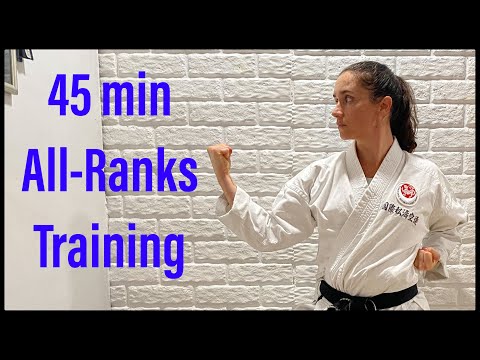
Unleash Your Inner Warrior: The BYAM 45-Minute Karate Workout for All Ranks

Welcome, warriors, to the hallowed grounds of BYAM, where the spirit of BUDO and artes marciales is not just discussed, but forged. Forget your fleeting fitness trends; today, we delve into a training regimen that harks back to the essence of martial discipline. Are you truly prepared to test your mettle? Our signature "Karate Workout: 45-Minute All Ranks Class" is not merely a session; it's a crucible designed to temper your body and sharpen your mind. Whether you're a fresh-faced beginner stepping onto the dojo floor for the first time, or a seasoned practitioner seeking to refine your edge, this workout promises to sculpt strength, hone agility, and build a resilience that transcends the mat. Prepare yourselves, for we are about to unlock the secrets of a training method that demands every ounce of your commitment.

The Forge of Readiness: Dynamic Warm-up

Before the true engagement, every warrior must prepare. Our session ignites with a dynamic warm-up, a calculated sequence designed not just to elevate your heart rate, but to awaken every fiber of your being. We begin with light, rhythmic movements – the gentle hum of a generator before the storm. This transitions seamlessly into a series of targeted stretches, focusing on the pillars of power: the legs, hips, and back. But this is no mere calisthenics. We weave in fundamental Karate techniques – the decisive tsuki (punch), the piercing geri (kick), and the resolute uke (block). Each motion is a whisper of the combat to come, a priming of the mind and body for the trials ahead. This isn't just about physical readiness; it's about entering the mental zone.

Heart of the Battle: Cardio & Strength Fusion

With the forge of readiness stoked, we plunge into the heart of the workout: a potent blend of cardiovascular exertion and muscular conditioning. This is where raw power meets enduring stamina. We employ a diverse arsenal of exercises, each selected to assault different muscle groups while maintaining an elevated heart rate. Imagine the explosive power of jumping jacks, the all-encompassing challenge of burpees, the foundation-building strength of lunges, the primal force of squats, and the unyielding resolve of push-ups.

But we are martial artists, not mere athletes. We infuse these fundamental movements with the spirit of combat. Engage in furious shadowboxing, envisioning your opponent, channeling your ki. Execute rigorous kicking drills, each strike a testament to your power and precision. This isn't just about burning calories; it's about cultivating the explosive power and relentless spirit required in any fight.

"The true warrior is not one who fears the fight, but one who understands its necessity and prepares with unwavering dedication."

The Calm After the Storm: Cool-down & Stretching

Victory, or even a hard-fought session, demands respect for recovery. The brutal intensity must yield to deliberate calm. Our cool-down is not an afterthought; it is a crucial phase of restoration, designed to mitigate injury and accelerate muscle repair. We transition to gentle, restorative exercises, focusing once again on the critical posterior chain – legs, hips, and back. This period also incorporates mindful breathing techniques, drawing inspiration from the Zen principles of meditation. Breathe deeply, release tension, and allow your mind to return from the battlefield of exertion to a state of focused tranquility. This is where true mastery begins – understanding the balance between exertion and recovery.

The Sensei's Edge: What Sets This Workout Apart

In a world saturated with generic fitness routines, the BYAM 45-Minute Karate Workout stands as a beacon of authentic martial training. What differentiates it? It is built on the foundational principle of inclusivity. Regardless of whether you hold a white belt or a black belt, this workout respects your journey. Beginners will discover a challenging yet achievable path, while seasoned practitioners will find ample opportunity for refinement and pushing their limits.

Furthermore, our focus transcends mere physical conditioning. We cultivate holistic fitness. You will emerge not just stronger, faster, and more enduring, but with a heightened sense of overall well-being. This is the power of integrating BJJ, Judo, Aikido, and Taekwondo principles into your regimen.

Crucially, we imbue this workout with the profound philosophy of Budo. Martial arts, in their purest form, are not solely about combat; they are about sculpting character. Discipline, unwavering focus, and profound respect – for oneself, for the art, and for fellow practitioners – are the cornerstones of this discipline. This workout is your path to not only superior physical condition but to becoming a more refined, resilient, and principled individual.

Training Guide: Executing the BYAM 45-Minute Karate Workout

To truly internalize this discipline, one must practice with precision. Follow these steps rigorously:

  1. Dynamic Warm-up (10 minutes):
    • Light Jogging/Skipping: 3 minutes
    • Leg/Hip/Back Dynamic Stretches (e.g., leg swings, hip circles, torso twists): 3 minutes
    • Basic Karate Punches (Tsuki), Blocks (Uke), and Stances (Dachi) practice: 4 minutes
  2. Cardio & Strength Circuit (25 minutes):

    Perform each exercise for 45 seconds, followed by 15 seconds of rest. Complete 4 rounds.

    • Jumping Jacks
    • Burpees
    • Forward Lunges (alternating legs)
    • Squats
    • Push-ups (modify on knees if needed)
    • Shadowboxing with fluid combinations
    • High Kicks (alternating legs, focus on form and power)
  3. Cool-down & Stretching (10 minutes):
    • Gentle static stretching focusing on major muscle groups (hold each stretch for 30 seconds): Hamstrings, quadriceps, hip flexors, glutes, back, shoulders.
    • Deep Diaphragmatic Breathing exercises: Practice slow, controlled inhales and exhales to calm the nervous system.

Essential Gear for Your Training

While this workout emphasizes minimal equipment, certain items can enhance your experience and support your progress. For the dedicated martial artist, investing in quality gear is a testament to your commitment.

  • Comfortable Training Attire: Opt for breathable fabrics that allow for a full range of motion. For Karate, a traditional Karate gi is ideal, but for general fitness, athletic shorts and a t-shirt suffice.
  • Training Mat: A good quality workout mat provides cushioning for ground exercises and stretches, protecting your joints.
  • Water Bottle: Hydration is paramount. Keep a reusable water bottle handy to replenish fluids throughout your session.
  • Optional: Training Gloves: For shadowboxing and kicking drills, light training gloves can offer a bit of protection and help build hand conditioning.

Frequently Asked Questions

Q1: I'm a complete beginner. Can I really do this workout?
Absolutely. The workout is structured to be scalable. Modify exercises as needed (e.g., knee push-ups, fewer repetitions) and focus on proper form over speed. The goal is consistent progress, not immediate perfection.

Q2: How often should I perform this workout?
For optimal results and recovery, aim to perform this workout 2-3 times per week, allowing at least one day of rest or lighter activity in between sessions.

Q3: Does this workout replace actual Karate training?
This workout is designed as a supplementary training tool to enhance your physical conditioning, agility, and stamina. It is not a substitute for instruction under a qualified Martial Arts Master who teaches technique, strategy, and the deeper philosophical aspects of Karate.

Q4: What if I don't have 45 minutes? Can I shorten it?
Yes, you can adapt. Focus on completing at least one full round of the Cardio & Strength Circuit and a brief cool-down. Prioritize consistency over duration. Even 20-30 minutes of focused training is immensely beneficial.

Deepen Your Path

The journey of martial arts is one of continuous learning and refinement. To further enrich your understanding and practice, explore these related topics:

"The way of the warrior is to train and prepare, not for one battle, but for all battles." - Miyamoto Musashi

Reflexión del Sensei: Tu Próximo Paso

This 45-minute Karate workout is a microcosm of the martial journey: demanding, rewarding, and transformative. It challenges your physical limits while demanding mental fortitude. But the true test lies not in completing the workout itself, but in how you integrate its lessons into your life. Does the discipline you cultivate on the mat carry over into your daily endeavors? Does the resilience you build when pushing through fatigue empower you to face life’s unexpected challenges? Or is this merely another session to be checked off a list?

Consider this: If a 45-minute workout requires such focused effort and discipline, what level of commitment do the grander battles of life demand? Where will you find your reserves of strength and perseverance when the real stakes are on the line? The answer lies not in a gym, but within you. Now, prove it.

```json { "@context": "https://schema.org", "@type": "FAQPage", "mainEntity": [ { "@type": "Question", "name": "I'm a complete beginner. Can I really do this workout?", "acceptedAnswer": { "@type": "Answer", "text": "Absolutely. The workout is structured to be scalable. Modify exercises as needed (e.g., knee push-ups, fewer repetitions) and focus on proper form over speed. The goal is consistent progress, not immediate perfection." } }, { "@type": "Question", "name": "How often should I perform this workout?", "acceptedAnswer": { "@type": "Answer", "text": "For optimal results and recovery, aim to perform this workout 2-3 times per week, allowing at least one day of rest or lighter activity in between sessions." } }, { "@type": "Question", "name": "Does this workout replace actual Karate training?", "acceptedAnswer": { "@type": "Answer", "text": "This workout is designed as a supplementary training tool to enhance your physical conditioning, agility, and stamina. It is not a substitute for instruction under a qualified Martial Arts Master who teaches technique, strategy, and the deeper philosophical aspects of Karate." } }, { "@type": "Question", "name": "What if I don't have 45 minutes? Can I shorten it?", "acceptedAnswer": { "@type": "Answer", "text": "Yes, you can adapt. Focus on completing at least one full round of the Cardio & Strength Circuit and a brief cool-down. Prioritize consistency over duration. Even 20-30 minutes of focused training is immensely beneficial." } } ] }

Henry Cejudo vs. Marlon Moraes: A Masterclass in Combat Strategy at UFC 238

The Unseen War: Beyond the Octagon's Roar

The clash between Henry Cejudo and Marlon Moraes at UFC 238 wasn't just a fight; it was a high-stakes chess match played out with fists, feet, and the formidable power of **wrestling** and **striking**. While the result saw Cejudo victorious, emerging as the new UFC Bantamweight Champion, the true lesson lies not just in the knockout, but in the strategic evolution and the philosophical underpinnings of combat that were on full display. Many fans see only the flash and the fury, the **knockout power** and the **grappling** exchanges, but a true student of the martial way, a **budoka**, looks deeper. They analyze the **mental game**, the **discipline**, and the subtle shifts in momentum that dictate the outcome of such intense **battles**. This wasn't merely a **fight**; it was a testament to decades of rigorous **training** and the relentless pursuit of mastery.

Cejudo's Legacy: From Olympic Gold to MMA King

Henry Cejudo's journey is a saga of dedication that transcends mere athletic achievement. As an Olympic gold medalist in freestyle wrestling, Cejudo brought an unparalleled level of mat control and **explosive takedowns** to the **MMA** arena. His record, a formidable 16-2-0, speaks volumes, but it's his fight IQ and adaptability that truly set him apart. He’s not just a wrestler; Cejudo honed his **striking** skills to a lethal degree, weaving together a potent arsenal of punches, kicks, and knees. He embodies the principle that mastery in one domain can be powerfully amplified when integrated with another. This synergy is the hallmark of a true martial artist, constantly evolving and integrating new knowledge. For those aspiring to excel, consider the importance of a well-rounded **training** regimen. A solid foundation in **wrestling** or **judo**, combined with dynamic **kickboxing** or **Karate** techniques, can create an unstoppable force.

Moraes: The Striking Maestro's Challenge

Marlon Moraes, a Brazilian warrior with a professional record of 22-6-1, arrived at UFC 238 as a seasoned contender, a former WSOF Bantamweight Champion renowned for his exceptional **striking skills**. With 17 wins by KO/TKO, Moraes possessed the kind of fight-ending power that kept opponents constantly on edge. His **defensive skills** were equally impressive, a testament to meticulous **training** designed to nullify an opponent's attack. He made it incredibly difficult for fighters to land clean shots, a crucial aspect of survival and victory in any **combat sport**. The dynamic between Cejudo's wrestling prowess and Moraes's striking excellence set the stage for a classic confrontation, a true test of different martial philosophies.

The Strategic Dance: Deconstructing Cejudo vs. Moraes

The initial exchanges were a strategic dance, a palpable tension filling the arena. Cejudo, true to his roots, immediately sought to close the distance, aiming for the clinch and the inevitable takedown that has defined much of his career. However, Moraes, with his keen understanding of range and timing, displayed superb **takedown defense**. He managed to keep the **fight** standing, a critical objective against a renowned wrestler. The first round saw Moraes utilize his powerful leg kicks, which visibly seemed to impact Cejudo's mobility. This was a smart tactic, aiming to blunt the wrestler's offensive capabilities. Yet, the hallmark of a champion isn't just skill, but the ability to adapt. In the second round, Cejudo made the crucial adjustments. He began to time his entries more effectively, finally breaching Moraes's defenses and securing a takedown. Once on the ground, the dynamic shifted dramatically. Cejudo's control was absolute, his **ground-and-pound** relentlessly targeting Moraes. This phase of the fight underscored a fundamental principle in **Budo**: once you have your opponent where you want them, exploit the advantage with decisive action. The third round saw Cejudo continuing his dominance, blending his wrestling with effective striking. Moraes, though resilient, appeared to be tiring, a common consequence of defending relentless takedowns and absorbing ground strikes. The **ki** flow seemed to be with Cejudo. The decisive moment arrived in the fourth round. Cejudo landed a powerful knee strike that sent Moraes crashing to the canvas. This was the **knockout** that fans craved, the definitive punctuation to a masterful performance. The follow-up ground strikes led to the referee's stoppage, crowning Cejudo the new champion. This victory wasn't just about raw power; it was about strategic evolution, demonstrating that even a fighter known for one discipline can conquer another with dedication and intelligent application of skills.

Veredicto del Sensei: ¿Merece la pena?

This **fight** is a prime example of how a well-rounded martial artist, who understands the interplay between different disciplines, can overcome specialized talent. Cejudo's victory over Moraes is a **lesson in strategy**, showcasing the importance of adaptability and the integration of **wrestling** and **striking**. For any **martial arts** enthusiast, this bout is a must-watch, not just for the excitement, but for the deep tactical insights it offers. It’s a clear demonstration that while **specialization** has its merits, true mastery lies in the ability to blend and adapt. Cejudo earned his **Cinturón Negro en Combate Estratégico**.

Equipo Esencial para tu Entrenamiento

To emulate the dedication and skill displayed by these warriors, the right **equipment** is paramount. Whether you're focusing on **wrestling**, **striking**, or a blend of disciplines, investing in quality gear is an investment in your own **training** and safety.
  • Guantes de MMA: Look for gloves that offer a good balance of protection for striking and dexterity for **grappling**. 16oz gloves are generally recommended for sparring sessions to ensure adequate padding.
  • Kimono de Judo o Jiu-Jitsu: For those focusing on ground **fighting** and **wrestling**, a durable, double-weave kimono (gi) is essential. It needs to withstand the rigors of constant pulling and grappling.
  • Protector Bucal: Non-negotiable for any form of sparring or intense **training**. Protect your teeth and jaw.
  • Espinilleras y Guantes de Kickboxing/Karate: If your **training** leans more towards **striking**, invest in proper shin guards and sparring gloves to prevent injuries.
  • Protector Genital: A vital piece of **equipment** for all male practitioners involved in any combat sport.
For those looking to deepen their understanding of martial principles, consider exploring foundational texts. The wisdom within books like "The Book of Five Rings" by Miyamoto Musashi offers insights that are as relevant to the **Octagon** as they are to any **battlefield**.

Guía de Entrenamiento: Integrando Wrestling y Striking

Aspiring fighters often struggle to bridge the gap between **wrestling** and **striking**. This exercise, inspired by the strategic shifts seen in Cejudo's performance, aims to improve your transitions and overall combat effectiveness.
  1. Warm-up (15 mins): Begin with dynamic stretching and light cardio. Focus on movements that simulate both striking and wrestling actions – hip rotations, leg swings, arm circles, torso twists.
  2. Striking Drills (10 mins): Practice combinations like jab-cross-hook, followed by a low kick. Focus on footwork and maintaining a balanced stance. Alternate between offensive drills and defensive drills (e.g., slipping punches, blocking kicks).
  3. Wrestling Entries (10 mins): Practice level changes and shooting for double-leg or single-leg takedowns. Focus on explosiveness and driving through the takedown. Imagine you are attacking a stationary opponent.
  4. Transition Drills (15 mins): This is the core of the drill.
    • Start in a striking stance. Throw a combination (e.g., jab-cross). As your opponent (or a partner) attempts to defend or counter, immediately transition into a takedown attempt.
    • If the takedown is defended, immediately pop back up to your striking stance and prepare to strike.
    • Alternatively, if you are taken down, practice effective get-ups (e.g., technical stand-up) while defending against ground-and-pound or submissions.
    • Work on clinching from striking range, transitioning to knees or elbows, and then potentially to a takedown if the opportunity arises.
  5. Sparring (10 mins): Engage in light, controlled sparring, focusing specifically on making these transitions. Don't worry about winning; focus on executing the *transition* from striking to wrestling and back.
  6. Cool-down and Stretching (5 mins): Static stretching, holding each stretch for 30 seconds.
Remember, consistency is key. Integrating these phases smoothly takes time and dedicated practice. The goal is to make these transitions second nature, a fluid response rather than a conscious decision.

Future Fights: What Lies Ahead?

Cejudo's victory was a crowning achievement, leading him to announce his retirement – a decision that, while understandable, left fans yearning for more. Yet, his hints at a potential return keep the flame of possibility alive. The UFC landscape is always shifting, and a fighter of Cejudo’s caliber can never truly be counted out. His legacy is secure, but the allure of one more **fight** often calls to the warrior’s spirit. For Marlon Moraes, this loss represents not an end, but a challenging crossroads. He remains a formidable force in the Bantamweight division, possessing the skills and the heart to bounce back. His journey will be watched closely, as he seeks to re-establish himself against the division's top contenders. Who will be his next opponent? This uncertainty is part of the thrill of **combat sports**. The path to redemption is often harder than the initial climb, but it yields a far greater reward.

Preguntas Frecuentes

What is Henry Cejudo's primary martial arts background?

Henry Cejudo is an Olympic gold medalist in freestyle **wrestling**. This background heavily influences his **MMA** style, focusing on takedowns and control.

How did Marlon Moraes typically win his fights?

Marlon Moraes is known for his exceptional **striking skills**, with a significant number of his wins coming by KO/TKO.

Was the fight between Cejudo and Moraes a close contest?

While Moraes displayed resilience and dangerous striking, Cejudo's strategic adjustments and **wrestling** advantage allowed him to gain control, ultimately leading to a TKO victory in the fourth round.

What does "TKO" mean in MMA?

TKO stands for Technical Knockout. It occurs when the referee stops the **fight** because one fighter is deemed unable to safely continue, even if they are not fully unconscious.

Does Cejudo's retirement mean he will never fight again?

While Cejudo has announced retirement, he has also hinted at a possible return. The world of **martial arts** often sees champions make comebacks.

Para Profundizar en tu Camino

  • BUDO: Explore the broader philosophy and principles behind martial disciplines.
  • MMA: Dive deeper into the world of Mixed Martial Arts, its history, and its stars.
  • DefensaPersonal: Understand how techniques learned in sports translate to real-world self-defense scenarios.

Reflexión del Sensei: Tu Próximo Paso

Cejudo conquered the **Octagon** by blending his wrestling dominance with sharpened striking. He didn't just fight; he strategized, he adapted, he overcame. This is the essence of true martial artistry. It is not merely about possessing skills, but about knowing *when* and *how* to apply them, and importantly, how to evolve when faced with adversity. So I ask you, my students, and all who seek mastery: When you face your own challenges – be it on the mat, in the ring, or in the complex arenas of life – do you adapt, or do you crumble? Do you possess the foresight to shift your strategy when your initial approach falters, or do you cling to a failing method with the stubbornness of a novice? The true warrior doesn't just throw punches; they understand the rhythm of the battle, the ebb and flow of power, and can transition seamlessly from attack to defense, from strategy to instinct. Consider this your **koan** for the week. ``` ```json { "@context": "https://schema.org", "@type": "FAQPage", "mainEntity": [ { "@type": "Question", "name": "What is Henry Cejudo's primary martial arts background?", "acceptedAnswer": { "@type": "Answer", "text": "Henry Cejudo is an Olympic gold medalist in freestyle wrestling. This background heavily influences his MMA style, focusing on takedowns and control." } }, { "@type": "Question", "name": "How did Marlon Moraes typically win his fights?", "acceptedAnswer": { "@type": "Answer", "text": "Marlon Moraes is known for his exceptional striking skills, with a significant number of his wins coming by KO/TKO." } }, { "@type": "Question", "name": "Was the fight between Cejudo and Moraes a close contest?", "acceptedAnswer": { "@type": "Answer", "text": "While Moraes displayed resilience and dangerous striking, Cejudo's strategic adjustments and wrestling advantage allowed him to gain control, ultimately leading to a TKO victory in the fourth round." } }, { "@type": "Question", "name": "What does \"TKO\" mean in MMA?", "acceptedAnswer": { "@type": "Answer", "text": "TKO stands for Technical Knockout. It occurs when the referee stops the fight because one fighter is deemed unable to safely continue, even if they are not fully unconscious." } }, { "@type": "Question", "name": "Does Cejudo's retirement mean he will never fight again?", "acceptedAnswer": { "@type": "Answer", "text": "While Cejudo has announced retirement, he has also hinted at a possible return. The world of martial arts often sees champions make comebacks." } } ] }

Mike Tyson's Brutal Drills: The Secret Behind His Knockout Power

As a seasoned martial artist and a deep student of the warrior's path – what some call Budo – I've witnessed countless hours of training, studied ancient texts, and analyzed the raw, unadulterated combat prowess that separates the legends from the mere participants. Today, we dissect a titan, a force of nature whose name alone conjures images of devastation: Mike Tyson. Forget the superficial gloss; we're diving into the very *mechanism* of his knockouts, focusing on the "crazy drills" that forged his unparalleled, fight-ending power. The intention here is clear: to understand the *why* and *how* behind Tyson's ability to turn mere drills into fight-altering blows, offering insights applicable even beyond the boxing ring.
This isn't just about boxing; it's about translating relentless, intelligent conditioning into devastating effectiveness. We'll examine the core principles behind his methods and how they echo through various martial disciplines.

Table of Contents

The Peek-a-Boo Foundation: More Than Just a Guard

Mike Tyson's "Peek-a-Boo" stance is often described as defensive, but that’s a gross oversimplification. It’s a dynamic, offensive-minded shell. By keeping his hands close to his face – palms almost kissing his cheeks, elbows tucked tightly – he achieved two critical objectives: immediate facial protection and the ability to launch punches from unexpected angles, with minimal telegraphing. This isn't just about blocking; it's about controlling space and creating openings. Think of it like the **Kamae** (posture) in Karate or the defensive structure in Judo, but weaponized for boxing's unique demands. The constant bobbing and weaving inherent to Peek-a-Boo also makes the fighter an elusive target, wearing down an opponent’s accuracy and patience. It’s a psychological weapon as much as a physical one.

The Slip and Rip: Mastering Evasion and Counter

The "Slip and Rip" is pure Budo in its essence: **Sen no Sen** (initiative in the face of an opponent's action). Tyson didn't just evade; he used the opponent's momentum and aggression against them. As a punch came, he would dip his head *just enough* to let the blow whistle past, simultaneously shifting his weight. This movement wasn't just about avoiding impact; it was the pivot point for his counter. The "Rip" was the explosive return punch, often a hook or an uppercut, delivered with the full rotation of his hips and torso. This requires an almost supernatural timing and an understanding of distance that borders on precognition. Many martial arts emphasize the seamless transition from defense to offense; Tyson perfected this in the brutal arena of professional boxing.
"The fighter is the one who practices the art. The spectator is the one who pays for it." - A principle that resonates deeply, highlighting the dedication behind Tyson's explosive moments.

The Devastating Uppercut: A Lesson in Explosive Power

Tyson’s uppercut is legendary. It wasn't just a punch; it was an event. He frequently set it up by slipping an opponent's jab or hook. As their punch sailed over his head, their chin would momentarily be exposed. Tyson would explode upwards, not just with his arm, but with his entire body. The power came from the ground up: a strong base, the coiling and uncoiling of his core, and the whip-like action of his arm. This is a perfect example of **Kime** – the focus and explosive power delivered at the moment of impact. Even a glancing blow from Tyson's uppercut could end a fight, a testament to the precise mechanics and raw power he generated. It’s a move that demonstrates that brute force, when applied with perfect technique, is near-unstoppable.

The "Crazy Drills" Unveiled: Forging KO Power

This is where the core of our analysis lies. Tyson's training was notoriously unconventional, designed to push the boundaries of human capability. The "punching through a towel" drill is a prime example. What does this achieve?
  • Enhanced Grip Strength: Holding and punching through a towel demands incredible forearm and grip stability. This translates to punches that don't "slip" on impact.
  • Improved Rotational Power: The resistance of the towel forces a deeper body rotation, maximizing torque.
  • Punching "Through" the Target: It trains the mind and body to continue the motion *past* the initial point of contact, crucial for generating knockout force. Imagine trying to break bamboo with a strike; you don't stop at the surface.
  • Speed and Precision: While seemingly crude, the drill, when performed correctly, refines the speed and accuracy needed to maintain power against resistance.
These weren't just exercises; they were simulations of combat conditions, designed to condition the body and mind to deliver devastating blows under pressure. This mirrors the principle of training with weighted sticks or hitting Makiwara boards in some Karate styles.
"The art of war is of vital importance to the State. It is a matter of life and death, a road to survival or ruin. Hence it must be studied." - Sun Tzu. Tyson lived this principle, turning every drill into a vital study of survival and dominance.

The Overhand Right: A Masterclass in Counter-Attack

The overhand right was another Tyson staple, often employed as a devastating counter. Against opponents who relied on a stiff jab or a straight lead, Tyson would loop his right hand over their guard. This punch is powerful because it uses the natural arc of the body's rotation and can catch an opponent off-guard if they are focused on blocking straight punches. It requires excellent timing, as the opponent must be extending their own punch for the counter to be most effective. It’s a high-risk, high-reward technique that Tyson executed with terrifying proficiency. It showcases the importance of understanding an opponent's rhythm and exploiting those predictable patterns.

Veredicto del Sensei: ¿Merece la Pena?

Mike Tyson's training methods, while seemingly chaotic, were deeply rooted in the pursuit of knockout power. The drills, the stance, the counters – they all formed a cohesive, brutal system. While not all his methods are directly transferable to every martial art or applicable for every practitioner, the underlying principles of explosive power generation, relentless conditioning, defensive ingenuity, and precise counter-offense are universally valuable. His legacy isn't just in the KOs, but in the relentless dedication to mastering the *art* of delivering a fight-ending blow. Calificación del Sensei: Cinturón Negro en Poder de KO

Equipo Esencial para tu Entrenamiento

While Tyson's drills often seemed to require minimal equipment, certain items can enhance your training and safety, especially if you're looking to develop punching power safely:
  • Boxing Gloves: 14-16oz gloves for sparring and heavy bag work are essential for hand protection.
  • Hand Wraps: Crucial for wrist and knuckle support.
  • Heavy Bag: A good quality heavy bag allows you to practice power shots and combinations.
  • Speed Bag: Develops hand-eye coordination and shoulder endurance.
  • Jump Rope: For cardiovascular conditioning and footwork.
  • Training Partner/Coach: For drills like the towel drill or to provide feedback.
  • Optional: Resistance Bands: Can be used for dynamic warm-ups and strength exercises mimicking punching motions.
Investing in proper martial arts merchandise like these can make your training more effective and prevent injuries.

Guía de Entrenamiento: Desarrollando Poder de KO

Let's adapt a principle from Tyson's drills for broader martial application. Remember, safety and proper form are paramount.
  1. Dynamic Warm-up: Begin with 10-15 minutes of cardio (jumping jacks, shadow boxing, light jogging) and dynamic stretches (arm circles, torso twists, leg swings).
  2. Grip and Rotational Strength Drill (Towel Drill Adaptation):
    • Find a sturdy towel. Fold it lengthwise a few times to create a thick, resistant band.
    • Hold the ends of the towel firmly, arms extended slightly in front of you.
    • Practice rotating your torso as if throwing a punch, pulling against the towel's resistance. Focus on using your core and hips, not just your arms.
    • Imagine you are "pulling" the towel through an imaginary opponent.
    • Perform 3 sets of 10-15 rotations per side.
  3. Explosive Punch Combinations:
    • Shadow box or use a heavy bag, focusing on generating power from your legs and hips.
    • Practice a jab-cross-hook combination. On the hook, really emphasize the body rotation and follow-through.
    • Incorporate slips: Slip an imaginary punch to your left, immediately counter with a right cross and a left hook.
    • Perform 5 rounds of 3 minutes each, focusing on power and speed, with 1-minute rest between rounds.
  4. Core Strength and Stability:
    • Plank variations (standard, side plank)
    • Russian twists (with or without weight)
    • Leg raises
    • Aim for 3 sets of each exercise, holding or performing reps until near fatigue.
  5. Cool-down and Stretching: Finish with static stretches, holding each for 30 seconds, focusing on shoulders, chest, back, and legs.
This regimen focuses on the kinetic chain – the interconnectedness of your body’s movements – which is the true source of explosive power, much like the Ki that flows through a martial artist.

Preguntas Frecuentes

Is the towel drill safe for beginners?

The towel drill can be adapted for beginners by using a less resistant towel and focusing purely on form and rotation. The key is to avoid over-exertion and listen to your body. Always prioritize proper technique over sheer force.

How did Tyson's Peek-a-Boo stance help his offense?

The Peek-a-Boo stance allowed Tyson to launch punches from an extremely tight, protected position. This meant his punches were often thrown from closer range and with less telegraphing, making them harder for opponents to see and block, thus leading to more effective offense.

Can these principles be applied to other martial arts like Karate or Kung Fu?

Absolutely. The concepts of explosive power generation through body rotation, defensive movement leading to counter-offense, and the importance of dedicated, often unconventional training drills are fundamental across many martial arts disciplines. The specific techniques will differ, but the underlying physics and biomechanics are universal. Understanding the philosophy of Budo helps connect these disparate elements.

What is "Kime"?

Kime (決め) is a Japanese term in martial arts that refers to the focus and explosive power generated at the moment of impact. It's about channeling all your energy into a single point, maximizing the force and effect of a strike or technique.

How did Tyson's drills contribute to his fighting style?

His drills were specifically designed to enhance the qualities that defined his fighting style: devastating punching power, incredible speed, relentless aggression, and the ability to absorb punishment while delivering more. They were not random exercises but highly targeted methods to forge a specific type of warrior.

Para Profundizar en tu Camino

Now, consider this: Tyson trained to inflict maximum damage with every available tool. In your own practice, are you training for impact, or merely going through the motions? The difference between a drill and a KO is intent. Sharpen your intent.

The Unseen Warrior: Mastering the Mind-Body Connection in Pre-School Martial Arts

The dojo is a crucible, forging not just physical prowess, but an indomitable spirit. Yet, how often do we truly consider the foundational elements being laid in the youngest of practitioners? Today, we journey to Oaxaca, where the "Artes Marciales Intermunicipal" crowned its champions in August 2022. While the victory of a Pre-Schooler in the "Primer Lugar" category might seem a simple display of childhood achievement, it holds profound lessons for us all. This isn't just about trophies; it's about the genesis of a warrior's mindset.

The Heart of the Matter: More Than Just a Game

The sheer energy and enthusiasm displayed by these young martial artists are infectious. However, beneath the surface of playful sparring and enthusiastic demonstrations lies a complex interplay of physical coordination, cognitive development, and emotional regulation. For a child to achieve "Primer Lugar" in a pre-school category, it signifies more than just speed or strength. It points to an early mastery of fundamental principles: listening, reacting, and executing with a nascent understanding of self-control. This is the nascent stage of *Mushin* – the mind without mind – a concept revered by seasoned practitioners, yet here, it manifests as pure, unadulterated focus.

The Significance of Early Training

Why are these early experiences so critical? Consider the principles of motor skill acquisition. The younger the brain, the more plastic it is, making it exceptionally adept at absorbing new movement patterns. This period is when the body learns to coordinate, when balance begins to develop, and when the intrinsic connection between thought and action is first forged. The techniques practiced, however simplified, are building blocks for a lifetime of martial exploration.
"The ultimate aim of martial arts is not victory or defeat, but the perfection of the human character." - Gichin Funakoshi
This quote by the father of modern Karate resonates deeply when observing these young contenders. Their "victory" is not merely winning the competition, but in the process of learning, participating, and striving. The discipline instilled, the respect shown to instructors and peers, and the sheer perseverance required to perform even the simplest *kata* – these are the true triumphs.

Unpacking the "Primer Lugar" Advantage

What sets the "Primer Lugar" winner apart? It's rarely about raw physical superiority at this age. More often, it's a combination of: * **Attentiveness**: The child who listens most keenly to their instructor. * **Coordination**: The child with a natural, or well-developed, ability to link movements. * **Confidence**: The child who, despite their age, displays a spark of self-assurance. * **Resilience**: The child who can recover quickly from a minor mistake or stumble. These are the very qualities that seasoned martial artists hone over decades. Seeing them manifest in pre-schoolers highlights the universality of these principles, irrespective of age or advanced technique.

The Role of the Instructor and Parents

The impact of the instructor is paramount. It is their ability to translate complex martial concepts into age-appropriate lessons that makes the difference. Encouraging, patient, and clear instruction creates an environment where young minds can thrive. Similarly, parental support is crucial. A child who sees their efforts validated and encouraged by their family is more likely to embrace the martial path with enthusiasm and dedication. This creates a robust ecosystem of support, crucial for any long-term development.

Beyond the Competition: Lasting Lessons

The cheers of victory fade, but the lessons learned in the dojo endure. For these young martial artists, their participation in the "Artes Marciales Intermunicipal" in Oaxaca is not just a memory; it's an investment in their future. They are learning: * **Discipline**: Following instructions, respecting rules, and committing to practice. * **Respect**: For themselves, their peers, their instructors, and the art itself. * **Focus**: Concentrating on tasks, even when they are challenging. * **Courage**: Stepping onto the mat, facing challenges, and giving their best. * **Coordination and Balance**: Essential physical skills that benefit all aspects of life. These are not mere "pre-school" skills; they are foundational virtues for life. The martial arts provide a unique, structured environment for their cultivation.

Reflexión del Sensei: Tu Próximo Paso

Consider the last time you felt truly present, fully engaged in a task, your mind and body acting as one. Was it during a demanding training session, a focused moment of practice, or perhaps even a simple, everyday action performed with intention? The young champions of Oaxaca remind us that this state of flow, this warrior's presence, is not an exclusive domain of seasoned experts. It is a potential within us all, waiting to be awakened. Now, I ask you: How can you bring this spirit of focused presence, this inherent connection of mind and body, into your own training today? Are you merely going through the motions, or are you truly *living* the martial path?

Equipo Esencial para tu Entrenamiento

While pre-schoolers might require minimal equipment, serious martial artists know the value of proper gear. Investing in quality equipment not only enhances performance but also ensures safety.
  • Kimono (Gi): Look for durable, comfortable fabrics that allow for a full range of motion. For disciplines like Judo or Brazilian Jiu-Jitsu, a heavier, double-weave gi is often preferred for its resilience against the rigors of grappling.
  • Guantes de Entrenamiento: Essential for striking arts like Karate, Kickboxing, or Muay Thai. Ensure they offer adequate padding for your hands and your training partners' safety. For sparring, consider 16oz gloves for better protection.
  • Protector Bucal: A non-negotiable item for any form of sparring or live combat.
  • Shin Guards y Empeines: Crucial for striking arts that involve leg techniques, offering protection against impact.
  • Mochila de Entrenamiento: To carry all your essential gear to and from the dojo. Consider a durable and spacious option for carrying multiple items like your uniform, water bottle, and any specialized equipment.

Recursos para Profundizar

The journey of martial arts is a continuous learning process. To complement your practical training, consider exploring these resources:
  • Libro: "The Book of Five Rings" by Miyamoto Musashi - A timeless classic on strategy and philosophy that transcends martial arts.
  • Documental: Explore documentaries on legendary martial artists or specific martial traditions to gain historical and cultural context. Titles like "The Art of War: The Wars of the States" can offer insights into ancient strategic thinking.
  • Federación Oficial: Visit the official website of your respective martial art's governing body for rules, history, and training resources. For example, the World Karate Federation (WKF) or the International Judo Federation (IJF).

Guía de Entrenamiento: El Despertar del Guerrero Interior

Even without a formal dojo, you can cultivate the warrior spirit. Here’s a simple routine focusing on presence and coordination.
  1. Calentamiento (5 minutos): Start with light cardio like jumping jacks or jogging in place to increase blood flow.
  2. Estiramientos Dinámicos (5 minutos): Perform arm circles, leg swings, and torso twists. Focus on controlled movements.
  3. Meditación de Atención Plena (10 minutos): Sit in a comfortable, upright position. Focus on your breath. When your mind wanders, gently guide it back to your breath. This builds concentration and awareness, mirroring the mental focus required in combat.
  4. Ejercicios de Coordinación (10 minutos): Practice simple sequences like stepping forward and punching, or a basic block followed by a strike. Focus on executing each movement with clear intent and proper form. Try to imagine an opponent, even if you're alone.
  5. Enfriamiento y Respiración (5 minutos): Gentle stretching and deep, diaphragmatic breathing to calm the body and mind.

Preguntas Frecuentes

¿Es necesario empezar las artes marciales a una edad temprana?

While starting young offers significant developmental advantages due to the brain's plasticity, it is never too late to begin. The principles and benefits of martial arts are accessible to practitioners of all ages.

¿Cómo puedo medir el progreso de un niño en artes marciales?

Progress should be measured not just by belt progression or competition wins, but by improvements in discipline, focus, respect, physical coordination, and overall confidence.

¿Qué arte marcial es el mejor para niños pequeños?

Many arts can be adapted. Disciplines like Karate, Taekwondo, and Judo often have well-established pre-school programs that focus on fun, fundamental skills, and character development.

¿Cómo afecta el entrenamiento de artes marciales a la agilidad y el equilibrio?

Martial arts training inherently develops agility and balance through dynamic movements, evasive techniques, stances, and controlled landings. These are fundamental to effective combat and everyday life.

¿Qué significa "BUDO" en el contexto de las artes marciales?

BUDO (武道) translates to "the way of the warrior" or "martial way." It emphasizes not just the physical techniques but also the philosophical and spiritual development, character building, and discipline inherent in martial arts practice.

Para Profundizar en tu Camino