Showing posts sorted by relevance for query Kung Fu. Sort by date Show all posts

The Unspoken Power: Why You Must Embrace Kung Fu

The rhythmic echo of a well-placed strike, the fluidity of movement born from centuries of refinement, the profound discipline that transcends the physical realm – this is the essence of Kung Fu, or Gongfu as it is known in its homeland. Far beyond a mere collection of fighting styles, Kung Fu is a living testament to China's rich historical tapestry, a traditional sport that has captivated the globe, and a cultural ambassador that speaks a universal language of strength, resilience, and inner harmony. In an era where superficiality often reigns, the pursuit of authentic martial arts, and specifically Kung Fu, has seen an unprecedented surge in popularity across all ages and nationalities. This renaissance has spurred the establishment of countless training centers and clubs, each a crucible for forging not just fighters, but better human beings. This exposé delves deep into the compelling reasons why Kung Fu is not just a martial art to learn, but a transformative journey to undertake.

Table of Contents

The Legacy of Kung Fu: More Than Just a Fight

To dismiss Kung Fu as simply a method of combat is to miss its profound depth. Its roots are interwoven with the very fabric of Chinese history, evolving over millennia through the practical needs of self-defense, battlefield application, and even philosophical introspection. Each style, from the animalistic grace of the Tiger to the grounded power of the Hung Gar, tells a story of adaptation and survival. When we speak of Kung Fu today, we speak of a tradition that has not only endured but flourished, becoming a symbol of Chinese heritage recognized and respected worldwide. The surge in its popularity isn't accidental; it's a response to a global yearning for genuine skill, physical conditioning, and a connection to something timeless.

"True martial arts are not about beating others, but about conquering oneself." - Anonymous Kung Fu Master

The establishment of dedicated Kung Fu schools signifies more than just increased interest; it represents a commitment to preserving and propagating these ancient arts. These institutions are vital for imparting the correct techniques, the underlying principles, and the disciplined ethos that defines true Kung Fu. It's a practice that offers tangible benefits, setting it apart from fleeting trends.

Sculpting the Body: The Physical Prowess of Kung Fu

The physical transformations witnessed in dedicated Kung Fu practitioners are nothing short of remarkable. This art demands a comprehensive approach to physical conditioning, pushing the boundaries of what the human body can achieve.

  • Enhanced Strength and Power: Kung Fu techniques, from explosive strikes to grappling maneuvers, are designed to build functional strength. Exercises like horse stance training (Mabu), foundational to many styles, develop incredible leg and core power, essential for generating force in every movement.
  • Unrivaled Flexibility and Agility: The wide stances, sweeping kicks, and acrobatic elements characteristic of many Kung Fu styles cultivate exceptional flexibility and agility. This isn't just for show; it translates into evasive capabilities and the ability to strike from unexpected angles, crucial in any confrontation.
  • Superior Cardiovascular Health: The continuous, often dynamic nature of Kung Fu training, especially forms (Taolu) and sparring, provides a rigorous cardiovascular workout. This improves stamina, endurance, and overall heart health, making practitioners more resilient in demanding situations.
  • Improved Coordination and Balance: Mastering complex sequences of movements and maintaining stability during dynamic actions hones fine motor skills, balance, and overall body control. This translates into grace and precision in all physical endeavors.
  • Refined Proprioception: Through constant practice and body awareness exercises, practitioners develop an acute sense of their body's position and movement in space. This heightened proprioception is key to avoiding injury and executing techniques with precision.

Consider the legendary Shaolin monks, whose rigorous training regimens are a testament to Kung Fu's power to forge peak physical specimens capable of extraordinary feats. Their discipline in maintaining demanding postures and executing complex sequences demonstrates the profound physical capabilities Kung Fu cultivates.

"The foot that has trod the road is the best teacher." - A saying echoed in many martial traditions, emphasizing practical experience.

This comprehensive physical development is not merely about aesthetics; it's about building a resilient, adaptable, and powerful physique ready for any challenge. For those seeking to not only defend themselves but to truly embody physical excellence, Kung Fu offers a complete curriculum.

Forging the Mind: The Mental Fortitude of Kung Fu

Beyond the visible strength, Kung Fu instills a discipline of the mind that is arguably its most valuable asset. The rigorous training demands a level of focus and mental resilience that permeates every aspect of a practitioner's life.

  • Unwavering Focus and Concentration: Learning and executing complex forms (Taolu) requires intense concentration. Practitioners learn to shut out distractions, to be present in the moment, and to commit sequences to muscle memory through sheer mental effort. This heightened focus is invaluable in academic, professional, and personal life.
  • Patience and Perseverance: Mastery in Kung Fu is a marathon, not a sprint. Progress is incremental, and plateaus are inevitable. Students learn the virtue of patience, understanding that consistent, diligent effort over time yields the greatest rewards. The ability to push through frustration and setbacks is a critical life skill.
  • Emotional Regulation: The dojo is a microcosm of life's challenges. Learning to manage the frustration of failed techniques, the sting of defeat in sparring, or the pressure of performance under guidance builds crucial emotional intelligence. Practitioners learn to respond rather than react impulsively.
  • Self-Confidence and Self-Esteem: As practitioners achieve new levels of skill, overcome personal challenges, and gain proficiency, their self-confidence naturally grows. This isn't arrogance, but a quiet assurance rooted in proven capability and self-mastery.
  • Mental Toughness (Jingli): This is the ability to persevere under duress, to maintain composure in the face of adversity. Kung Fu training, with its inherent physical and mental demands, is a powerful crucible for forging this resilience.

Think of the dedication required by the martial artists in films like "Crouching Tiger, Hidden Dragon" (though fictionalized, it captures the spirit). The mental discipline depicted, the focus required for intricate wire-fu choreography, underscores the commitment needed to achieve such physical and mental feats.

The mental fortitude cultivated through Kung Fu is a shield against the stresses of modern life, fostering a calm, centered, and capable individual.

The Way of the Warrior: Kung Fu's Profound Philosophy

Kung Fu is inextricably linked to profound philosophical principles that guide its practice and imbue it with meaning. These aren't abstract theories but practical wisdom applied to the art of living.

  • The Concept of Qi (Ki): Understanding and cultivating vital energy (Qi in Chinese, Ki in Japanese) is central to many Kung Fu styles. This energy is believed to flow through the body and the universe, and its harmonious cultivation leads to enhanced vitality, power, and health.
  • Yin and Yang: The interplay of opposing yet complementary forces is a fundamental principle. Kung Fu often embodies this through the balance of hard and soft techniques, offense and defense, stillness and motion.
  • Mindfulness and Presence: Many Kung Fu traditions emphasize being fully present in each moment. This mirrors Buddhist and Taoist philosophies, advocating for awareness and deliberate action rather than mindless repetition or impulsive reaction.
  • Respect and Humility: A cornerstone of the martial arts ethos is respect for one's teacher, training partners, the art itself, and even opponents. Humility is recognizing that there is always more to learn, a lesson reinforced with every advanced technique or challenging sparring session.
  • The Five Animals (Wu Xing Quan): Styles based on the movements of the Tiger, Crane, Leopard, Snake, and Dragon embody the distinct characteristics of these creatures – power, grace, speed, fluidity, and ferocity. This approach connects the practitioner to the natural world and its inherent wisdom.
"To conquer a foe, you must understand the mind of your enemy. To conquer yourself, you must understand the mind of the warrior." - Miyamoto Musashi, from "The Book of Five Rings," a text deeply influential across many East Asian martial traditions.

These philosophical underpinnings elevate Kung Fu from a mere physical discipline to a path of self-discovery and spiritual growth. It teaches practitioners to approach life with a balanced perspective, understanding the interconnectedness of all things.

A Gateway to Culture: Beyond the Fights

Learning Kung Fu is an immersive experience into Chinese culture. The art is a vessel carrying centuries of history, philosophy, and tradition.

  • Understanding Chinese Heritage: Through Kung Fu, one gains insights into traditional Chinese values, historical events, and the societal roles martial arts have played.
  • Language and Terminology: Practitioners learn key phrases and terms in Mandarin, further deepening their connection to the art and its origins.
  • Appreciation for Aesthetics: The elegance of Kung Fu forms, the discipline in calligraphy, and the intricate details in traditional Chinese art often share a common thread of precision and aesthetic appreciation.
  • Connection to a Global Community: As Kung Fu gains worldwide popularity, learning it opens doors to a diverse international community of practitioners who share a common passion and respect for the art.

For those fascinated by the East, Kung Fu offers a tangible and engaging way to connect with its rich cultural heritage, far beyond what a textbook or documentary could ever provide.

Selecting Your Dojo: Finding the Right Kung Fu School

The effectiveness of your Kung Fu journey hinges on choosing the right training environment. A good school is more than just a place to practice; it's a community that fosters growth.

  • Qualified Instructors: Seek instructors who possess a deep understanding of their chosen style, not just in technique but also in its underlying principles and philosophy. Look for those with verifiable lineage and experience.
  • Training Methodology: Does the school emphasize practical application, physical conditioning, and philosophical understanding, or is it focused solely on flashy routines? A balanced approach is key.
  • Dojo Etiquette: Observe the atmosphere. Is there a sense of respect, discipline, and mutual support among students? Proper etiquette (Do-yo) is crucial for a positive learning environment.
  • Style Specialization: Different schools may focus on specific styles (e.g., Shaolin, Wing Chun, Tai Chi). Research the styles and decide which best aligns with your goals, whether it's self-defense, health, or cultural exploration.

Don't be afraid to visit multiple schools, observe classes, and even participate in a trial lesson. Your intuition and feeling of belonging are important factors.

Essential Gear for Your Kung Fu Journey

While Kung Fu is often associated with minimal equipment, having the right gear can significantly enhance your training experience and safety.

  • Kung Fu Uniform (Gongfu Fu): Traditional uniforms are often loose-fitting trousers and a jacket, allowing for maximum freedom of movement. They are typically made of comfortable, breathable fabrics like cotton or linen.
  • Kung Fu Shoes: Soft-soled shoes designed for martial arts provide good grip and flexibility, crucial for performing stances and dynamic movements without slipping or hindering footwork.
  • Training Weapons: As you progress, you may be introduced to traditional Kung Fu weapons such as the staff (Gun), sword (Jian), or broadsword (Dao). These should be practice-grade and handled with utmost respect and caution.
  • Protective Gear: For sparring sessions, essential protective gear includes sparring gloves, mouthguards, and groin protectors to minimize the risk of injury.

Investing in quality gear ensures comfort and safety, allowing you to focus on perfecting your techniques.

Frequently Asked Questions

  • Is Kung Fu effective for self-defense?
    Yes, many Kung Fu styles, particularly those focused on practical application like Wing Chun or practical Shaolin, are highly effective for self-defense due to their emphasis on close-range combat, rapid strikes, and defensive principles.
  • How long does it take to become proficient in Kung Fu?
    Proficiency is a subjective term. Basic self-defense skills can be learned within a year or two of consistent training. However, achieving mastery of complex forms, internal energy cultivation, and advanced combat strategies can take a lifetime.
  • Can I learn Kung Fu at home through videos?
    While videos can supplement training and provide theoretical knowledge, they are insufficient for learning Kung Fu effectively. The guidance of a qualified instructor is essential for correcting form, ensuring safety, and imparting the nuances of technique and philosophy that cannot be conveyed through a screen.
  • What is the difference between Kung Fu and Karate?
    Kung Fu, originating in China, encompasses a vast array of diverse styles, often characterized by fluid movements, animalistic stances, and internal energy cultivation. Karate, originating in Okinawa (influenced by Chinese martial arts), typically features more linear movements, powerful blocks, and striking techniques, with a greater emphasis on fixed forms (Katas).

Sensei's Reflection: Your Next Move

Kung Fu is not merely an ancient art; it is a potent discipline for modern life. It offers a holistic path to self-improvement, forging a body of steel, a mind of unshakeable resolve, and a spirit deeply connected to timeless wisdom. The reasons to embark on this journey are as varied as the styles themselves, yet the core benefits remain constant: strength, discipline, philosophy, and a profound connection to a rich cultural heritage.

Reflexión del Sensei: Tu Próximo Paso

The screen may have shown you the 'why,' but the true understanding lies in the 'how.' If you have read this far, you have taken the first step. Now, I ask you: Are you content to be a spectator of potential, or will you step onto the training floor and begin the arduous, yet incredibly rewarding, process of self-discovery? The path of Kung Fu awaits those bold enough to walk it. Are you ready to answer its call?
Para Profundizar en tu Camino

``` GEMINI_METADESC: Explore the profound physical, mental, and philosophical benefits of learning Kung Fu. Discover its history, cultural impact, and why it's a powerful path for self-defense and personal growth.

The Unveiling: Kung Fu's True Fighting Prowess - Beyond the Myths

Kung Fu. The very word conjures images of breathtaking speed, impossible leaps, and strikes that shatter stone. It is a term so pervasive, so deeply ingrained in our popular consciousness, that many believe they understand its essence. Yet, how many of us, even seasoned practitioners of the martial arts, can truly delineate the myriad branches of this ancient art? Do we grasp the nuances that distinguish styles emphasizing bare-handed devastation from those mimicking the predatory grace of animals, or the practical application of combat-oriented disciplines?

For those who have dedicated years to the rigorous path of Kung Fu, perhaps some of these questions resonate with familiar knowledge. For the rest, and I suspect this is the majority, the vast and intricate tapestry of Kung Fu's history and philosophy remains a tantalizing mystery. And it is a colossal undertaking, a task that might humble the most dedicated scholar, to claim mastery over the entirety of such an ancient and multifaceted art.

However, our purpose today is not to dissect every lineage or to memorize every kata. Instead, we embark on a critical examination, a discerning look into Kung Fu itself. Is it merely a spectacle of cinematic prowess, or does it possess a genuine and formidable efficacy as a fighting style in the crucible of real combat? This is the question we shall confront, armed with both historical context and practical insight.

The Roots of Kung Fu: More Than Just Moves

To understand Kung Fu's fighting potential, we must first peel back the layers of myth and legend. Originating in China, "Kung Fu" (功夫) literally translates to "skill achieved through hard work and practice." It is not a single style, but rather an umbrella term encompassing hundreds of distinct martial arts systems that have evolved over centuries. Its roots are deeply entwined with philosophical, religious, and even medicinal practices.

Many styles trace their lineage back to the Shaolin Temple, a place steeped in legend and martial lore. It is said that monks, needing to defend themselves and their monastery, developed or refined various techniques. This historical nexus is crucial: the initial impetus was not sport or entertainment, but survival and the protection of a way of life. This foundational aspect imbues many traditional Kung Fu systems with a pragmatic, albeit often obscured, combat core.

The development of Kung Fu was not a monolithic process. It was influenced by military strategies, agricultural movements, observations of animalistic combat, and the mystical pursuits of Taoism and Buddhism. This eclectic heritage is why we see styles that mimic the power of the tiger, the fluidity of the snake, the agility of the monkey, and the grounded stability of the horse.

"True Kung Fu is not about the flashy moves seen in movies. It is about discipline, respect, and the relentless pursuit of self-improvement." - Anonymous Shaolin Master

Branches and Briefs: A Glimpse into Diversity

The sheer diversity within Kung Fu is staggering. Categorizing them neatly is a challenge, but broad strokes can be painted. Some systems, like Wing Chun, focus on direct, economical movements, centerline control, and simultaneous blocking and striking. Others, such as Long Fist (Chang Quan), emphasize wide, powerful stances and expansive, flowing movements, often favored for their conditioning benefits and long-range efficacy.

Then there are the highly specialized animal styles:

  • Tiger Style: Emphasizes powerful stances, clawing hand techniques, and aggressive energy.
  • Crane Style: Focuses on balance, graceful evasions, and precise, often single-leg techniques.
  • Snake Style: Characterized by fluid, whipping movements, evasive footwork, and strikes to vital points.
  • Leopard Style: Known for its speed, agility, and sharp, pouncing strikes.
  • Monkey Style: Mimics the erratic and unpredictable movements of a monkey, often employing acrobatic maneuvers and deceptive tactics.

The question then arises: how do these diverse forms translate to a real fight? Many traditional Kung Fu styles incorporate a vast repertoire of techniques, including strikes (punches, kicks, elbows, knees), locks, throws, and even weapons. However, the emphasis can vary drastically. Some styles are primarily standing-based, while others delve deeply into grappling and close-quarters combat, albeit often with different principles than those found in Judo or BJJ.

It is crucial to distinguish between the practical application and the performance aspect. Many styles have evolved over time, with some branches becoming more focused on aesthetic or athletic demonstration rather than raw combat effectiveness. This is a common evolutionary path for many martial arts and one that often leads to debate about their relevance in modern combatives.

Kung Fu vs. Sport Combat: The Practicality Test

This is where the polemic truly ignites. In an era dominated by the structured, rules-based environment of MMA, boxing, and kickboxing, how does a system as diverse and often esoteric as Kung Fu fare? The answer, as with most things in the martial arts, is complex and depends heavily on the specific style and the practitioner.

Challenges:

  • Lack of Sparring: Many traditional Kung Fu schools historically did not engage in full-contact sparring, a cornerstone of modern combat sports. This can lead to a disconnect between theoretical knowledge and practical application under pressure.
  • Ruleset Differences: Kung Fu techniques are often designed for no-rules environments, targeting vulnerable points or employing strategies that would be illegal in sport. Adapting these to a regulated bout requires significant modification.
  • Emphasis on Forms (Kata/Taolu): While forms are excellent for developing technique, coordination, and muscle memory, excessive focus without sufficient practical application can lead to a practitioner who looks impressive but performs poorly in a dynamic fight.

Potential Advantages:

  • Versatility: The sheer breadth of techniques available in many Kung Fu systems, including strikes, throws, joint locks, and pressure point attacks, can offer a formidable arsenal.
  • Body Conditioning: Rigorous Kung Fu training often develops exceptional strength, flexibility, speed, and stamina, all critical components of fighting prowess.
  • Strategic Depth: Advanced Kung Fu principles often involve sophisticated concepts of timing, distance, deception, and energy manipulation that can be highly effective when properly understood and applied.
  • Mental Fortitude: The discipline, perseverance, and focus required to master Kung Fu cultivate a powerful mental game, essential for any fighter.

The critical factor is often the lineage and teaching methodology. A Kung Fu school that incorporates consistent, realistic sparring and emphasizes practical application will produce fighters far more capable than one that solely focuses on forms and theoretical instruction. We've seen this play out in MMA, where fighters with diverse martial arts backgrounds, including those with roots in Kung Fu, have achieved success by adapting their skills to the modern competitive landscape.

The Spirit of Budo and Kung Fu: Parallel Paths

While Kung Fu is Chinese, and Budo (the collective term for Japanese martial ways) has its own distinct origins, there are profound philosophical parallels. Both emphasize the cultivation of character, discipline, and self-mastery as much as physical technique. Concepts like Mushin (no-mind state) in Japanese martial arts find echoes in the fluidity and unthinking responsiveness sought in advanced Kung Fu.

The idea of "mastery" in both traditions implies a lifelong journey, not a destination. It is about refining not just the body, but the mind and spirit. This holistic approach is what elevates martial arts beyond mere fighting techniques, transforming them into paths for personal development.

"The supreme art of war is to subdue the enemy without fighting." - Sun Tzu
While not strictly Budo or Kung Fu, this principle resonates deeply within both traditions.

Both Kung Fu and Budo teach that true strength lies not just in the ability to inflict harm, but in the control to refrain from it, and the wisdom to know when action is necessary. This martial philosophy, when truly understood, is a powerful tool for navigating not only conflict but life itself.

Veredicto del Sensei: Is Kung Fu Truly Lethal?

To dismiss Kung Fu as mere cinematic flair would be a grave error, born of ignorance and a superficial understanding. The art's formidable reputation is not entirely unearned. Many traditional styles possess devastatingly effective techniques, honed over centuries. However, its efficacy in a modern, no-holds-barred confrontation hinges critically on the practitioner and the specific lineage they follow.

A Kung Fu master who has integrated rigorous, realistic sparring, who understands the principles of leverage and timing beyond rote memorization of forms, and who can adapt their art to the chaos of a real fight, is undoubtedly a dangerous opponent. The fluidity, the diverse arsenal, and the profound mental discipline cultivated can be truly formidable.

Conversely, a practitioner solely focused on flashy, pre-arranged movements without the crucible of pressure testing, will likely find their skills wanting when faced with the brutal simplicity of modern combat sports or street encounters. The "myth" of Kung Fu's invincibility is often perpetuated by those who have not truly mastered its practical application, or by those who misunderstand its true nature.

Cinturón Negro en Potencial de Combate: Kung Fu, when properly trained and applied, retains a potent fighting capability. The depth of its principles and techniques offers immense potential for those willing to commit to the arduous journey of true mastery.

Equipo Esencial para tu Entrenamiento

While many Kung Fu styles can be practiced with minimal equipment, certain items can significantly enhance your training, especially if you aim to bridge the gap towards practical combat effectiveness. Investing in quality gear is an investment in your development.

  • Uniformes de Kung Fu (Gongfu Fu): While aesthetically traditional, ensure the material allows for freedom of movement and durability during dynamic drills.
  • Guantes de Entrenamiento: For any form of sparring, even light contact drills, padded gloves are essential for hand protection. Consider lighter gloves for focus mitt work and heavier ones, like MMA gloves, for more intense sparring sessions.
  • Protectores Bucales: Non-negotiable for any sparring or intense drilling to protect your teeth and jaw.
  • Shin Guards: If your training involves kicking drills or sparring with kicks, these will save you from bruises and injuries.
  • Equipamiento de Condicionamiento: Depending on your style, items like weighted vests, resistance bands, or even traditional makiwara (if your school utilizes them) can be beneficial.

Guía de Entrenamiento: Fundamentos Esenciales

To unlock Kung Fu's fighting potential, focus on the fundamentals that underpin its diverse styles. This guide emphasizes drills that build a solid foundation, applicable across many lineages.

  1. Stance Fundamentals (Ma Bu/Horse Stance):
    1. Assume a wide, shoulder-width stance with feet parallel.
    2. Sink your hips as if sitting on a high stool, keeping your back straight.
    3. Hold for 30-60 seconds, focusing on grounding and stability. Repeat 5 times.
  2. Basic Hand Strikes (Straight Punch):
    1. From a stable stance, chamber your fist at your hip.
    2. Extend your fist directly forward, rotating your wrist at the last moment so your palm faces down.
    3. Retract with the same speed and control. Practice with both hands.
    4. Integrate with footwork: step forward as you punch.
  3. Combinations (e.g., Punch-Block):
    1. Practice a basic block (e.g., rising block) followed immediately by a straight punch.
    2. Focus on smooth transitions and maintaining your balance.
    3. Gradually increase speed, ensuring technique remains precise.
  4. Footwork Drills:
    1. Practice shuffling steps forward, backward, and sideways while maintaining your stance's depth and stability.
    2. Incorporate evasive movements like dodging and weaving.
    3. Drill transitioning between different stances fluidly.
  5. Conditioning:
    1. Include dynamic stretching for flexibility and joint mobility.
    2. Perform bodyweight exercises like push-ups, squats, and lunges to build functional strength.
    3. Incorporate short bursts of cardio (e.g., jumping jacks) to improve stamina.

Remember: Consistency is key. Even short, focused daily practice of these fundamentals will yield greater results than infrequent, long sessions.

Preguntas Frecuentes

  • ¿Es Kung Fu solo para jóvenes?
    No. Si bien la agilidad y la resistencia pueden disminuir con la edad, los principios de Kung Fu, como la estrategia, la precisión y el desarrollo de la fuerza interna, son accesibles para personas de todas las edades. La adaptación de las técnicas es posible.
  • ¿Kung Fu es efectivo contra estilos como Judo o BJJ?
    Depende. Contra el Judo o el BJJ, un practicante de Kung Fu centrado en el golpeo podría tener dificultades en el suelo. Sin embargo, si el estilo de Kung Fu incorpora agarres y derribos efectivos, o si el practicante puede mantener la distancia, puede ser efectivo. La adaptabilidad es crucial.
  • ¿Cuánto tiempo se tarda en ser "bueno" en Kung Fu?
    No hay una respuesta única. Para alcanzar un nivel de competencia funcional que pueda aplicarse en un combate realista, hablamos de años de entrenamiento consistente y diligente. La maestría es un viaje de por vida.
  • ¿Las formas (Taolu) son inútiles para la lucha?
    Las formas no son inútiles, pero su utilidad depende de cómo se entrenen. Bien practicadas, desarrollan la coordinación, el equilibrio, la potencia y la memoria muscular. Mal entrenadas, se convierten en meras coreografías. El secreto está en comprender la aplicación combativa de cada movimiento.

Para Profundizar en tu Camino

Si la exploración de la profundidad y la eficacia de las artes marciales te apasiona, te invito a consultar otros análisis y guías:

Reflexión del Sensei: Tu Próximo Paso

Hemos desentrañado algunas capas del vasto mundo del Kung Fu, cuestionando su validez como arte de combate. Pero el conocimiento teórico es solo la semilla. La verdadera comprensión florece con la práctica. Si has entrenado Kung Fu, reflexiona: ¿cuántas de estas técnicas has puesto a prueba bajo presión realista? Si no has entrenado, ¿qué te impide dar el primer paso y descubrir por ti mismo la verdad detrás de los mitos?

La pregunta final que te lanzo, budoka, es esta: ¿Estás entrenando para la pantalla grande, o para la vida real? Tu respuesta, y las acciones que tomes a partir de ella, definirán tu camino marcial.

``` GEMINI_METADESC: Explore the true fighting capabilities of Kung Fu. Is it a cinematic myth or a potent combat art? This analysis delves deep for martial artists.

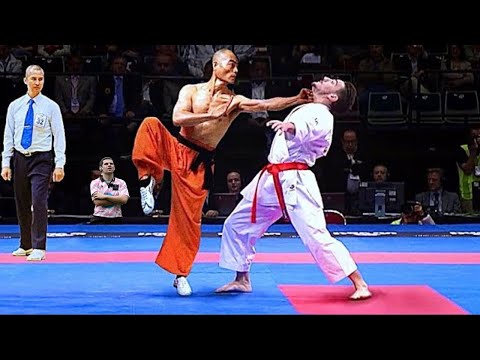
The Unveiled Truth: Kung Fu Master vs. Karate - A Deep Dive into Their Divergent Paths

The arena of martial arts is vast, a sprawling landscape dotted with disciplines, each a testament to centuries of human ingenuity and the relentless pursuit of physical and spiritual mastery. Yet, for the uninitiated, and often even for those who have taken their first steps onto the dojo floor, the lines between these formidable traditions can blur. The terms "Karate" and "Kung Fu," in particular, are frequently tossed about with a casual indifference, perceived by many as interchangeable synonyms for "oriental fighting." This common misconception, however, is a disservice to the profound depth and distinct identities of these two pillars of martial heritage.

Are you, like so many, caught in the labyrinth of this confusion? Do you find yourself unable to discern the subtle, yet fundamental, differences that set these powerful arts apart? Or perhaps you've witnessed the electrifying clash of styles depicted on screen and wondered: what truly separates the precision of Karate from the fluidity of Kung Fu? Prepare yourself, for this is not merely an observation; it is a dissection. We shall peel back the layers of superficial similarity to reveal the heart of each tradition, exploring their origins, their philosophies, and the very essence of their practice.

The Genesis: Where Their Roots Lie

To truly grasp the distinction between Kung Fu and Karate, we must first journey back to their origins. Karate, as we know it today, predominantly hails from the islands of Okinawa, Japan. Its development was a fascinating blend of indigenous fighting methods and influences from Chinese martial arts, brought to Okinawa by traders and scholars. The Okinawan people, under strict prohibition from bearing arms by the Ryukyu Kingdom (and later, Japanese authorities), honed empty-hand combat systems as a means of self-defense. The term "Karate" itself, meaning "empty hand," is a profound reflection of this heritage, emphasizing the practitioner's reliance on their own physical and mental faculties.

Kung Fu, on the other hand, boasts an origin story steeped in the ancient lore of China. Its roots are immeasurably deeper and more diverse, often linked to the legendary Shaolin Temple and the philosophical and religious practices that flourished there. "Kung Fu" (or Gongfu) is not a specific style but a broader term that signifies skill, accomplishment, and the diligent application of effort over time. It encompasses a staggering array of styles – over 300 recognized, with countless variations – each often inspired by animal movements (Tiger, Crane, Monkey, Leopard, Snake) or philosophical concepts. The development of Kung Fu was intrinsically tied to China's rich history, encompassing military training, self-defense, and even theatrical performance.

"The styles of Kung Fu are as numerous as the stars in the sky, each a unique path to mastery." - A saying attributed to various Kung Fu masters.

Philosophical Divergence: The Heartbeat of Each Art

Beyond geography, the philosophical underpinnings of Karate and Kung Fu diverge significantly. Karate, particularly in its Okinawan and Japanese renditions, often emphasizes principles like discipline, respect, and the pursuit of perfection through rigorous repetition. The concepts of Seiken-tsuki (straight punch), Gedan-barai (downward block), and Chudan-uke (middle block) are executed with a linear, powerful intent. The ultimate goal, often encapsulated by the phrase "Karate ni sente nashi" (there is no first attack in Karate), is not aggression but the development of character, self-control, and the ability to defend oneself when necessary, using minimal force.

Kung Fu's philosophy is far more varied, reflecting its multitude of styles. While discipline and respect are universal to all serious martial arts, Kung Fu often incorporates a broader spectrum of philosophical influences, including Taoism, Buddhism, and Confucianism. This can manifest as a greater emphasis on fluidity, adaptability, and the concept of yielding to overcome force – the Taoist principle of 'Wu Wei' (non-action or effortless action) finds echoes in some styles. The goal can range from developing a powerful, efficient fighting system for battlefield survival to achieving a state of spiritual enlightenment through movement and breath control. The essence of Kung Fu lies in its holistic approach, integrating mind, body, and spirit in a manner that is deeply personal to each style and practitioner.

Technique and Form: The Body's Language

Visually, the differences in technique and form are often the most striking. Karate is characterized by its strong, stable stances, linear and direct movements, and powerful, focused strikes. The primary offensive techniques involve punches, kicks, knee strikes, and elbow strikes, often delivered with explosive power from a rooted position. Defensive techniques are predominantly blocks designed to deflect or absorb an opponent's force. The Kihon (basics), Kata (forms), and Kumite (sparring) form the bedrock of Karate training.

Kung Fu, conversely, is renowned for its dynamism, fluidity, and variety. Styles can range from the explosive, acrobatic movements of some Northern Chinese styles, emphasizing long-range techniques and kicks, to the intricate, close-range, and often deceptive techniques of Southern Chinese styles, which might incorporate hand-trapping and powerful short-range strikes. Many Kung Fu styles mimic animal movements, lending them a unique aesthetic and practical application. Forms in Kung Fu can be incredibly complex, incorporating a wide array of hand strikes, kicks, sweeps, throws, joint locks, and pressure point attacks. The concept of circular movements, redirection of force, and the seamless transition between offense and defense is often more pronounced than in Karate.

Consider the iconic "Crane Stance" in some Kung Fu styles, where balance and evasion are paramount, contrasting sharply with the solid, grounded stances of Karate, designed for power generation and stability. This difference is not a matter of superiority but of distinct purpose and philosophy.

Training Methodologies: Forging the Warrior

The training regimens for Karate and Kung Fu, while both demanding, have evolved along different paths. Traditional Karate training involves extensive drilling of Kihon, memorization and practice of Kata, and controlled sparring (Kumite). The emphasis is on perfecting fundamental movements to an extremely high degree, building muscle memory, and developing both physical power and mental fortitude.

Kung Fu training is often as diverse as its styles. While basics, forms (Taolu), and sparring are common, the specific approach varies wildly. Some styles might incorporate extensive conditioning exercises, acrobatic training, weapons training from an early stage, or methods focused on internal energy (Qi or Ki) cultivation, such as Neijiaquan (Internal Boxing) styles like Tai Chi, Bagua, and Xing Yi. The objective is not always solely combat effectiveness but can also include health, longevity, and spiritual development.

"The master's skill is not in the doing, but in the years of dedicated practice that make the doing look effortless." - A common sentiment echoed across martial traditions.

Cultural Footprints: Beyond the Battlefield

Both Karate and Kung Fu have left indelible marks on global culture, particularly through cinema. Bruce Lee, a master of Wing Chun Kung Fu, revolutionized martial arts films and became a global icon. Jackie Chan, known for his comedic timing and intricate stunt work incorporating Kung Fu, brought a different, yet equally impactful, dimension to martial arts cinema. On the other hand, Karate has been famously represented by figures like Chuck Norris and the "Karate Kid" franchise, showcasing its directness and discipline to a worldwide audience.

However, the portrayal in film, while entertaining, often sensationalizes and simplifies these complex arts. It's crucial to remember that the true essence of Karate and Kung Fu lies not in on-screen theatrics but in the lifelong dedication of their practitioners. The real fight, the most significant battle, is always within oneself – the struggle for self-improvement, discipline, and understanding.

Veredict of the Sensei: Recognizing True Mastery

The question is not "Which is better, Kung Fu or Karate?" This is a false dichotomy, akin to asking if a painter's brush is superior to a sculptor's chisel. Both Kung Fu and Karate are complete and profound systems of self-cultivation and self-defense. Their value lies in their distinct approaches, their unique philosophies, and the dedication they demand from their students.

A true master in either discipline embodies humility, unwavering discipline, and profound understanding. You will recognize them not by their flashy techniques, but by their calm demeanor, their respectful interactions, and the quiet confidence that emanates from years of dedicated practice. The ultimate goal of both arts, beyond combat, is the refinement of character.

Rating:

  • Authenticity of Representation: 4/5 Stars (Acknowledging cinema's necessary dramatization)
  • Depth of Philosophy: 5/5 Stars (Both offer immense spiritual and ethical depth)
  • Practical Application: 5/5 Stars (When trained correctly, both are highly effective)

Essential Equipment for Your Training

While the core of martial arts lies within the practitioner, the right equipment can significantly enhance your training experience and safety.

  • For Karate: A high-quality Karate Gi is essential. Look for a durable, double-woven fabric for sparring (kumite) that can withstand impact and frequent washing. A good quality belt is also symbolic and functional.
  • For Kung Fu: Depending on the style, your needs may vary. A comfortable, breathable uniform (often a Kung Fu suit or Gongfu uniform) is standard for many styles. For styles emphasizing kicks and acrobatics, flexible training pants are beneficial. If your style involves weaponry, you'll eventually need specific training implements.
  • General Training: Comfortable athletic shoes for styles that require them, or bare feet for many traditional styles. A clean training mat can be useful for home practice, especially for grappling or ground techniques.

Investing in good quality Karate merchandise or Kung Fu uniforms is a sign of respect for the art and yourself.

Training Guide: Developing Foundational Principles

Whether you choose Karate or Kung Fu, the path to mastery begins with fundamental principles. Here’s a guide to developing these basics, applicable to both paths:

  1. Master the Stance: For Karate, focus on stable, grounded stances like the Kiba-dachi (horse stance) or Zenkutsu-dachi (front stance). For Kung Fu, experiment with the wide variety of stances, understanding how each serves a specific purpose in balance and power generation.
  2. Practice Basic Strikes: Execute punches (e.g., Seiken-tsuki in Karate) and blocks with precision and power. In Kung Fu, explore various hand strikes, understanding their trajectory and application.
  3. Develop Footwork: Essential for both. Learn to move efficiently, maintaining balance and readiness. Practice stepping, sliding, and pivoting techniques.
  4. Incorporate Forms (Kata/Taolu): These choreographed sequences are the blueprints of your art. Practice them diligently, focusing on correct technique, flow, and intent.
  5. Sparring (Kumite/Sanshou): Engage in controlled sparring sessions to apply techniques against a live opponent. Focus on timing, distance, and strategy. For Kung Fu, this might include Sanshou or MMA training depending on the style's lineage.
  6. Build Conditioning: Implement a consistent fitness regimen including strength training, cardiovascular exercises, and flexibility work. This is crucial for strength and endurance.

Frequently Asked Questions

  • Is Kung Fu harder than Karate? Both arts require immense dedication and discipline. Kung Fu's diversity means some styles might be physically demanding, while others focus more on internal cultivation. Karate is known for its rigorous basic training.
  • Can I learn Kung Fu or Karate online? While online resources can supplement learning, they cannot replace the vital in-person instruction from a qualified Sensei or Sifu. Hands-on correction is crucial for proper technique and safety.
  • Which style is better for self-defense? Both are effective. The best art for self-defense is the one you train consistently and with dedication under qualified instruction.
  • Does Kung Fu have forms like Karate's Kata? Yes, Kung Fu has forms, known as Taolu (套路). These vary greatly in complexity and number depending on the specific Kung Fu style.

To Dive Deeper into Your Journey

Ultimately, the distinction between Kung Fu and Karate is a rich tapestry of history, philosophy, and physical expression. Understanding these differences not only deepens our appreciation for each art but also illuminates the universal quest for self-mastery that lies at the heart of all true martial traditions.

Reflexión del Sensei: Tu Próximo Paso

The cinematic portrayals of Kung Fu Masters and Karate practitioners often fuel the imagination, leading to the misconception that these arts are mere fighting styles. But are they? Or is the true battle fought not against an opponent, but against the limitations of one's own mind and body? Consider this: if the ultimate goal of these arts is to cultivate character and achieve inner peace, how does your daily training – the sweat, the repetition, the discipline – truly reflect this higher purpose? Are you merely practicing movements, or are you forging a better version of yourself with every strike and every stance?

``` ``` GEMINI_METADESC: Uncover the profound differences between Kung Fu and Karate. Explore origins, philosophies, techniques, and training to understand these iconic martial arts like never before.

Monarchy of Kung Fu: A Masterclass in Cinematic Martial Arts

As a seasoned martial artist and film critic, I've seen countless films attempt to capture the essence of the martial path. Many fall short, presenting mere choreography devoid of spirit. Others, however, rise above, becoming not just entertainment, but lessons in themselves. "Monarchy of Kung Fu" falls into the latter category, a film that, despite its perhaps overly enthusiastic YouTube title, offers a compelling and authentic portrayal of Chinese martial arts cinema.
This isn't just a collection of punches and kicks; it's a narrative woven with the threads of tradition, discipline, and the unyielding spirit that defines true Budo. Many viewers, drawn by the promise of explosive action, might overlook the deeper currents at play. My aim today is to dissect "Monarchy of Kung Fu" from the perspective of a martial artist, examining its technical prowess, philosophical underpinnings, and its place within the broader landscape of martial arts films.

Introduction: More Than Just a Movie

In the annals of martial arts cinema, certain films stand out not just for their action, but for their ability to encapsulate the very spirit of the disciplines they portray. "Monarchy of Kung Fu," while perhaps not a household name globally, is a gem that deserves a closer look, especially for those who practice or deeply respect the martial arts. The common intention of a viewer seeking out such a film is often to witness spectacular combat, but I believe the deeper desire is to connect with the principles that drive the martial artist – discipline, resilience, and the pursuit of self-mastery. This film, in its own way, offers a potent blend of all these elements.

Cinematic Kung Fu: Between Myth and Reality

The depiction of martial arts in film is a delicate dance between artistic license and authentic representation. "Monarchy of Kung Fu" navigates this space with considerable skill. Unlike many over-the-top productions that rely on wire-fu for impossible feats, this film, to a degree, grounds its action in recognizable techniques. This is crucial for us, the practitioners, who can appreciate the effort to translate the dynamism of a real confrontation onto the silver screen. The sheer visual spectacle of Kung Fu movies has always been a powerful draw. From the legendary Shaw Brothers studios to the global phenomenon of Bruce Lee, Chinese action cinema has a rich history of showcasing breathtaking combat. "Monarchy of Kung Fu" taps into this legacy, presenting a narrative that often explores themes of honor, betrayal, and the struggle for power, all of which are classic tropes in Wuxia and Kung Fu films.
"The martial way is a path of constant learning and adaptation. A true warrior never stops seeking knowledge, whether from ancient scrolls or the heat of battle."
This quote, while not from a specific character in the film, embodies the spirit that "Monarchy of Kung Fu" strives to convey. It’s about continuous improvement and understanding the deeper meaning behind the physical techniques.

The Art of the Fight: Choreography and Technique

When analyzing any martial arts film, the choreography is paramount. In "Monarchy of Kung Fu," the fight sequences demonstrate a clear understanding of traditional Kung Fu forms. We see movements that are fluid, powerful, and, importantly, appear to have practical application, even if stylized for cinematic effect. The use of various Kung Fu styles, from striking techniques reminiscent of Wing Chun to more dynamic, acrobatic movements, showcases the versatility of the art. What sets apart a good martial arts film from a mediocre one is the attention to detail. Does the choreography reflect the practitioner's stance? Are the transitions between offensive and defensive maneuvers logical? Does the tempo of the fight reflect the stakes involved? In "Monarchy of Kung Fu," these questions are, for the most part, answered affirmatively. The fighters exhibit proper footwork, controlled breathing, and a sense of economy in their movements, indicating that the performers and choreographers likely had a solid grounding in martial arts. It’s a common misconception that all movie fights are purely for show. While some elements are undoubtedly exaggerated for dramatic impact, the best films incorporate genuine martial principles. The power generation, the targeting, the defensive reflexes – these are often rooted in reality. Watching these sequences can offer insights into the application of techniques, even if we must always temper our expectations with the understanding that it is, after all, a film.

Philosophical Underpinnings: The Spirit of Budo

Beyond the physical execution, the true heart of martial arts lies in its philosophy. The term "Budo" itself, often translated as "the martial way," encompasses a holistic approach to training that extends far beyond mere combat. It involves discipline, self-control, respect, and a constant striving for perfection – not just of technique, but of character. "Monarchy of Kung Fu" weaves these philosophical elements into its narrative. We see characters grapple with moral dilemmas, learn from their mistakes, and demonstrate unwavering perseverance in the face of adversity. The protagonist's journey often involves not only mastering their physical skills but also overcoming internal struggles – doubt, fear, and ego. This internal battle is often more significant than any external conflict.
"The ultimate aim of martial arts is not victory or defeat, but the perfection of the human character." - A core tenet of many traditional martial philosophies.
The film encourages contemplation on the true meaning of strength. Is it brute force, or is it the inner resolve that allows one to stand firm against overwhelming odds? This introspective aspect elevates "Monarchy of Kung Fu" from a simple action flick to a work that can resonate deeply with those on their own martial arts journey. It’s a reminder that the physical training is a vehicle for something much greater.

Comparative Analysis: "Monarchy of Kung Fu" vs. Modern MMA

The rise of Mixed Martial Arts (MMA) has brought a new wave of combat sports into the global spotlight. Fighters like Jon Jones and Cyril Gane showcase a blend of striking and grappling that is incredibly effective in competition. However, comparing "Monarchy of Kung Fu" to a modern MMA bout highlights the distinct purposes and philosophies of each. While MMA prioritizes efficiency and effectiveness in a competitive, rule-bound environment, traditional Kung Fu, as depicted in this film, often emphasizes form, strategy, and a broader spectrum of self-defense applications. The stylization in "Monarchy of Kung Fu," though sometimes exaggerated, speaks to a tradition that predates modern sport combat. It's about more than just winning a fight; it's about embodying a way of life. | Feature | Monarchy of Kung Fu (Cinematic Kung Fu) | Modern MMA (e.g., UFC) | | :--------------- | :--------------------------------------------- | :------------------------------------------------ | | **Objective** | Narrative, tradition, character development | Competition, skill demonstration, sport | | **Technique Focus** | Diverse styles, forms, weapon integration | Clinically effective striking and grappling | | **Ruleset** | Cinematic freedom, dramatic license | Defined rules, weight classes, rounds | | **Philosophy** | Budo, self-perfection, discipline | Athleticism, strategy, dominance within sport | | **Visuals** | Stylized, fluid, often acrobatic | Raw, explosive, functional | This table illustrates that while both involve physical confrontation, their contexts and aims differ significantly. "Monarchy of Kung Fu" serves as a window into a rich cultural heritage, while MMA represents the cutting edge of combat sports science.

Veredicto del Sensei: A Timeless Lesson in Martial Arts Cinema

"Monarchy of Kung Fu" is more than just a martial arts film; it’s a testament to the enduring power of Kung Fu on screen. While the YouTube title might lean towards hyperbole, the content delivers a solid dose of authentic-feeling choreography and a narrative that respects the discipline. It successfully bridges the gap between thrilling action and the profound philosophical tenets of Budo. For practitioners of martial arts, it offers not just entertainment, but a visual meditation on the principles we strive to embody. **Cinturón Negro en Autenticidad Cinematográfica.**

Essential Gear for Your Training

While "Monarchy of Kung Fu" showcases the power of the human body, proper equipment is vital for safe and effective training in any martial art. Investing in the right gear not only protects you but also enhances your performance and signifies your commitment to your path.
  • Durable Uniform (Gi/Kimono): For styles like Judo or Kyokushin Karate, a strong, double-weave uniform is essential for grappling and striking drills. Look for high-quality cotton that can withstand rigorous training.
  • Training Sparring Gear: This includes padded gloves (e.g., 16oz for Muay Thai or kickboxing), headgear, shin guards, and groin protection. Essential for safely practicing combat techniques.
  • Training Weapons: If your art incorporates them (e.g., Bo staff, Escrima sticks), invest in safe, durable training versions.
  • Focus Mitts and Pads: Crucial for trainers to develop striking accuracy and power with their students.
  • Fitness Equipment: Resistance bands, jump ropes, and even a simple mat can greatly enhance your conditioning and flexibility training at home.
For those looking to purchase, exploring options like "high-quality Judo kimonos" or "MMA sparring gloves" can lead you to reliable brands that support your training journey.

Training Guide: Cultivating Inner Strength

True martial power isn't just physical; it's deeply rooted in mental fortitude and inner peace. This exercise, inspired by the contemplative aspects of Budo and Eastern philosophies, aims to cultivate focus and resilience.
  1. Find a Quiet Space: Choose a location free from distractions where you can sit undisturbed for at least 10-15 minutes.
  2. Adopt a Stable Posture: Sit in a comfortable cross-legged position (Seiza or Sukhasana) or on a chair, ensuring your spine is erect but not rigid. Your hands can rest gently on your lap or knees.
  3. Focus on Your Breath: Close your eyes gently. Begin to observe your natural breath without trying to alter it. Feel the air entering and leaving your body.
  4. Mindful Observation: As thoughts arise (and they will), acknowledge them without judgment. Imagine them as clouds drifting across the sky. Gently redirect your attention back to your breath.
  5. Deepen the Practice: Gradually increase the duration of your meditation. Aim to extend the period of focused awareness.
  6. Integrate into Training: Before and after each training session, take a moment to center yourself. Use this practice to cultivate the calm focus seen in the masters of martial arts cinema.
This practice, often referred to as Zazen in Zen Buddhism, is a cornerstone for developing the mental game required for high-level martial arts.

Frequently Asked Questions

What are the key differences between cinematic Kung Fu and real-life combat?

Cinematic Kung Fu prioritizes visual spectacle, dramatic storytelling, and often employs exaggerated techniques or physics-defying stunts for entertainment. Real-life combat emphasizes efficiency, practicality, and adherence to the laws of physics, with less room for stylistic flourish.

Is "Monarchy of Kung Fu" suitable for beginners in martial arts?

Yes, as an introduction to the aesthetics and spirit of Kung Fu cinema, it is suitable. However, for learning actual techniques, it's best to supplement film viewing with instruction from a qualified martial arts instructor.

Does the film teach specific martial arts techniques?

While the film showcases various Kung Fu movements, it is not a technical instructional video. Its value lies in demonstrating the *spirit* and *style* of Kung Fu, rather than providing a step-by-step guide to executing specific moves safely and effectively.

How does the philosophy presented in the film relate to modern self-improvement?

The film's emphasis on discipline, perseverance, character development, and overcoming internal obstacles are timeless principles directly applicable to modern self-improvement goals, whether in martial arts, career, or personal life.

To Deepen Your Path

To truly understand the depths of the martial world, continuous learning is key. Here are some resources to expand your knowledge beyond the screen:

Reflexión del Sensei: Tu Próximo Paso

The world of martial arts is vast, and films like "Monarchy of Kung Fu" offer but a glimpse into its rich tapestry. The true journey begins when you step onto the mat, embrace the discipline, and face the challenges – both physical and mental – that lie before you. My question to you is this: Does the spectacle of cinematic combat inspire you to seek the truth of the martial way, or does it merely serve as an ephemeral distraction from the rigorous, yet rewarding, path of true practice? Your honest answer, reflected in your actions, will reveal your commitment. ``` GEMINI_METADESC: Analyze "Monarchy of Kung Fu" from a martial artist's perspective, exploring its choreography, philosophy, and impact. A deep dive into Budo and cinematic combat.

Kung Fu vs. Karate: The Ultimate Showdown for Street Survival

Introduction: The Streets Are Calling

The clamor of urban life can sometimes escalate into dangerous confrontations. With reports of gang activity on the rise in major cities, the question of self-defense becomes not just relevant, but critical. Are you prepared to defend yourself, not just against a single aggressor, but against multiple attackers? It’s a grim thought, but one that every practitioner of the martial arts must confront. Many turn to the ancient disciplines for answers, and two names frequently surface in these discussions: Kung Fu and Karate. Though often used interchangeably by the uninitiated, these are distinct martial arts with different philosophies and methodologies. Today, we delve deep into a comparison: Kung Fu vs. Karate. Which one truly earns the title of "Gang Destroyer"? Welcome to Budo and Martial Arts, your definitive source for martial arts wisdom.

Historical Roots: Where Did They Come From?

To understand which art might be superior for street survival, we must first understand their origins. This isn't just about dusty scrolls and ancient masters; it's about the environmental pressures that shaped their techniques. * **Kung Fu (Gong Fu):** This is not a single style but an umbrella term encompassing hundreds of Chinese martial arts. Its roots stretch back millennia, evolving from battlefield techniques, animalistic movements, and philosophical influences like Taoism and Buddhism. Styles like Shaolin Kung Fu, Wing Chun, and Tai Chi Chuan represent just a fraction of this vast family. The emphasis has always been on practicality, adaptability, and often, the integration of mind, body, and spirit. * **Karate:** Originating from the Ryukyu Islands (modern-day Okinawa), Karate developed from indigenous fighting methods combined with influences from Southern Chinese martial arts (which likely contributed to its name, meaning "Empty Hand"). Unlike the diverse forms of Kung Fu, Karate is more codified into distinct styles like Shotokan, Goju-ryu, and Wado-ryu. Its development was significantly influenced by a desire for effective self-defense under restrictive historical conditions, leading to a focus on direct, powerful techniques and efficient movement.
"The master does not teach the way of his art, but teaches the spirit of his art." - Unknown Karate Master

Kung Fu Philosophy and Techniques: The Art of Adaptability

Kung Fu is a tapestry woven with diverse threads. This inherent diversity is, perhaps, its greatest strength when considering real-world conflict. * **Philosophy:** Kung Fu emphasizes fluidity, adaptability, and utilizing an opponent's force against them. Many styles draw inspiration from nature – the strength of the tiger, the grace of the crane, the evasiveness of the snake. There's often a focus on long-term development, cultivating inner strength (Qi) and a deep understanding of movement. The concept of "Yin and Yang" is often prevalent, advocating for the balance of hard and soft techniques. * **Techniques:** The range of techniques in Kung Fu is staggering. You'll find powerful, direct strikes similar to Karate, but also: * **Elusive footwork and evasive maneuvers:** Essential for dealing with multiple opponents. * **Close-range trapping and joint manipulation:** Useful when distance is closed. * **Leverage-based throws and sweeps:** Employing an attacker's momentum. * **A variety of weapon training:** Though less relevant for an unarmed street fight, it speaks to the art’s comprehensive nature. * **Emphasis on continuous movement and flow:** Less about static stances, more about transitioning seamlessly between offense and defense. When facing multiple assailants, the Kung Fu practitioner's ability to adapt, evade, and control distance becomes paramount. The principle of "using many to defeat one, and one to defeat many" is often central.

Karate Philosophy and Techniques: The Way of the Empty Hand

Karate, while seemingly more uniform than Kung Fu, possesses a potent simplicity and directness that has made it a globally recognized self-defense art. * **Philosophy:** Karate, translated as "Empty Hand," signifies proficiency without the use of weapons. Its core tenets revolve around discipline, respect, perseverance, and self-control. The term "Budo" is deeply ingrained, emphasizing the martial way as a path to personal development. The ideal is to achieve a state of "Mushin" (no mind) – a state of intuitive action free from fear or hesitation. * **Techniques:** Karate is renowned for its: * **Powerful linear strikes:** Direct punches (Tsuki), kicks (Keri), and elbow/knee strikes (Empi/Hiza) delivered with focused intent and full body power. * **Strong stances and rootedness:** Providing stability and a solid base for explosive movements. * **Emphasis on precision and timing:** Delivering decisive blows to vital targets. * **Blocking and counter-attacking:** Often in a simultaneous or near-simultaneous fashion. * **Kata:** Prearranged forms that train fundamental techniques, transitions, and strategic thinking. While Karate's focus on powerful, single strikes might seem less suited for overwhelming numbers, its emphasis on efficient power generation and decisive action can be highly effective. A single well-placed, high-power strike can neutralize a threat quickly, buying precious time.
"The ultimate aim of Karate is not to be defeated." - Gichin Funakoshi

The Street Fight Scenario: Multiple Attackers and Unpredictability

Let's be brutally honest. A street fight is rarely a fair one-on-one duel. It's chaos, desperation, and survival. When we talk about multiple attackers, the dynamics shift dramatically: * **Angles of Attack:** You're not just facing one direction; threats can come from anywhere. * **Overwhelm:** The sheer number can be psychologically and physically debilitating. * **Environmental Factors:** Uneven ground, poor lighting, obstacles – the street is not a dojo. * **Lethal Intent:** Unlike sport combat, street violence often carries a higher risk of lethal weaponry and intent. In such a scenario, a practitioner needs more than just strong techniques. They need: * **Situational Awareness:** To detect and avoid conflict before it starts. * **Evasion and Mobility:** The ability to move, disengage, and control the space. * **Efficient Power Generation:** To incapacitate threats quickly. * **Mental Fortitude:** To overcome fear and react instinctively.

Analysis of Effectiveness: Kung Fu vs. Karate

Now, let's dissect how each art might fare in this brutal arena. | Feature | Kung Fu (General Strengths) | Karate (General Strengths) | Street Fight Advantage | | :-------------------- | :----------------------------------------------------------- | :----------------------------------------------------------- | :------------------------------------------------------------------------------------------------------------------------------------------------------------------------------------------------------------------------------------------------------------ | | **Adaptability** | High. Diverse styles offer varied approaches. | Moderate. Styles are more codified but highly refined. | **Kung Fu**. Its varied techniques (trapping, joint locks, evasive movement) offer more tools for unpredictable situations. | | **Mobility/Evasion** | Often emphasizes fluid footwork and evasive maneuvers. | Stances can be rooted; mobility is present but often direct. | **Kung Fu**. Its emphasis on flow and evasion is crucial for managing multiple attackers and maintaining distance or closing it strategically. | | **Power Generation** | Can be powerful, often drawing on Qi and body mechanics. | Highly developed, focused on linear, explosive power. | **Karate**. For neutralizing a single immediate threat decisively with a single blow, Karate's direct power is formidable. However, for sustained engagement with multiple foes, Kung Fu's ability to redirect and flow might be more sustainable. | | **Close-Quarters Combat** | Many styles excel in close-range techniques (trapping). | Less emphasis on grappling/trapping, more on striking. | **Kung Fu**. Its repertoire of close-range techniques can be invaluable when an attacker closes the distance. | | **Simplicity/Directness** | Varies greatly by style. | High. Focus on direct, effective techniques. | **Karate**. Simplicity can be an advantage under extreme stress; fewer complex movements to recall. However, a lack of variety could be a disadvantage against adaptive opponents. | | **Defensive Strategy**| Often involves redirection, evasion, and counter-attacks. | Focus on blocking, parrying, and immediate counter-strikes. | **Kung Fu**. Its ability to redirect and flow with attacks can be more effective against the chaos of multiple attackers, preventing one from being overwhelmed by a single defensive block that fails. | | **Mental Discipline** | Strong emphasis across most styles (e.g., Shaolin Zen). | Core principle ("The Way"). Highly developed. | **Even**. Both arts cultivate significant mental fortitude. This is less about the art and more about the practitioner's dedication. |

Veredict of the Sensei: Which Art Prevails?

This is where the debate truly ignites, and the answer is rarely simple. If we're forced to choose which art, *in its generalized form*, offers a more comprehensive toolkit for the chaotic, multi-attacker scenario of street fighting, the edge leans towards **Kung Fu**. Why? Because the sheer diversity and adaptability inherent in the broad term "Kung Fu" provide a wider array of strategies. The ability to flow, evade, redirect, trap, and strike from various ranges makes it incredibly versatile. Many Kung Fu styles were developed with practical self-defense in mind, often under conditions where survival was paramount. However, this is a generalization. A highly skilled Karateka, trained in a self-defense-oriented style and emphasizing practical application over sport, can be exceptionally dangerous. The power and decisiveness of Karate strikes are undeniable. A well-executed punch or kick from a Karate master can end a confrontation instantly, which is a significant advantage when outnumbered. The true determinant is never just the style, but the **practitioner**. A lazy Kung Fu student is useless. A purely sport-focused Karateka might struggle. The **quality of instruction**, the **dedication of the student**, and the **emphasis on realistic application** are far more crucial than the label on the gi. Cinturón Negro en Adaptabilidad: Kung Fu (con la advertencia de su vasta diversidad) Cinturón Negro en Potencia Decisiva: Karate (cuando la aplicación es realista)

Training Guide: Essential Drills for Both Styles

Regardless of your chosen path, dedicated training is key. Here are fundamental drills that benefit practitioners of both Kung Fu and Karate, focusing on street survival principles.
  1. Drill: The One-Minute Drill (Focus: Stamina & Reaction)
    • Set a timer for 1 minute.
    • Practice your basic offensive and defensive movements continuously.
    • For Kung Fu: Focus on fluid transitions, evasive footwork, and varied strikes.
    • For Karate: Focus on powerful stances, rapid punches, blocks, and kicks.
    • Rest for 30 seconds, repeat for 5-10 rounds.
  2. Drill: Multiple Attacker Simulation (Focus: Awareness & Movement)
    • Have training partners (or imagine them) attacking from different angles.
    • The goal is NOT to fight them all, but to move, evade, and create space.
    • Use defensive blocks or minimal strikes only to create openings to escape.
    • Practice identifying threats and reacting with efficient movement.
  3. Drill: Power Strike Application (Focus: Precision & Impact)
    • Using a heavy bag or makiwara: Practice delivering your most powerful strikes (e.g., Karate's reverse punch, Kung Fu's straight fist) with full commitment.
    • Focus on proper body mechanics, hip rotation, and follow-through.
    • Aim for controlled power, not wild flailing.
  4. Drill: Close-Range Control (Focus: Trapping & Short Strikes)
    • Practice controlling an opponent's arms and body in very close range.
    • For Kung Fu: Work on limb control, short-range strikes (e.g., Wing Chun's pak sao, tan sao), and elbow/knee strikes.
    • For Karate: Focus on effective blocks that transition into close-range strikes and clinching if necessary.

Essential Gear for Your Training

While many martial arts can be practiced with minimal equipment, certain items can significantly enhance your training, safety, and understanding.
  • Uniform (Gi/Dobok/Kung Fu Outfit): A comfortable and durable uniform allows for a full range of motion and is traditional. For Karate, a heavy-duty Karate gi is recommended for durability during drills. For Kung Fu, a breathable outfit designed for flexibility is ideal.
  • Training Pads/Mitts: Essential for practicing strikes with a partner and developing power and accuracy. Focus mitts are excellent for speed and reaction drills, while kickboxing-style pads are great for power kicks and punches.
  • Protective Gear: If sparring, headgear, mouthguards, and groin protection are non-negotiable for safety.
  • Heavy Bag/Makiwara: Crucial for developing punching power, conditioning your hands (with a makiwara, used cautiously and with proper technique!), and improving stamina.
  • Floor Mats: For arts that involve throws or groundwork, mats are essential for safety and comfort.

Frequently Asked Questions

Q1: Is Kung Fu or Karate more effective for self-defense?
A: Both can be highly effective. Kung Fu's adaptability and variety of techniques might offer an edge in chaotic, multi-attacker situations, while Karate's direct power and efficiency can neutralize threats decisively. The effectiveness largely depends on the practitioner and the training.

Q2: Can Karate be used against multiple attackers?
A: Yes, with the right mindset and training. While Karate's strengths lie in one-on-one encounters, its emphasis on speed, power, and decisive action, combined with defensive principles, can be applied. However, practitioners must train specifically for such scenarios, focusing on evasion and creating opportunities to disengage.

Q3: Is Kung Fu too complex for beginners to learn for self-defense?
A: Kung Fu encompasses many styles, some of which are indeed complex. However, many beginner-friendly styles focus on practical self-defense principles from the outset. Finding a reputable instructor is key.

Q4: Should I focus on striking or grappling for street fighting?
A: For street survival, a well-rounded approach is best. While striking arts like Karate and many Kung Fu styles provide excellent tools, understanding basic grappling and Judo principles (like throws and control) can be invaluable if the fight goes to the ground or involves clinching.

Further Learning on Your Journey

To continue your exploration into the depths of martial arts and combat, I recommend these resources:

Sensei's Reflection: Your Next Step

We’ve dissected Kung Fu and Karate, examining their philosophies, techniques, and potential effectiveness in the unforgiving arena of street combat. The martial path is not about finding a single "best" style, but about forging oneself through diligent practice, understanding, and unwavering spirit. Kung Fu offers a vast ocean of adaptability, while Karate provides the sharp edge of decisive action. Both demand discipline, respect, and a commitment to continuous improvement. Now, I pose this question to you, the warrior spirit reading these words: **Which principles from these arts resonate most with your own approach to self-mastery, and how will you integrate them not just into your physical training, but into the challenges you face daily?** The streets may be unpredictable, but your preparation, your mindset, and your dedication are within your control. Prove your understanding. --- GEMINI_METADESC: Compare Kung Fu vs. Karate for street fighting. Discover which martial art offers superior adaptability and power for survival against multiple attackers.