Showing posts sorted by relevance for query Budo philosophy adaptability. Sort by date Show all posts

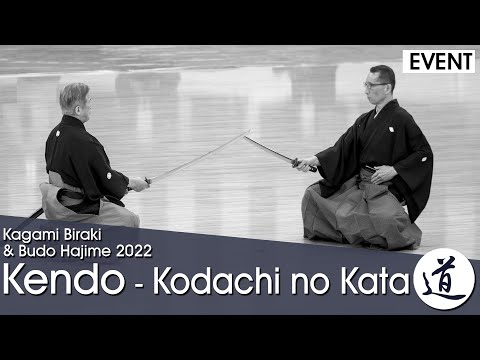
Kendo's Hidden Sword: Unveiling the Kodachi no Kata's Secrets at Kagami Biraki

The path of Budo is a journey of constant refinement, a relentless pursuit of perfection etched into the very soul of the practitioner. Yet, how often do we truly delve beyond the familiar, the obvious, to unearth the profound nuances that lie dormant within the established forms? Today, we confront a demonstration that offers precisely this opportunity: the Kodachi no Kata presented at the 2022 Kagami Biraki and Budo Hajime. While the grandeur of the event at the Nippon Budokan is undeniable, the true essence lies not just in the spectacle, but in the philosophical underpinnings and the practical application of these ancient sword techniques. Are you prepared to look beyond the shine of the steel and understand the warrior's intent?

Table of Contents

The Legacy of Kagami Biraki: More Than Just a Ceremony

The Kagami Biraki, a ceremony whose name translates literally to "opening the mirror," is steeped in tradition, its origins tracing back to the Shogunate era. This is no mere historical reenactment; it is a living testament to the enduring spirit of Budo. When held at the revered Nippon Budokan in early January, it signifies more than the start of a new calendar year. It marks the Budo Hajime, the inaugural practice of the year, a symbolic cleansing and recommitment to the path of martial discipline.

The event itself is a multi-faceted affair:

  • Kagami Biraki: A historical reconstruction, often performed in full armor, bringing the past to life.
  • Budo Demonstrations: Showcasing the prowess and intricacies of the "nine official Budo," a curated selection of Japan's most respected martial disciplines.
  • Budo Hajime: The collective first practice of the year, where all attendees are invited to partake, fostering a sense of unity and shared endeavor.
  • Oshiruko kai: A traditional post-ceremony gathering, involving a sweet azuki bean soup with mochi. This symbolizes the sharing and breaking of the mochi used earlier in the ceremony.

It's noteworthy that, due to the exigencies of global health concerns, the Oshiruko kai was suspended. This highlights a crucial aspect of martial arts philosophy: adaptability. Even in tradition, there must be a pragmatic response to changing circumstances. However, the core demonstrations and the spirit of Budo Hajime endure, reminding us that the mirror we open reflects not just the past, but our commitment to the future of martial practice.

Deconstructing Kodachi no Kata: The Dual Sword Dance

The true subject of our focus today is the Kodachi no Kata, a two-person kata featuring a long sword (Tachi) against a short sword (Kodachi). In a world increasingly dominated by the straightforwardness of single-weapon combat or the brutal efficiency of modern combat sports like MMA, the concept of two distinct sword lengths being utilized against each other might seem archaic. Yet, this kata is a masterclass in strategy, timing, and understanding the inherent advantages and disadvantages of each weapon.

The dynamic of Tachi versus Kodachi is not merely about reach. It's a sophisticated interplay of:

  • Distance Management: The Kodachi user must close the distance to negate the reach of the Tachi, while the Tachi user must maintain distance to exploit their advantage.
  • Rhythm and Timing: A single mistimed movement, a hesitation, can be fatal. The kata teaches the practitioner to read their opponent's rhythm and strike at the opportune moment.
  • Adaptability: The Kodachi fighter must be agile and precise, often employing evasive maneuvers and rapid counter-attacks. The Tachi fighter needs power, control, and the ability to anticipate and block.

This isn't a simple exchange of blows; it's a complex dance of strategy and execution. The Kodachi no Kata forces a deeper consideration of weapon dynamics than many modern combat scenarios, demanding a level of nuanced understanding that is often overlooked.

"Every technique, every movement, should be a deliberate act, born from a clear mind and an unwavering spirit. Hesitation is the precursor to defeat."

Masters of the Blade: Toyomura Azumori & Kurita Waichiro

The skill displayed in the demonstration is amplified by the credentials of its performers. Toyomura Azumori, Hanshi 8th Dan, and Kurita Waichiro, also Hanshi 8th Dan, are not merely practitioners; they are custodians of Kendo's legacy. Their mastery of the blade, particularly in the intricate Kodachi no Kata, is a testament to decades of dedicated Martial Arts Training and a deep understanding of BUDO principles.

To witness a Hanshi 8th Dan perform is to see Budo in its purest form. Their movements are not just technically perfect; they are imbued with a spirit, a presence that transcends mere physical action. This is where the true depth of the Kendo art form is revealed. It’s about the Ki, the life force, channeled through the sword and directed with intention.

Budo Hajime: Forging the New Year's Spirit

The Budo Hajime, as part of the Kagami Biraki, is a crucial ritual. It’s an opportunity to shed the inertia of the year's end and embrace the fresh start with invigorated purpose. For practitioners of any artes marciales, the first practice of the year sets the tone. It’s a chance to recommit to:

  • Discipline: Reaffirming the commitment to regular training and self-control.
  • Focus: Sharpening the mind and preparing for the challenges ahead.
  • Community: Connecting with fellow practitioners and reinforcing the bonds of the Martial Arts Community.

The participation of all present in the Budo Hajime emphasizes that Budo is a shared path, not an individual pursuit. It fosters a sense of collective growth and mutual respect, essential components of any true Warrior Philosophy.

Symbolism and Philosophy: The Mirror and the Sword

The "opening of the mirror" is a powerful metaphor. The mirror, in many cultures, represents truth, self-reflection, and clarity. By opening it, we symbolically invite introspection and honest appraisal of our progress. In the context of Budo, this means critically examining our techniques, our mindset, and our adherence to the principles of the art.

The Kodachi no Kata itself adds layers to this symbolism. The contrast between the long and short sword can represent:

  • Opposing Forces: Yin and Yang, aggression and defense, offense and counter-offense.
  • Adaptability: The ability to transition between different strategies based on the opponent and the situation.
  • Inner Conflict: The internal struggle to balance different aspects of one's character or approach to conflict.

This kata, therefore, is not just a physical exercise; it's a philosophical dialogue conducted through movement and steel. It challenges the practitioner to find harmony within apparent opposition, a core tenet of many martial traditions.

Practical Application: Beyond the Dojo's Walls

While Kendo is a sport and an art form with its own specific rules and contexts, the principles embedded within the Kodachi no Kata hold relevance far beyond the practice of swordsmanship. Consider the world of Combat Sports or even Self Defense scenarios.

The ability to manage distance, to exploit an opponent's reach disadvantage, to time attacks with split-second precision, and to adapt one’s strategy on the fly are universally applicable skills. Even in non-physical confrontations, such as business negotiations or interpersonal conflicts, the underlying principles of reading the situation, managing emotional distance, and timing your response are critical for success.

The Kodachi no Kata, in its intricate portrayal of weapon dynamics, serves as a microcosm for strategic thinking in any competitive or challenging environment. It teaches us to be aware of not just our own strengths, but also the strengths and weaknesses of our perceived opposition, and how to leverage these factors to our advantage.

Equipment Essential for Your Training

To truly appreciate and engage with disciplines like Kendo, proper equipment is paramount. It not only ensures safety but also facilitates correct technique and immersion into the art.

  • Kendo Shinai: The bamboo sword used for practice. Essential for learning striking techniques and timing. Look for well-balanced shinai, suitable for your level. For Kodachi practice, specific smaller shinai might be used to simulate the short sword.
  • Kendo Bogu (Armor): This protective gear includes the men (helmet), kote (gloves), do (chest protector), and tare (hip protector). It is crucial for safe sparring and full-contact practice.
  • Kendo Gi and Hakama: Traditional martial arts attire providing freedom of movement and embodying the aesthetic of Budo. A sturdy, double-weave Karate gi can also serve for general martial arts conditioning and even some forms of unarmed combat training if a dedicated gi isn't available.
  • Kendo Tenugui: A towel worn under the men to absorb sweat and provide a cushion.

Investing in quality Martial Arts Merchandise is not an extravagance; it is a commitment to your training and safety. For those interested in exploring sword arts beyond Kendo, books on historical swordsmanship or even high-quality bokken (wooden swords) for unarmored kata practice can be invaluable.

Veredict of the Sensei: A Testament to Depth

The Kagami Biraki demonstration of the Kodachi no Kata, performed by Toyomura Azumori and Kurita Waichiro, is a powerful reminder that martial arts are living traditions, rich with layers of meaning and application. It is not merely about executing movements; it is about embodying principles.

This demonstration, though specific to Kendo, offers profound lessons for practitioners of all disciplines, from Judo and Aikido to Karate Kyokushin and MMA. The understanding of weapon dynamics, distance, timing, and adaptability showcased here is timeless.

Rating: 5 out of 5 Katanas. A must-watch for anyone seeking to understand the deeper currents of Budo.

Frequently Asked Questions

What is the main difference between Tachi and Kodachi in Kendo?
The Tachi is the longer, standard length sword, offering greater reach and power. The Kodachi is a shorter sword, designed for closer combat, rapid strikes, and defensive maneuvers when space is limited.
Is Kodachi no Kata a form of self-defense?
While originating from samurai combat, the Kodachi no Kata is a pre-arranged sequence (kata) designed for training specific principles and techniques. Its underlying principles of timing, distance, and adaptation are highly relevant to self-defense.
What does "Hanshi 8th Dan" signify?
Hanshi is an honorific title awarded to highly skilled and experienced martial artists, typically 8th Dan or higher. It signifies a master level, acknowledging not just technical proficiency but also deep understanding and contribution to the art.
Can I practice Kodachi without a formal Kendo dojo?
Practicing the kata's movements can be done with practice swords (shinai or bokken). However, for safety and correct instruction, learning from a qualified Kendo instructor is highly recommended, especially when incorporating armor and full-speed drills.

Deepen Your Path

The journey into the heart of martial arts is a lifelong endeavor. The Kodachi no Kata demonstration is but one facet of this vast world. To continue your exploration and refine your understanding, consider delving into these related topics:

Reflexión del Sensei: Tu Próximo Paso

You have witnessed a demonstration of profound skill and ancient wisdom. Now, the mirror is open. Does the clash of the long sword against the short sword echo a conflict within your own training? Are you too focused on one aspect, neglecting the complementary strengths that could make you a more complete warrior? Or do you, like the Kodachi, find yourself needing to close the distance to truly understand and overcome your challenges?

Reflect on this: When faced with a seemingly superior force or technique, do you instinctively retreat, or do you seek the angle, the timing, the closing of distance that will turn their strength into your advantage? The answer lies not in the sword you wield, but in the mind that guides it. Now, I ask you: What is the "Kodachi" in your own life, and how will you use it to master the "Tachi" of your greatest challenges?

``` GEMINI_METADESC: Uncover the secrets of Kendo's Kodachi no Kata at Kagami Biraki 2022. Explore Budo traditions, masterful techniques, and practical applications for martial artists.
Mikio Yahara: The Unyielding Spirit of Shotokan Karate and the Rediscovery of Budo

The Uncompromising Fighter

Welcome, students of the martial path. Today, we delve into the life and legacy of a man whose name resonates with the very essence of dynamic Shotokan Karate: Mikio Yahara. Born in 1947, Yahara Sensei is not merely a practitioner; he is a force of nature within the dojo and a living testament to the power of unwavering spirit. Masatoshi Nakayama, a titan of Karate himself, recognized this when he declared Yahara "the best fighter of his generation." This is not hyperbole; it is a pronouncement earned through sweat, discipline, and an unshakeable commitment to the principles of martial combat.

But what truly sets Yahara Sensei apart, and what we will explore today, is his profound dedication to reintroducing Karate to its ancient Budo roots. In an era where Karate often drifts towards sport or mere physical exercise, Yahara Sensei stands as a beacon, reminding us of the deeper, combative, and spiritual dimensions of our art. Prepare yourselves for a lesson not just in Karate, but in the enduring philosophy of the warrior.

Forged in the Crucible of the JKA

Mikio Yahara emerged from the prestigious Japan Karate Association (JKA) dojo, an institution synonymous with the standardization and global dissemination of Shotokan Karate. This was no easy environment. The JKA of Yahara's formative years was a breeding ground for exceptional talent, a place where only the strongest, most dedicated, and most skilled could thrive. To be recognized within this elite group, let alone singled out for praise, speaks volumes about Yahara's innate abilities and relentless work ethic.

His achievements within the JKA are legendary. Winning the JKA Grand Championship is not a minor feat; it signifies conquering the highest echelon of competitive Karate. This victory was more than just a trophy; it was a declaration of dominance, a validation of his physical prowess and tactical acumen. He proved himself on the most demanding stage, a feat that solidified his reputation as a formidable competitor.

"The JKA was a proving ground. Every session, every kumite, was a test. Yahara didn't just pass these tests; he redefined them."

His early success wasn't accidental. It was the direct result of countless hours spent honing his techniques, perfecting his timing, and cultivating an indomitable spirit. The intensity of training within the JKA under masters like Nakayama instilled a level of discipline and combat readiness that few could match.

A Style Born of Necessity

What made Mikio Yahara a fan favorite and a feared opponent was his truly unique fighting style. It wasn't simply about executing perfect techniques; it was about a raw, energetic, and often unpredictable approach to kumite. This dynamism wasn't just for show; it was a product of his deep understanding of combat and his commitment to effectiveness.

In the world of martial arts, especially in competition, styles often evolve. Some become more reliant on speed, others on power, and some on strategic point-scoring. Yahara Sensei, however, embodied a style that was both explosive and deeply rooted. He attacked with a ferocity that belied his technical precision, making him a captivating figure to watch. His movements were not just movements; they were manifestations of focused intent, designed to overwhelm and disable an opponent.

This fighting style, described as "energetic" and "dynamic," is a hallmark of true martial artists who understand that combat is not static. It requires adaptability, a willingness to press the advantage, and the courage to face adversity head-on. His approach was a stark contrast to more conservative styles, making him a standout performer and an inspiration to many who sought a more aggressive, yet still principled, way to fight.

The impact of such a style on the perception of Shotokan Karate cannot be overstated. It demonstrated that the art, while possessing a rich tradition, could also be expressed through powerful, modern combat applications. This versatility is key to the longevity of any martial art, and Yahara Sensei was a living embodiment of this principle.

The Path Back to Budo

While his prowess in competition is undeniable, it is Yahara Sensei's later focus on the philosophical underpinnings of Karate that has cemented his status as a modern master. He is a fervent advocate for reintroducing Karate to its original Budo roots. This is a critical distinction and one that resonates deeply with those who believe Karate is more than just a sport.

Budo, the "way of warfare" or "martial way," encompasses not just technical proficiency but also the spiritual, ethical, and mental cultivation of the practitioner. It emphasizes discipline, respect, self-control, and the development of character. In its purest form, Budo is a lifelong path of self-improvement, where combat is a means to an end—the perfection of self—rather than the ultimate goal.

"Karate, in its original Budo context, was not merely about striking. It was about understanding the totality of conflict, both external and internal."

Yahara Sensei's commitment to this philosophy is not just theoretical; it's a guiding principle in his teachings and his personal practice. He believes that by returning to these core principles, Karate can regain its profound depth and continue to be a transformative force in practitioners' lives. This perspective challenges many modern interpretations of Karate, which may focus heavily on sport Karate or self-defense without fully embracing the holistic development inherent in traditional Budo.

His exploration of Budo Karate has made him a pivotal figure today, guiding Karateka toward a more complete understanding of their art. This is crucial in a world that often separates physical training from mental and spiritual growth. Yahara Sensei bridges this gap, reminding us that the strongest fighter is not just the one with the most powerful technique, but the one with the most disciplined and enlightened mind.

The journey back to Budo is a call to arms for martial artists worldwide. It is an invitation to look beyond the immediate rewards of competition or self-defense and to embrace the lifelong pursuit of wisdom and character development that martial arts, at their best, offer.

Enduring Influence and the Future of Karate

Mikio Yahara's influence extends far beyond his competitive achievements. His dedication to the Budo aspect of Karate ensures that his teachings will continue to shape the art for generations to come. He represents a vital bridge between the historical roots of Karate and its future potential.

As Karate continues to evolve, with its inclusion in the Olympic Games and its diverse manifestations across the globe, voices like Yahara Sensei's are essential. They serve as a reminder of the art's origins and its potential for profound personal development. His legacy is not just in the techniques he performed, but in the philosophical direction he champions for Karate.

The question for practitioners today is: How do we integrate the dynamism and competitive spirit, for which Yahara Sensei is renowned, with the depth and wisdom of Budo? It is a challenge that requires careful consideration, dedication, and a willingness to look beyond superficial achievements. The path forward for Karate, as championed by masters like Yahara, involves a holistic approach that nourishes both the body and the spirit.

Sensei's Verdict: A Champion's Legacy

Mikio Yahara is more than just a decorated Karateka; he is a living embodiment of the martial spirit. His career exemplifies the peak of Shotokan competition, earning him accolades and the respect of his peers. Yet, it is his unwavering commitment to the deeper principles of Budo that truly elevates his status. He reminds us that true mastery lies not only in victory but in the continuous pursuit of self-perfection and the preservation of an art's soul.

Rating: 10th Dan in Legacy & Philosophy

Essential Training Gear for Karateka

To emulate the dedication of masters like Mikio Yahara, having the right equipment is fundamental. Quality training gear not only enhances performance but also ensures safety and respect for the dojo.

  • High-Quality Karate Gi: Look for a double-weave or heavyweight gi for durability during intense kumite and kata. Brands offering a good balance of tradition and modern fit are ideal.
  • Protective Gear: For sparring (kumite), ensure you have proper sparring gear including mitts, foot protectors, and a chest protector. Safety is paramount.
  • Training Mats (if applicable): For home practice or specific dojo drills, consider mats that offer good cushioning and grip.
  • Bokken or Bo Staff (for related disciplines): While not always central to Shotokan, if exploring weapons-based Budo, a wooden sword (bokken) or staff (bo) is essential.
  • Books on Budo and Karate History: Supplement your physical training with knowledge. Understanding the philosophy and history deepens your practice.

Investing in quality Karate merchandise is an investment in your own development.

Frequently Asked Questions

Who is Mikio Yahara?
Mikio Yahara is a highly respected 10th Dan Shotokan Karate practitioner, renowned for his dynamic fighting style and his advocacy for returning Karate to its Budo roots.
What is Budo Karate?
Budo Karate emphasizes the martial way, focusing not only on combat techniques but also on the spiritual, ethical, and mental development of the practitioner, akin to traditional samurai disciplines.
What was Yahara's significance in the JKA?
Yahara was considered "the best fighter of his generation" by Masatoshi Nakayama and won the prestigious JKA Grand Championship, showcasing exceptional skill and competitive spirit.
Why is his focus on Budo important today?
In a landscape where Karate can sometimes lean heavily towards sport or self-defense without deeper philosophical engagement, Yahara Sensei's emphasis on Budo reminds practitioners of the art's holistic potential for character development and spiritual growth.

To Dive Deeper Into Your Journey

The path of the martial artist is one of continuous learning. To further enrich your understanding and practice, explore these related topics:

Reflexión del Sensei: Tu Próximo Paso

Yahara Sensei's life is a testament to the idea that true martial arts mastery is a blend of fierce combat effectiveness and profound philosophical depth. He urges us to look beyond the immediate victory and seek the enduring lessons of the path. Now, I ask you:

Can the fierce warrior and the contemplative sage truly coexist within a single martial artist? And if so, how does one cultivate both without sacrificing the essence of the other?

Share your thoughts, your doubts, and your insights. Let us engage in a discussion that honors the spirit of Budo and the legacy of masters like Mikio Yahara.

``` GEMINI_METADESC: Explore the dynamic fighting style and profound Budo philosophy of 10th Dan Shotokan Karate master Mikio Yahara, hailed as the best fighter of his generation.

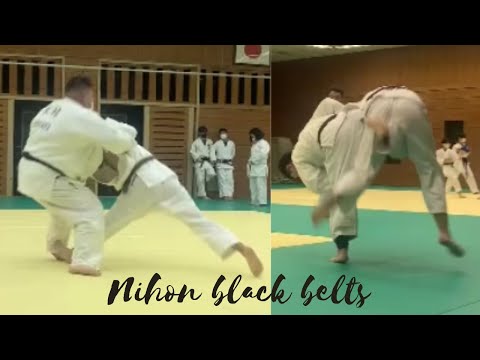
Chadi VS Japanese Black Belts: A Critical Analysis of Randori in Osaka

Introduction: The Crucible of Randori

The dojo is more than just a training hall; it is a crucible where techniques are forged into skills, and discipline is tempered into character. When we witness sparring sessions, particularly those that pit practitioners from different backgrounds against established masters in their homeland, we are presented with a unique opportunity to dissect the very essence of martial arts. This video, featuring Chadi’s randori (free sparring) against Japanese black belts in Osaka, Japan, is precisely such an occasion. Is this merely a showcase of raw talent, or a profound lesson in the application and philosophy of Kodokan Judo? Prepare yourselves, for we are about to embark on a critical examination. The question that immediately burns in the mind of any serious martial artist watching this is: does the technique translate? Does the spirit of Budo, the Way of the Warrior, transcend geographical and stylistic boundaries? We see a foreign practitioner engaging with local black belts – a scenario rife with potential for both revelation and humbling truth. This isn't just about who wins or loses; it's about understanding the underlying principles, the cultural context, and the sheer dedication required to stand on the tatami in Japan and test oneself against its finest.

Deep Dive: Chadi's Randori Against Japanese Black Belts

Let us be frank: randori is the lifeblood of Judo. It is where theory meets reality, where the precision of kata is tested against the unpredictable dynamism of a living opponent. Watching Chadi engage with Japanese black belts is akin to observing a craftsman testing their tools against the finest materials. The intensity is palpable, the respect inherent, yet the competitive fire is undeniable. We must observe not just the throws – the spectacular `Uchi-mata` (inner thigh throw) or the constricting `Sankaku-gatame` (triangle arm lock) – but the transitions, the grips (`tsukuri`), and the explosive power (`kake`). How does Chadi adapt to the unique grip fighting (`kumi-kata`) prevalent in Japanese dojos? Is his posture (`shisei`) stable under pressure? Does he maintain `zanshin` (awareness) throughout the exchange, even when seemingly caught off guard? These are not minor details; they are the building blocks of mastery.
The visual spectacle is one thing, but the true learning lies in the micro-moments: the slight shift of weight, the breath control, the subtle feint that sets up a decisive movement. We are not merely spectators of a fight; we are students of `Budo`. The title itself, "Chadi VS Japanese black belts (sparring/Randori) 大阪柔道の乱取り," speaks volumes. "Randori" implies a controlled yet genuine exchange, while "Osaka Judo" hints at a specific regional flavor, perhaps a legacy of the Kodokan’s foundational principles or localized innovations.
"Judo is not a mere sport; it is a method of physical, intellectual, and moral education. Its principles, when applied to life, can lead to a better world. But first, one must master the fundamentals on the mat." - Jigoro Kano (paraphrased)
The commitment of Chadi to step onto the tatami against established practitioners in their home country is commendable. It requires immense courage and a deep-seated desire for self-improvement, hallmarks of a true `Budo` practitioner. However, courage alone does not guarantee success. We must analyze his strategy, his adaptability, and his ability to apply the Judo principles he has learned under the immense pressure of a randori session where every movement is scrutinized.

The Cultural Nuances of Japanese Judo

Understanding Japanese Judo requires acknowledging its profound cultural roots. The emphasis on `rei` (etiquette and respect), the meticulous attention to detail, and the deep-seated philosophy of `seiryoku zenyo` (maximum efficiency, minimum effort) and `jita kyoei` (mutual welfare and benefit) are not just abstract concepts; they are woven into the fabric of every randori. In Japan, judo is often more than just a physical discipline; it is a way of life, a path of self-cultivation (`shugyo`). The Japanese black belts may exhibit a fluidity and an understanding of space that is almost intuitive, a product of years, perhaps decades, immersed in this environment. Their movements might seem economical, their defense impenetrable. This isn't just about superior technique; it's about an ingrained understanding of timing, distance, and the opponent's intent. Do we see this deep cultural immersion reflected in Chadi's approach? Or is he fighting a more modern, perhaps more aggressive, style that may clash with traditional expectations? The way grips are initiated and broken, the subtle body positioning, and the very atmosphere of the dojo itself convey layers of meaning that extend far beyond the physical exchange. The respect shown before and after the match is as vital as any throw.

Technical Breakdown: Key Judo Principles in Play

Let's get down to brass tacks. In any randori, several key elements of Judo must be evident for effective engagement: * **Grip Fighting (`Kumi-kata`)**: This is the chess match of Judo. How Chadi establishes and maintains grips, and how he breaks his opponents' grips, is crucial. Japanese judoka are renowned for their sophisticated `kumi-kata`, often employing grips that allow for immediate leverage and control. * **Off-Balancing (`Kuzushi`)**: A throw is impossible without effective off-balancing. Observe how Chadi uses his body, his hips, and his grips to disrupt his opponents' balance *before* committing to a technique. Are his `kuzushi` movements sharp and decisive? * **Entry and Execution (`Tsukuri` & `Kake`)**: The seamless transition from `kuzushi` into `tsukuri` (fitting in) and finally `kake` (execution) is what separates novices from masters. Does Chadi flow into his techniques, or is there a visible struggle? * **Posture and Footwork (`Shisei` & `Ashi Sabaki`)**: Maintaining a strong base and moving efficiently with one's feet are paramount. Poor posture makes one vulnerable to throws, while clumsy footwork telegraphs intentions. * **Response to Throws (`Ukemi`)**: While not directly visible in the attacker, the quality of the thrower is often judged by how well their opponent can receive the technique. This indicates the completeness of the action. Looking at the specific techniques mentioned, such as `Uchi-mata` and `Sankaku-gatame`, we can analyze their effectiveness. Is the `Uchi-mata` executed with proper hip contact and driving force, or is it a lazy leg sweep? Is the `Sankaku-gatame` applied with control, or is it a frantic scramble for a submission? The labels `#JudoThrows` and `#Kodokan` suggest a focus on fundamental, perhaps classical, Judo techniques.

Beyond the Throw: The Budo Philosophy in Randori

The term `Budo` itself encompasses a much broader spectrum than mere combative skill. It is the cultivation of character, the pursuit of self-mastery, and the understanding of life's principles through the lens of martial practice. Randori, in this context, is not just about physical exertion; it's a moving meditation, a test of `mushin` (no-mind) and `fudoshin` (immovable mind). How does Chadi embody the spirit of `Budo`? Does he display resilience when facing adversity? Does he maintain his composure when his strategies are countered? Does he show respect and gratitude towards his training partners, recognizing that they are instrumental in his growth? These intangible qualities are as important, if not more so, than the physical techniques displayed. The hashtags `#BUDO` and `#ki` are not merely labels; they point to the underlying energy and spirit that should animate every movement. Consider the concept of `Seiryoku Zenyo`. Is Chadi exerting maximum effort in a brute-force manner, or is he finding the most efficient path to neutralize his opponent and apply his techniques? Is he learning to use his opponent’s energy against them, a cornerstone of Judo?

Sensei's Verdict: Authenticity and Application

Now, let's address the elephant in the room. While Chadi's willingness to engage is admirable, the ultimate test lies in the efficacy and authenticity of his Judo. Many practitioners learn techniques, but few truly internalize the principles. Is Chadi’s Judo a genuine reflection of Kodokan Judo, or a hybrid style adapted from various influences? The context of a "VS" scenario, even in sparring, can sometimes lead to a focus on winning over pure learning. However, the randori format is designed precisely to foster learning through dynamic engagement. The Japanese black belts, representing the traditional lineage, serve as living repositories of this knowledge. Their reactions, their counters, and their overall approach are invaluable data points. My assessment, as a seasoned observer of martial arts and their cinematic representations, hinges on a few critical factors: 1. **Efficiency of Movement**: Are techniques executed with minimal wasted motion? 2. **Control and Leverage**: Does the practitioner rely on brute strength or superior technique and leverage? 3. **Adaptability**: How well does the practitioner adjust to different opponents and styles? 4. **Spirit of Budo**: Is there an evident display of respect, resilience, and continuous learning? If Chadi demonstrates proficiency in these areas, he is not merely sparring; he is learning and contributing to the grand tapestry of Judo. If not, then this serves as a stark reminder of the depth and refinement inherent in established traditions.

Training Essentials for Your Randori

To truly excel in randori, whether in Judo, BJJ, or any grappling art, dedicated training is non-negotiable. Here’s a breakdown of what you need to focus on:
  1. Grip Development: Strengthen your forearms and hands. Practice various grip fighting drills. A strong, strategic grip is your primary weapon.
  2. Core Strength: A powerful core provides stability and explosiveness for throws and submissions. Exercises like planks, Russian twists, and leg raises are essential.
  3. Balance and Footwork: Practice moving with stability. Drills focusing on `ashi sabaki` (footwork) will improve your ability to enter, exit, and maintain balance.
  4. Flexibility: Crucial for injury prevention and executing techniques that require a wide range of motion. Incorporate dynamic and static stretching.
  5. Conditioning: Randori is demanding. Cardiovascular and muscular endurance are vital to maintain performance throughout multiple rounds.
  6. Technical Study: Don't just spar. Study the techniques. Watch instructional videos, read books, and drill specific entries and transitions relentlessly.
  7. Mental Fortitude: Develop `fudoshin`. Learn to remain calm under pressure, accept setbacks, and persevere.

Resources for Deepening Your Judo Knowledge

To truly grasp the depth of Kodokan Judo, one must engage with authoritative resources. Here are some avenues to explore:
  • Books: Look for foundational texts on Judo by authors like Jigoro Kano himself, or recognized modern masters. Works detailing `Nage-no-kata` (forms of throwing) and `Katame-no-kata` (forms of grappling) are invaluable.
  • Instructional Videos: Seek out high-quality instructional series that break down techniques and principles systematically. Look for accredited coaches and high-ranking black belts.
  • Dojo Training: Nothing replaces regular, in-person training at a reputable dojo. The feedback from experienced instructors and training partners is irreplaceable.
  • Federation Websites: Official Judo federations (like the IJF or national federations) often provide historical information, rules, and technical resources.

Frequently Asked Questions

Q1: What is the primary difference between Randori and Kata in Judo? A: Kata are pre-arranged forms demonstrating specific principles and techniques, performed with a partner in a set sequence. Randori is free sparring, where practitioners apply techniques spontaneously against a resisting opponent. Kata teaches the 'how,' while Randori teaches the 'when' and 'why' in a dynamic context. Q2: Why is it important to train against Japanese black belts in their home country? A: Training in Japan offers exposure to a deep-rooted Judo culture, often characterized by refined technique, exceptional etiquette, and a profound philosophical understanding. It provides a benchmark for authenticity and mastery within the art's birthplace. Q3: Can Judo techniques be effectively used in Mixed Martial Arts (MMA) or self-defense? A: Absolutely. Judo provides powerful throwing, control, and submission techniques that are highly effective in MMA. Its principles of leverage and off-balancing are also fundamental to effective self-defense, though real-world application often requires adaptation to different scenarios and attire. Q4: What does "Kodokan Judo" refer to? A: Kodokan Judo is the original Judo style founded by Jigoro Kano at the Kodokan Institute in Tokyo. It encompasses the technical curriculum, philosophical principles, and educational aims established by Kano.

For Deeper Study on Your Path

To continue your exploration into the profound world of martial arts and develop your understanding, consider these essential topics:

Reflection of the Sensei: Your Next Step

This randori showcases not just techniques, but the spirit of a warrior's journey. Chadi's engagement with Japanese black belts is a testament to the universal pursuit of martial excellence. But is excellence merely about executing a perfect throw? Or is it about the continuous, humbling process of learning, adapting, and respecting the tradition? Your challenge: Reflect on a time you tested your skills against someone significantly more experienced or from a different tradition. Did you focus solely on winning, or did you seek to understand *why* they were more skilled? What lessons did you bring back to your own training? Now, it is your turn. Do you believe Chadi's performance reflects true mastery, or merely a temporary exhibition of skill? Did he demonstrate the essence of Budo, or was this simply a physical contest? Argue your case in the comments below. Let the debate begin. ``` GEMINI_METADESC: Analyze Chadi's Judo randori against Japanese black belts in Osaka. A critical look at technique, Budo philosophy, and cultural nuances. Sensei's verdict included.

Unveiling the Secrets of Bujinkan: A Master's Guide to Throws and Joint Locks

Are you truly grasping the essence of martial arts, or are you merely going through the motions? Many practitioners chase power and flashy techniques, forgetting the profound connection between mind, body, and spirit that defines true mastery. In a world saturated with diluted styles and sensationalized combat, finding authentic knowledge can feel like searching for a hidden scroll in a modern metropolis. But what if the path to genuine understanding lay not in the latest viral fight, but in the ancient wisdom of those who walked the warrior's path before us?

The Legacy of Hatsumi Masaaki and Bujinkan Budo

The world of martial arts is vast and often confusing. We see the explosive power of MMA, the intricate dance of Judo, the disciplined strikes of Karate, and the elusive movements of Ninjutsu. Yet, beneath the surface of these distinct disciplines lies a common thread: the pursuit of effectiveness, strategy, and self-mastery. Today, we delve into a lineage that claims to unify these pursuits, a system that has garnered international attention and trained hundreds of thousands worldwide: the Bujinkan Budo Taijutsu, under the guidance of its Sōke (Grandmaster), Hatsumi Masaaki.

But what truly defines Bujinkan Budo? Is it merely a collection of ancient techniques, or is there a deeper philosophy at play? This exploration is prompted by a comprehensive DVD series, specifically focusing on the foundational aspects of throws and joint locks. We aim to dissect its content, understand its historical context, and critically assess its value for the modern martial artist. Do not expect a superficial overview; this is a deep dive into the heart of a combat system that has been taught to elite forces like the FBI and CIA.

The Roots: Takamatsu Toshitsugu and the Nine Schools

To understand Hatsumi Masaaki's Bujinkan, one must first acknowledge his teacher, Takamatsu Toshitsugu. Revered as "The Tiger of Mongolia" and often referred to as the "last ninja," Takamatsu inherited a vast legacy, reportedly learning from his own teacher, Toda Shinryuken Masamitsu, the skills of nine distinct classical martial arts schools (ryū). These included various forms of Ninjutsu and traditional combat systems.

"All martial arts ultimately lead to Ninpo." - Takamatsu Toshitsugu, 33rd Sōke of Togakure-ryū.

This lineage forms the bedrock of Bujinkan Budo Taijutsu. Hatsumi Masaaki, having inherited these traditions, synthesized them into a cohesive system. This is not to say he simply copied them, but rather that he refined, organized, and transmitted them in a way that remains relevant. The question remains: how effectively does this transmission translate into practical application, and how well is it documented for those outside the direct lineage?

Bujinkan Budo: More Than Just Techniques

The term "Budo" itself implies more than just combat. It signifies the "Martial Way," a path of personal development through rigorous physical training. Bujinkan Budo Taijutsu, therefore, is not solely about learning to throw or lock an opponent. It encompasses principles of natural movement, spatial awareness, timing, and adaptability. The goal is not to dominate through brute force, but to neutralize an attack with minimal effort, using the opponent's own energy and intentions against them.

A fundamental principle often discussed in martial arts, and particularly relevant here, is the concept of Mushin (無心) – a state of "no mind" or effortless action. This state is achieved through relentless practice, allowing the body to react instinctively and effectively without conscious thought. This is the pinnacle of martial training, where technique transcends conscious control and becomes pure, unadulterated action. The DVDs we examine promise to reveal aspects of this path, focusing on the practical application of grappling and striking.

Unpacking the "Throws & Joint Locks" DVD

The DVD in question, "初見良昭の秘技継承【武神館の武術】第二巻 投げ・関節技編" (Hatsumi Masaaki's Secret Techniques Inheritance [Bujinkan Budo] Vol. 2: Throws & Joint Locks Edition), is presented as a comprehensive guide to the grappling and control aspects of Bujinkan Budo Taijutsu. It features instruction by Shihan Norio Sakai, a highly respected master within the Bujinkan organization.

The content, as described, delves into "the culmination of ancient joint techniques," starting with the "Capture-Hand Basic Forms" (捕手基本型五法 - Toshu Kihon Kata Goho). It also covers throwing techniques (投技 - nage waza), escape methods (破術 - hōjutsu or datsu jutsu), and the advanced "Unarmed Capture" techniques (奥義・無刀捕 - Ōgi・Mutōdori). The implication is that this DVD offers a systematic introduction to skills that have historically been less visually documented, making it a valuable resource for practitioners seeking to understand this specific facet of Bujinkan.

Is this a true window into the "Great Combat System"? Or is it a curated presentation designed for a specific audience? The visual medium offers a unique advantage in martial arts instruction, allowing for detailed observation of movement, leverage, and timing. However, the true test lies in the applicability of these techniques and the depth of understanding they impart.

The Roots: Takamatsu Toshitsugu and the Nine Schools

To understand Hatsumi Masaaki's Bujinkan, one must first acknowledge his teacher, Takamatsu Toshitsugu. Revered as "The Tiger of Mongolia" and often referred to as the "last ninja," Takamatsu inherited a vast legacy, reportedly learning from his own teacher, Toda Shinryuken Masamitsu, the skills of nine distinct classical martial arts schools (ryū). These included various forms of Ninjutsu and traditional combat systems. The transmission of these arts through a single individual is a rare phenomenon, and Takamatsu's role as the link between these ancient traditions and modern practice cannot be overstated.

"All martial arts ultimately lead to Ninpo." - Takamatsu Toshitsugu, 33rd Sōke of Togakure-ryū.

This lineage forms the bedrock of Bujinkan Budo Taijutsu. Hatsumi Masaaki, having inherited these traditions, synthesized them into a cohesive system. This is not to say he simply copied them, but rather that he refined, organized, and transmitted them in a way that remains relevant. The question remains: how effectively does this transmission translate into practical application, and how well is it documented for those outside the direct lineage? Many modern systems claim ancient roots, but the clarity and integrity of that transmission are often lost in translation or embellishment. The Bujinkan's claim to this specific lineage is a significant factor in its global recognition.

Bujinkan Budo: More Than Just Techniques

The term "Budo" itself implies more than just combat. It signifies the "Martial Way," a path of personal development through rigorous physical training. Bujinkan Budo Taijutsu, therefore, is not solely about learning to throw or lock an opponent. It encompasses principles of natural movement, spatial awareness, timing, and adaptability. The goal is not to dominate through brute force, but to neutralize an attack with minimal effort, using the opponent's own energy and intentions against them. This echoes the foundational principles found in many highly effective martial arts, where understanding physics and psychology plays as much a role as physical prowess.

A fundamental principle often discussed in martial arts, and particularly relevant here, is the concept of Mushin (無心) – a state of "no mind" or effortless action. This state is achieved through relentless practice, allowing the body to react instinctively and effectively without conscious thought. This is the pinnacle of martial training, where technique transcends conscious control and becomes pure, unadulterated action. The DVDs we examine promise to reveal aspects of this path, focusing on the practical application of grappling and striking. Achieving Mushin requires not just repetition, but deep comprehension of the underlying principles. Can a DVD truly convey this elusive state, or is it merely a visual aid for technical learning?

Unpacking the "Throws & Joint Locks" DVD

The DVD in question, "初見良昭の秘技継承【武神館の武術】第二巻 投げ・関節技編" (Hatsumi Masaaki's Secret Techniques Inheritance [Bujinkan Budo] Vol. 2: Throws & Joint Locks Edition), is presented as a comprehensive guide to the grappling and control aspects of Bujinkan Budo Taijutsu. It features instruction by Shihan Norio Sakai, a highly respected master within the Bujinkan organization. The credibility of the instructor is paramount when evaluating such a resource. Shihan Sakai's long-standing association with Hatsumi Masaaki lends significant weight to his teachings.

The content, as described, delves into "the culmination of ancient joint techniques," starting with the "Capture-Hand Basic Forms" (捕手基本型五法 - Toshu Kihon Kata Goho). It also covers throwing techniques (投技 - nage waza), escape methods (破術 - hōjutsu or datsu jutsu), and the advanced "Unarmed Capture" techniques (奥義・無刀捕 - Ōgi・Mutōdori). The implication is that this DVD offers a systematic introduction to skills that have historically been less visually documented, making it a valuable resource for practitioners seeking to understand this specific facet of Bujinkan. The inclusion of "Mutōdori" (empty-handed capture of weapons) is particularly intriguing, as it speaks to the system's emphasis on real-world self-defense scenarios.

Is this a true window into the "Great Combat System"? Or is it a curated presentation designed for a specific audience? The visual medium offers a unique advantage in martial arts instruction, allowing for detailed observation of movement, leverage, and timing. However, the true test lies in the applicability of these techniques and the depth of understanding they impart. Without the direct feedback of a qualified instructor, viewers must possess a discerning eye and a solid foundation in martial principles to truly benefit.

Mastering the Core: Capture-Hand Basic Forms and Beyond

The "Capture-Hand Basic Forms" are described as the "culmination of ancient joint techniques." This suggests a progression, where foundational principles are built upon to achieve complex control. In many grappling arts, the mastery of basic locks and takedowns is essential before one can effectively move to more advanced techniques. The focus on joint manipulation, as opposed to purely striking, highlights the Bujinkan's emphasis on control and incapacitation with precision.

Throwing techniques (nage waza) are crucial for disrupting an opponent's balance and creating openings for subsequent attacks or control. The effectiveness of a throw often depends on understanding body mechanics, leverage, and the opponent's posture. Similarly, escape methods (hōjutsu) are vital for survival, allowing a practitioner to break free from disadvantageous positions or holds. Finally, the advanced "Unarmed Capture" techniques (Mutōdori) are the ultimate expression of control, demonstrating the ability to neutralize a weapon threat without resorting to equally dangerous counter-violence.

The systematic presentation of these elements in the DVD is key. If the instruction is clear, progressive, and emphasizes the underlying principles rather than rote memorization, it can be a powerful learning tool. However, it's critical to remember that these techniques are tools. Their effectiveness is derived from the practitioner's understanding of distance, timing, and adaptability – concepts that visual media can demonstrate but cannot fully instill.

Sensei's Verdict: The Value of Authentic Instruction

This DVD, while offering a glimpse into the Bujinkan's grappling and control arts, should be viewed as a supplementary resource, not a replacement for direct instruction. The quality of instruction by Shihan Norio Sakai is likely high, given his standing. The systematic approach to Toshu Kihon Kata, nage waza, and Mutōdori presents a structured learning path for those already familiar with the Bujinkan curriculum or for curious martial artists seeking a deeper understanding of systems that integrate striking, grappling, and weaponry.

However, the nuanced timing, subtle body shifts, and intent behind each movement can only be fully grasped under the guidance of a qualified instructor. The "Great Combat System" is not just a set of techniques; it is a living art form that requires personal transmission. Therefore, while this DVD is a commendable effort to document and share these skills, its true value lies in its ability to inspire further study and provide a visual reference point for those actively training within the Bujinkan or a similar traditional art. It is a valuable piece of the puzzle, but not the entire picture.

Training Guide: Developing Your Grip and Leverage

Mastering throws and joint locks requires more than just strength; it demands an understanding of biomechanics and precise application of force. Here’s a fundamental training guide:

  1. Grip Strength Development: Start with basic grip exercises. Use hand strengtheners, grip trainers, or even a simple towel to practice crushing and pinching grips. Consistent practice builds the foundation for holding and controlling an opponent.
  2. Understanding Leverage Points: Study anatomy, specifically the joints and bone structure. Understand how applying pressure at specific points can create submission or break balance. Visual aids from the DVD or anatomical charts can be invaluable here.
  3. Balance and Footwork Drills: Practice moving your body and maintaining your balance while applying pressure to a partner's limbs (even a stationary object like a punching bag initially). Focus on root stability and efficient weight transfer.
  4. Controlled Practice of Basic Throws: If you have a training partner and safe matting, practice fundamental Judo or BJJ throws like O-goshi or Ippon-seoi-nage. Focus on achieving a clean break of balance and a controlled descent. Always prioritize safety.
  5. Joint Lock Isolation: Practice isolating specific joints, like the elbow or wrist. Understand the range of motion and the application of pressure for control, not injury. Start with very light pressure on compliant partners.
  6. Simulated Escapes: Practice breaking holds and escaping common pins or locks. This often involves understanding subtle body movements and timing rather than brute force.
  7. Mindful Repetition (Repetition sans thought): The goal is to move towards Mushin. Practice these techniques repeatedly until they become instinctive. This is where the true depth of a system like Bujinkan is revealed.

Essential Training Equipment

While Bujinkan Budo Taijutsu emphasizes adaptability and can be practiced with minimal equipment, certain items can significantly enhance your training and safety. For those delving into the grappling and control aspects showcased in the DVD, consider the following:

  • Durable Training Uniform (Gi): A high-quality gi, such as a reinforced Judo gi or a traditional Karate gi, is essential for practicing throws and joint locks. It provides a surface for gripping and allows for the application of techniques as intended. Look for double-weave fabrics for added durability.
  • Training Mats (Tatami/Roll-out): If you plan to practice throws and groundwork, investing in safe training mats is crucial to prevent injuries. MMA mats or traditional Judo mats are ideal.
  • Gloves (Optional for striking drills): While this DVD focuses on grappling, if you cross-train in striking aspects, MMA gloves or kickboxing gloves are advisable for sparring.
  • Resistance Bands: Excellent for conditioning grip strength, arm endurance, and core stability – all vital components for effective grappling.
  • Reference Books and DVDs: Beyond this specific DVD, acquiring other reputable instructional materials can provide different perspectives and deepen your understanding. Books on anatomy and biomechanics can also be surprisingly useful.

Frequently Asked Questions

  • What is the difference between Bujinkan Budo Taijutsu and Ninjutsu? Bujinkan Budo Taijutsu is the modern name for the combined martial arts curriculum taught by Hatsumi Masaaki, which includes elements derived from traditional Ninjutsu schools, among others. While often associated with ninjas, Bujinkan encompasses a broader martial system for self-defense and personal development.
  • Is Bujinkan effective for self-defense? Yes, Bujinkan Budo Taijutsu is designed as a comprehensive combat system with a strong emphasis on practical self-defense. Its techniques focus on adapting to situations, using an opponent's energy, and neutralizing threats efficiently.
  • Do I need to be flexible to train Bujinkan? While flexibility is beneficial in any martial art, it is not a prerequisite. Flexibility can be developed through consistent training and dedicated stretching exercises, as shown in various flexibility and stretching routines.
  • Can I learn Bujinkan effectively from DVDs alone? DVDs can be excellent supplementary tools for visual learning and understanding techniques, but they cannot replace the crucial feedback, correction, and direct transmission provided by a qualified instructor in a dojo setting.

To Deepen Your Path

The journey into martial arts is a continuous one, filled with discovery and refinement. If the principles of effectiveness, tradition, and comprehensive combat resonate with you, further exploration into related disciplines can offer valuable insights:

  • Judo: The Gentle Way of Throws - Explore the profound art of Judo, a cornerstone for many grappling arts, focusing on throws, pins, and submission holds.
  • The Evolution of Mixed Martial Arts - Understand how traditional arts like those found in Bujinkan have influenced and been influenced by the modern sport of MMA.
  • The Philosophy of Budo - Delve deeper into the ethical and spiritual aspects of martial training, understanding the 'Way' beyond mere combat techniques.
"The martial way is a thing of daily practice. It is a choice that must be made every moment." - Miyamoto Musashi

Reflexión del Sensei: Tu Próximo Paso

You've seen the technical breakdown, the historical context, and the potential value of this Bujinkan instructional. But knowledge without application is like a sharp sword left to rust. The question is not whether these techniques are effective – that is for you to discover and prove. The real question is: How will you integrate this learning into your own path? Will you dismiss it as another esoteric art, or will you challenge yourself to explore its principles, perhaps even seeking out qualified instruction? Are you seeking mere information, or are you truly seeking mastery?

Now it's your turn. Do you believe systems like Bujinkan hold true combat efficacy in the modern age? Or are they relics of a bygone era? Debate this fiercely in the comments below. Prove your point with logic and experience, not just opinion.

``` GEMINI_METADESC: Master Bujinkan's throws & joint locks with our expert guide. Explore Hatsumi Masaaki's legacy, Takamatsu Toshitsugu's teachings, and practical training advice.

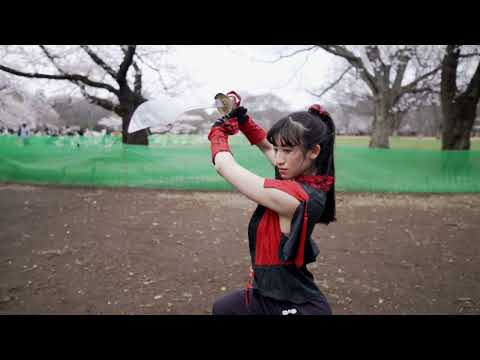
Kunoichi: The Shadow Warrior - Unveiling the Deadly Art of the Female Ninja

Greetings, warriors and seekers of truth. Today, we cast our gaze not upon the battlefield of direct confrontation, nor the dojo of honorable duels, but into the shadows where a different kind of warrior honed their deadly craft. We speak of the Kunoichi, the female ninja. When the word "ninja" is uttered, images of silent assassins and masters of espionage flood the mind. But how much do we truly understand about their female counterparts? Are they merely counterparts, or possessors of a distinct and equally terrifying prowess? Today, we dissect the legend, separating myth from the stark, brutal reality of what it meant to be a Kunoichi.

Who are the Kunoichi? Beyond the Stereotype

The common perception of a Kunoichi often reduces them to seductive spies or agile assassins, their roles solely defined by manipulation and stealth. While espionage and assassination were indeed core functions, this view is woefully incomplete. Kunoichi were integral members of ninja clans, trained in a comprehensive array of martial disciplines. Their "feminine wiles" were merely one tool in a vast arsenal, often employed to bypass defenses or gather intelligence that male ninja could not. Their training mirrored that of their male counterparts, focusing on ninjutsu, encompassing not just combat but also survival, disguise, medicine, and the art of psychological warfare. To underestimate a Kunoichi is to court disaster, a mistake few made and lived to regret.

The term "Kunoichi" itself is believed to derive from the kanji characters for "woman" (女, onna), "field" (田, ta), and "child" (子, ko), phonetically representing the components of the character 女, but more importantly, alluding to the perceived domestic roles women occupied, a perfect camouflage for their true activities. This duality is central to their effectiveness: the ability to be utterly unremarkable in plain sight, while harboring the capacity for extreme violence or profound influence.

Historical Context: The Veil of Secrecy

The historical existence of Kunoichi is debated, much like many aspects of ninja history. However, evidence suggests that women were indeed trained and utilized by ninja clans, particularly during the tumultuous Sengoku period (15th-17th centuries) in Japan. These were times of constant warfare, where information and infiltration were as crucial as any pitched battle. Ninja clans, like the Iga-ryū and Kōga-ryū, were sophisticated organizations that employed a wide range of specialists.

Unlike the samurai, whose lives and arts are well-documented, the ninja operated in secrecy. Their training, their missions, and their very existence were meant to remain unknown. This inherent clandestine nature makes concrete historical accounts of Kunoichi scarce. When they are mentioned, it is often in hushed tones, within tales of infiltration and intrigue. The lack of official records does not negate their existence; it merely speaks to their unparalleled effectiveness in their chosen professions.

The true ninja is not seen. The true ninja is not heard. The true ninja is the shadow that is felt.

This principle of invisibility applied just as strongly to the Kunoichi. Their advantage often lay in being underestimated, in their ability to move through social strata without suspicion. A woman could gain access to areas, conversations, and individuals that a male ninja might find impossible to approach.

Kunoichi Techniques and Training: More Than Just Espionage

The training of a Kunoichi was not a watered-down version of male ninja training. It was comprehensive and often tailored to exploit their physical and social advantages. While stealth, infiltration, and intelligence gathering were paramount, their combat skills were formidable.

  • Taijutsu (Unarmed Combat): Kunoichi were trained in various unarmed combat techniques designed for close-quarters effectiveness. This included strikes, joint locks, throws, and pressure point attacks. Their goal was often incapacitation rather than outright killing, allowing for escape and continued intelligence gathering.
  • Kenjutsu and Bojutsu: While not always wielding large weapons, Kunoichi were proficient with smaller, concealable blades like the tantō (dagger) and specialized ninja swords. They also trained in the use of the (staff) and other polearms.
  • Shurikenjutsu (Projectile Weapons): The iconic throwing stars, or shuriken, were a staple. Kunoichi were adept at using these not just for direct attack but also for distraction, signaling, or even causing minor injuries to impede pursuit.
  • Nawajutsu (Rope Techniques): Mastery of ropes was crucial for climbing, rappelling, binding targets, and even creating traps.
  • Disguise and Deception: This was arguably their most potent weapon. Kunoichi could adopt various personas – a geisha, a servant, a merchant’s wife – to infiltrate enemy strongholds or gather information. Their ability to blend in and observe was a critical martial skill in itself.
  • Poisons and Medicine: Understanding anatomy and the effects of various substances was vital. Kunoichi could administer poisons subtly or use medicinal knowledge for healing themselves or allies, or even to feign illness to gain access.
  • Psychological Warfare: The ability to sow discord, manipulate emotions, and exploit weaknesses was a key component of their training, often more effective than physical force.

Consider the application of seemingly simple tools. A hairpin could be a lethal stabbing weapon. A fan could conceal a blade or be used for distraction. Even their traditional attire could be modified for combat or escape. This is the essence of ninja adaptability – turning the mundane into the deadly.

The discipline required for such a multifaceted education is immense. It demanded not only physical prowess but also an iron will, an exceptional memory, and a profound understanding of human psychology. This wasn't merely about learning techniques; it was about forging a mindset capable of operating under constant duress and deception.

Philosophical Underpinnings of the Kunoichi Way

At the heart of any true martial tradition lies a philosophy, a guiding principle that shapes its practice. For the Kunoichi, this was deeply intertwined with the broader principles of Budo and ninjutsu, yet with its own unique emphasis.

  • Mushin (無心) - No Mind: This is the state of flow, where the mind is free from distraction, fear, or ego. For a Kunoichi operating in high-stakes situations, Mushin was not a luxury but a necessity for survival and mission success. It allowed for instantaneous, instinctual reactions.
  • Ju Jutsu (柔術) - Gentle Art: While not exclusively practiced by Kunoichi, the principles of yielding to overcome force were highly advantageous. Using an opponent's momentum against them, redirecting aggression, and employing subtle but debilitating techniques were key.
  • Seishin Teki Kyoyo (精神的教養) - Spiritual/Mental Training: This encompasses the development of resilience, patience, and emotional control. A Kunoichi had to endure hardship, isolation, and the constant threat of discovery without breaking.
  • Adaptability and Fluidity: Just as water flows around obstacles, a Kunoichi adapted their tactics, persona, and techniques to the situation. Rigidity was weakness.

The Kunoichi’s path was one of paradox: living a life of deception while striving for inner truth; employing violence while seeking mental clarity; existing in the shadows yet impacting the course of history. Their philosophy was one of ultimate pragmatism, where the success of the mission and the survival of the self were paramount, achieved through discipline, adaptability, and a profound understanding of the human condition.

"The supreme art of war is to subdue the enemy without fighting." - Sun Tzu. This tenet was the daily bread of the Kunoichi, their battlefield often the human heart and mind rather than the physical form.

The image of the Kunoichi in modern media is a double-edged sword. On one hand, it keeps the mystique alive, introducing these figures to a new generation. On the other, it often sensationalizes and distorts their reality, reducing them to caricatures.

Films like "Lady Snowblood" or series such as "Kunoichi: The Ninja Princess" present stylized versions of these warriors. While entertaining, they frequently fall prey to common pitfalls:

  • Exaggerated Powers: Portraying them with superhuman agility or invincibility ignores the rigorous training and the very real risks they faced.
  • Overemphasis on Seduction: While deception was a tool, their effectiveness stemmed from a broader skillset, not solely their attractiveness.
  • Lack of Historical Nuance: Modern interpretations often fail to capture the complex social and political landscape in which real ninja operated.

As martial artists, we must approach these portrayals with a discerning eye. We can appreciate the artistry of choreography and the compelling narratives, but we must also recognize when fantasy eclipses the discipline and sacrifice that defined the true Kunoichi. The true "fight" for them was often a silent, internal one, a constant battle against exposure and error.

Veredict of the Sensei: Do Kunoichi Arts Hold Up?

From a purely martial perspective, the principles that underpinned the Kunoichi's training – adaptability, stealth, psychological manipulation, efficient close-quarters combat, and a deep understanding of Budo – are timeless and effective. The ninjutsu and associated disciplines they practiced were honed by necessity in an era of brutal conflict. While specific tools and contexts may have evolved, the core competencies remain relevant.

Could a modern Kunoichi, trained in the traditional arts, operate effectively today? Absolutely. Their ability to gather intelligence, disappear into crowds, and neutralize threats with precision would be invaluable in various fields, from private security to strategic analysis. However, the romanticized portrayal often misses the sheer dedication, the immense risk, and the ethical complexities involved.

The core tenets of ninjutsu, as practiced by Kunoichi, remain potent. They are not magic, but the result of extreme discipline and intelligent application of skills.

Essential Equipment for Your Training

While Kunoichi training emphasizes adaptability and the use of everyday objects, specific equipment can enhance your martial journey, whether you're focusing on Budo, self-defense, or a deeper understanding of martial philosophy.

  • Durable Training Uniform (Gi): For disciplines like Judo or Karate, a reinforced judogi or a double-weave Karate gi is essential for grappling and striking drills.
  • Training Knives (Tantō): For practicing ninjutsu or self-defense techniques involving blades, safe, blunt training knives are a must.
  • Protective Gear: When sparring, ensure you have appropriate padding, mouthguards, and groin protectors.
  • Makiwara or Training Dummy: For developing striking power and conditioning.
  • Books on Martial Philosophy: Texts like Miyamoto Musashi's "The Book of Five Rings" or works on Bushido offer profound insights applicable to any martial path. Investing in quality books on Kyokushin Karate or the history of MMA can also broaden your perspective.

Remember, the best equipment is often the least: your own body, mind, and spirit. But quality tools can facilitate learning and ensure safety.

Frequently Asked Questions

Were Kunoichi real historical figures, or just legends?
While concrete, widespread historical documentation is scarce due to the clandestine nature of ninja, historical texts and anecdotal evidence strongly suggest that women were trained and actively participated as Kunoichi within ninja clans.
What is the difference between a ninja and a Kunoichi?
A Kunoichi is a female ninja. While both were trained in ninjutsu, Kunoichi often leveraged social expectations and camouflage to their advantage, specializing in espionage, infiltration, and assassination roles where a male operative might be conspicuous.
Are Kunoichi techniques practical for modern self-defense?
The underlying principles of Kunoichi training—stealth, observation, adaptability, psychological tactics, and efficient close-quarters combat—are highly practical for modern self-defense. Specific techniques would need to be adapted, but the core mindset is invaluable.
What martial arts are associated with Kunoichi training?
Primarily ninjutsu, which encompasses a wide range of skills. They may have also drawn from or cross-trained in arts like Jujutsu, Kenjutsu, and knowledge of poisons or medicine.

Deeper Into Your Path

The world of the Kunoichi is a potent reminder that the martial path is not monolithic. It is a landscape of diverse strategies, philosophies, and applications. To truly understand martial arts, one must be willing to look beyond the obvious, into the shadows and the silent spaces between.

Reflection of the Sensei: Your Next Step

We have peeled back the layers of legend surrounding the Kunoichi. We have seen their training, glimpsed their philosophy, and critically assessed their depiction in modern media. But knowledge without application is like a sword left to rust.

Here is your challenge: Identify one aspect of the Kunoichi's training or philosophy that resonates with you. Is it the art of deception? The discipline of Mushin? The adaptability in combat? For the next week, actively seek to integrate this principle into your own training, your work, or your daily life. Do not just observe; become. How will you embody the shadow warrior in your own existence?

Now, the floor is yours. Do you believe the Kunoichi were more than mere extensions of male ninja, or are they a romanticized myth? Share your insights, your disagreements, and your own interpretations in the comments below. Let the debate commence!

``` GEMINI_METADESC: Explore the enigmatic world of the Kunoichi, the female ninja. Uncover their history, training, techniques, and philosophical underpinnings with a critical martial arts perspective.

The Uppercut Advantage: Striking Shorter Opponents in Martial Arts

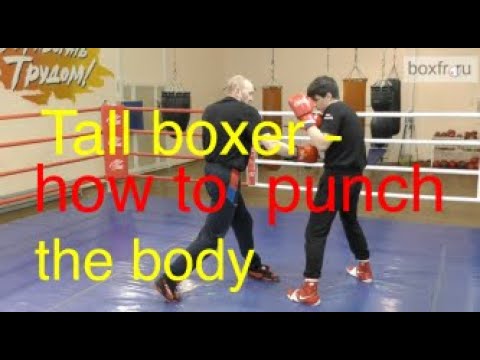
A common quandary in the crucible of combat: how does one effectively deliver a devastating blow to an opponent who stands shorter than you, especially when they're closing the distance? Many believe the answer lies in brute force or overextended, predictable techniques. Yet, the true masters of Budo understand that victory often hinges on precision, leverage, and an understanding of anatomical targets. Alexey Frolov, in a demonstration that cuts through theoretical fluff, illustrates a potent solution: the uppercut to the body, delivered with deceptive ease even from a longer range. This isn't just a technique; it's a philosophical statement on adaptability and exploiting the inherent vulnerabilities in any stance.

Hello and welcome to Budo and Martial Arts, the most comprehensive and up-to-date martial arts blog on the internet. Today, we delve into a fundamental yet often misunderstood aspect of striking: how to maintain offensive pressure and land effective body shots against a shorter adversary. Forget the notion that height is always the ultimate advantage. In the dynamic theater of martial arts, adaptability and strategic application of technique can turn any perceived disadvantage into a decisive edge. Follow us on social networks and do not forget to visit our main page: We also invite you to visit our other blogs:

Understanding the Challenge: The Shorter Opponent

The immediate assumption is that a shorter opponent presents a smaller target. While true in some respects, their lower center of gravity and ability to get "under" your punches can be a significant advantage if you are unprepared. They can duck under your jabs and crosses with relative ease, forcing you into awkward defensive postures or exposing your own vulnerabilities. Your primary weapons – the straight punches – may become less effective if they cannot clear the opponent's guard or head. This is where tactical thinking and a willingness to employ less conventional (but equally devastating) techniques become paramount.

The key is to realize that a shorter opponent often seeks to close the distance to negate your reach advantage. They want to get inside. Therefore, your strategy must be to either maintain that distance with superior footwork and probing strikes, or, when they do close in, to have a counter-strategy that exploits their chosen range. Trying to out-fight them in their preferred close-range, without the right tools, is a recipe for disaster. We need to elevate our attack, both physically and strategically.

The Uppercut Unveiled: Alexey Frolov's Masterclass

Alexey Frolov's demonstration of the long-range uppercut to the body is a masterclass in exploiting anatomical angles. From a distance where a traditional hook or straight punch might be too easily blocked or evaded, the uppercut provides a different trajectory. It's designed to travel upwards, hitting targets that are often less protected and more susceptible to impact. Think of the solar plexus, the liver, or even the rib cage. These are vital areas that, when struck effectively, can incapacitate an opponent far quicker than a glancing blow to the head.

The "long distance" aspect is critical here. It implies that Frolov is not simply throwing an uppercut from a static, close-range clinch. Instead, he's able to generate power and accuracy from a standing distance, likely using a combination of forward momentum, hip rotation, and a snap of the arm. This requires precise timing and an understanding of weight transfer, principles deeply ingrained in disciplines like Budo and MMA.

"The ultimate aim of martial arts is not to be victorious over others, but to be victorious over oneself." - Unknown Master

Anatomical Targets and Leverage

When facing a shorter opponent, focusing on the body is often more strategic than aiming for the head. Their shorter stature means their head is naturally lower, making it a more difficult target to hit effectively from a distance without overextending. However, their torso presents a larger, more accessible target for upward strikes. Consider these key areas:

  • Solar Plexus: Located just below the sternum, a well-placed uppercut here can disrupt breathing and cause immense pain.
  • Liver: On the right side of the abdomen (from the opponent's perspective), this is a notoriously sensitive area. A powerful uppercut can be fight-ending.
  • Rib Cage: While seemingly robust, the ribs can be cracked or bruised with sufficient force, leading to debilitating pain and shortness of breath.
  • Kidneys: Lower on the back, but accessible with certain angles of upward striking, these are highly vulnerable.

The leverage for an uppercut comes from the ground up. Planting your lead foot, rotating your hips and torso, and snapping your fist upwards with a bent elbow creates a whip-like action. Even with a reach disadvantage, this kinetic chain can generate surprising power. It's about transferring your body's weight and momentum into the strike, not just arm strength.

Training Drills for the Uppercut

To master the long-range uppercut against shorter opponents, dedicated practice is essential. Here’s a breakdown of drills:

  1. Body Pad Drills: Work with a partner holding focus mitts or body pads. Practice throwing uppercuts from various distances, focusing on snapping the punch and hitting the designated target areas. Your partner can simulate a shorter opponent by keeping their guard low and compact.
  2. Heavy Bag Work: Incorporate uppercuts into your heavy bag routine. Vary the angle and power. Visualize a shorter opponent closing the distance and practice stepping in slightly while throwing the uppercut.
  3. Shadow Boxing with Visualization: During shadow boxing, actively visualize a shorter opponent. Practice your footwork to create the optimal distance and angle, then execute the uppercut. Focus on the fluidity of motion and the snap at the end.
  4. Slipping and Countering: Have a training partner throw punches that you would typically slip (e.g., hooks or straights). Practice slipping inside their range and immediately countering with an uppercut to the body. This drill hones your reaction time and defensive-to-offensive transitions, crucial in Artes Marciales Mixtas.
  5. Resistance Band Training: Use resistance bands anchored at a lower level to simulate the upward trajectory of an uppercut. This helps build the specific muscle groups and explosiveness needed.

Philosophical Implications: Adaptability in Budo

The technique demonstrated by Frolov is more than just a combat tactic; it embodies a core principle of Budo: adaptability. The samurai and martial artists of old did not adhere to rigid formulas. They understood that the battlefield, or the dojo, is a fluid environment. To survive and thrive, one must be able to adapt to the opponent's strengths and weaknesses, their height, their speed, their style. The ability to employ techniques like the long-range uppercut against a shorter foe is a testament to this adaptive mindset.

It challenges the notion that reach is the sole determinant of success in striking. It teaches us to look beyond the obvious and find leverage and power in unexpected places. This is the essence of true martial arts training: not just learning movements, but understanding principles that can be applied universally. As Bruce Lee famously said,

"Adapt to it, make it your own, and let it flow. No distinct style is the ultimate style."

This adaptability is key in modern combat sports like MMA, where fighters must possess a diverse skill set to overcome opponents of varying sizes and styles. A fighter who relies solely on reach will be at a severe disadvantage against a skilled grappler or a shorter, aggressive striker.

Veredict of the Sensei: Does This Technique Conquer Height?

Absolutely. The long-range uppercut to the body, as exemplified by Alexey Frolov, is a highly effective technique for engaging shorter opponents. It bypasses common defensive strategies aimed at negating reach and targets vital areas that can quickly end a confrontation. However, it's not a magic bullet. Its effectiveness relies on proper training, timing, understanding of leverage, and the adaptability to apply it when the situation calls for it. It requires dedication to practice and a willingness to incorporate less obvious, but incredibly potent, tools into your arsenal.

Cinturón Negro en Ingenio Táctico

Essential Equipment for Your Training

While martial arts can be practiced with minimal equipment, certain items can significantly enhance your training, particularly when refining striking techniques like the uppercut.

  • Focus Mitts and Body Pads: Essential for practicing striking accuracy, power, and speed with a partner. Look for durable materials and good padding.
  • Heavy Bag: A staple for developing power, endurance, and practicing combinations. Ensure it's securely mounted and filled appropriately for your training needs.
  • Hand Wraps and Boxing Gloves: Crucial for protecting your hands and wrists during bag work and sparring. Invest in quality wraps and gloves that fit well.
  • Resistance Bands: Versatile for explosive power training and mimicking specific movement patterns like the uppercut.
  • Sparring Gear: If you engage in sparring, appropriate headgear, mouthguards, and shin guards are non-negotiable for safety. Consider brands known for their durability and protective qualities.

Frequently Asked Questions

Q1: Can this technique be used against taller opponents?
A: While primarily discussed for shorter opponents, the principle of targeting the body with an uppercut remains valid against taller adversaries, especially if they have a tendency to drop their hands or you can get inside their guard effectively. However, the specific "long-range" aspect might be less applicable as taller opponents generally have better control of distance.

Q2: What is the difference between this and a regular uppercut?
A: The key differentiator is the context and execution. A "regular" uppercut is often thrown from close range as a follow-up or counter. The "long-range" uppercut, as shown, emphasizes generating power and accuracy from a slightly greater distance, often utilizing more body mechanics and a snapping motion rather than just lifting the fist.

Q3: Is this technique safe for beginners?
A: Like any striking technique, it requires proper instruction and practice. Beginners should focus on form and accuracy with light contact or on pads/bags before applying power. The core principles of leverage and body mechanics are beneficial for all levels, but safety should always be the priority.

Q4: What martial arts styles commonly use this technique?
A: Boxing, Kickboxing, Muay Thai, and of course, MMA are all disciplines where the uppercut to the body is a fundamental and frequently used technique. Its practicality ensures its place across various combat disciplines.

Deepen Your Path

Reflexión del Sensei: Tu Próximo Paso

Frolov shows us a way to overcome a perceived physical limitation through technical mastery and strategic understanding. But the true lesson is this: In every fight, in every challenge, are you looking for the obvious solution or the intelligent one? When faced with an opponent, or a problem, that seems to have an advantage over you, do you falter, or do you seek the angle, the leverage, the principle that turns the tables? Consider your own life. Where do you feel at a disadvantage due to circumstances beyond your immediate control? And more importantly, how are you adapting your 'strikes' – your efforts, your strategies – to overcome it?

``` GEMINI_METADESC: Master the long-range uppercut against shorter opponents. Alexey Frolov demonstrates effective body striking techniques rooted in Budo principles of adaptability and leverage.