Showing posts sorted by relevance for query Budo Japan. Sort by date Show all posts

The Unseen Grind: Becoming a Professional Female Fighter in Japan

"In the pursuit of mastery, beauty is often found not in the superficial, but in the relentless dedication to the craft." Welcome, warriors and students of the martial path, to Budo and AM. Today, we peel back the glamorous facade and delve into the demanding reality of what it truly means to be a professional female fighter in Japan. Forget the fleeting images and superficial charm; we are here to discuss the grit, the sacrifice, and the profound martial spirit that underpins this arduous journey. The idea of a "luchadora profesional en Japón" might conjure images of captivating performances and undeniable allure. And yes, Akari, whom we’ll be following, possesses that undeniable charisma. However, to equate her success solely with her appearance is to misunderstand the very essence of martial endeavor. True strength, true fighting prowess, emanates from within, forged in the crucible of countless hours of rigorous training and unwavering discipline. Follow Akari on her social media channels: * Twitter: @Akari_PureJ * Main Page: Link * YouTube: Akari Luchadora Channel * TikTok: @akariluchadora ◕ Click Here to Subscribe Now! ► Subscribe to Budo and AM Share this video on Facebook ► -------------------------------------------------- Follow us on Social Media and More - Click Here! * Facebook Page: Budo and AM Facebook * Instagram Page: Budo and AM Instagram * Meme Fan Page: Budo and AM Memes This post, "Ser luchadora profesional en Japón: Muy linda!", was published on April 27, 2022, at 08:00 PM. Welcome to the most complete and updated martial arts blog on the internet. Follow us on social networks and do not forget to visit our main page: Budo and AM Main. We also invite you to visit our other blogs: * For those who appreciate the art and wish to support authentic martial arts, explore our exclusive NFTs.

Table of Contents

The Genesis of a Fighter's Dream

The path to becoming a professional fighter, regardless of gender or nationality, is rarely a straightforward one. In Japan, a nation steeped in centuries of martial tradition, the landscape for combat sports is particularly unique. It’s a world that demands not only physical prowess but also mental fortitude and a deep respect for the established *do* (the Way). For women entering this arena, the challenges are often amplified, requiring a delicate balance between embracing traditional expectations and forging a new identity as a powerful combatant. The initial spark for a fighter often ignites from a personal connection to the arts, a desire for self-improvement, or perhaps a captivating encounter with a martial arts performance. For Akari, and many like her, the journey begins with a foundational understanding of disciplines like Karate, Judo, or perhaps even emerging sports like MMA.

The Japanese Proving Ground: A Unique Environment

Japan offers a distinct environment for combat sports. Traditional martial arts are deeply ingrained in the culture, emphasizing discipline, respect, and the cultivation of inner strength – the very essence of BUDO. Professional fighting circuits, while evolving, still often retain elements of this cultural reverence. This can be both a blessing and a challenge. For female fighters, breaking into established male-dominated circuits requires not just skill but also the ability to navigate societal perceptions. While some embrace the "fighter" persona unequivocally, others find themselves judged by different standards. The allure, the presentation, can become as much a part of the professional narrative as the knockouts and submissions. This isn't necessarily a negative; it's a complex reality that many successful athletes leverage. However, it’s crucial that the substance of their skill remains the primary focus.

Beyond the Surface: Training Regimen and Sacrifice

Let's address the elephant in the dojo: the training. What does it take, day in and day out, to compete at a professional level? It’s a grueling testament to human endurance and dedication. For a fighter like Akari, the daily grind likely involves:
  • Intense Physical Conditioning: Hours dedicated to strength training, cardiovascular endurance, and flexibility. This isn't just about lifting weights; it’s about building functional strength and stamina that can withstand the rigors of combat. Think explosive power for strikes, core stability for grappling, and lung capacity for prolonged engagements.
  • Technical Skill Refinement: Daily practice of techniques specific to her chosen discipline. Whether it’s mastering Karate kata, perfecting Judo throws, or drilling BJJ submissions, repetition is key. This includes sparring sessions that simulate real combat scenarios.
  • Dietary Discipline: Maintaining peak physical condition requires meticulous attention to nutrition. This often means sacrificing social outings and adhering to strict meal plans.
  • Mental Preparation: Learning to manage pre-fight anxiety, developing focus, and cultivating a resilient mindset. This often involves meditation, visualization, and studying opponents.
  • Recovery: Proper rest, physiotherapy, and injury prevention are as critical as the training itself.
This level of commitment necessitates significant sacrifice. Social lives are often curtailed, relationships are strained by constant travel and demands, and the specter of injury is a constant companion. The "muy linda" aspect, while perhaps drawing initial attention, is merely the tip of an iceberg of immense effort.

Philosophical Underpinnings: More Than Just Combat

The true spirit of martial arts, especially within the Japanese context, transcends mere physical confrontation. It is rooted in principles like perseverance, respect, self-control, and the continuous pursuit of self-perfection. This is the core of BUDO – the Way of the Warrior. A fighter who embodies this philosophy doesn't just fight; they strive for excellence in all aspects of their life. They understand that the lessons learned on the mat – resilience in the face of adversity, the humility of defeat, the discipline of practice – are transferable to everyday life. This inner strength, this 'ki' or vital energy, is what truly separates a performer from a warrior.
"The ultimate aim of martial arts is not victory or defeat, but the perfection of the human character." - Gichin Funakoshi (Founder of Shotokan Karate)

The Role of Presentation: Charisma Meets Combat

In today's entertainment-driven world, the presentation of an athlete can significantly impact their career trajectory. For female fighters in Japan, and globally, charisma and marketability are often important factors alongside their fighting skills. This is where the "muy linda" aspect, if understood correctly, can be a strategic advantage. It’s not about relying solely on looks, but about understanding how presentation can amplify one's message and attract a broader audience. This could involve:
  • Engaging Social Media Presence: Sharing training insights, personal stories, and connecting with fans.
  • Professional Ring Persona: Developing a distinct style and character that resonates with the audience.
  • Media Appearances: Utilizing opportunities to promote their sport and personal brand.
However, the danger lies in letting presentation overshadow substance. A fighter who is all show and no skill will quickly falter. True longevity comes from a robust foundation of martial ability, supported by effective branding.

Challenges and Rewards on the Path

The journey of a professional female fighter in Japan is fraught with unique challenges:
  • Societal Expectations: Navigating perceptions of femininity versus combativeness.
  • Competition: Facing fierce talent within Japan and potentially internationally.
  • Injury Risk: The constant threat of physical harm.
  • Career Longevity: The demanding physical nature of fighting often leads to shorter career spans.
Yet, the rewards, when achieved, are profound:
  • Personal Mastery: The satisfaction of pushing oneself to the limits and achieving peak physical and mental condition.
  • Respect and Recognition: Earning the admiration of peers and fans for dedication and skill.
  • Financial Opportunities: Through prize money, sponsorships, and endorsements.
  • Inspiring Others: Serving as a role model for aspiring athletes, particularly young women.

Veredicto del Sensei: Is the Glamour Worth the Grind?

Let me be clear: judging a fighter solely on their appearance is a shallow and ultimately disrespectful act. Akari’s success, like that of any elite athlete, is built upon a bedrock of relentless training, unwavering discipline, and profound dedication to her craft. The charisma and visual appeal are simply facets of her persona, tools that can be used to amplify her message and connect with a wider audience. The true fighter, the one who embodies the spirit of BUDO, is defined by their inner strength, their resilience, and their commitment to the Way. The "muy linda" aspect is secondary to the warrior spirit that drives them. **Cinturón Negro en Dedicación y Habilidad; Reconocimiento por su Presencia.**

Equipo Esencial para tu Entrenamiento

To embark on your own martial arts journey, having the right equipment is crucial. While many arts require minimal gear, some items enhance safety and effectiveness:
  • Kimono/Gi: Essential for disciplines like Judo, Jiu-Jitsu, and Karate. Look for a durable, double-weave gi for Judo or a lighter, breathable one for Karate.
  • Training Gloves: For striking arts such as Karate, Kickboxing, or MMA, padded gloves are vital for protecting your hands and your training partners.
  • Mouthguard: A non-negotiable for any form of sparring to protect your teeth and jaw.
  • Shin Guards: Recommended for sparring in disciplines involving kicks, like Kickboxing or Taekwondo.
  • Sparring Headgear: Offers additional protection for the head during intense sparring sessions.
For those interested in specific gear, exploring options for Karate merchandise or high-quality Judo gis can be a worthwhile investment.

Guía de Entrenamiento: Striking Fundamentals

Mastering striking is fundamental to many martial arts. Here’s a basic drill to improve your jab and cross, crucial for arts like Karate or Kickboxing. This drill focuses on technique, not raw power, for beginners.
  1. Stance: Assume a balanced fighting stance. Feet shoulder-width apart, one slightly forward, knees slightly bent, and your guard up.
  2. Jab Execution: From your guard, extend your lead hand straight forward in a rapid motion. Keep your elbow tucked and rotate your fist as it extends, so your palm faces downward at the end of the punch. Ensure your shoulder shields your chin.
  3. Return to Guard: Immediately retract your lead hand back to your guard position, maintaining your balance and guard.
  4. Cross Execution: This punch comes from your rear hand. As you extend, pivot on your rear foot and rotate your hips and torso into the punch. Imagine transferring your body weight through the strike. Keep your elbow tucked and rotate your fist as it extends.
  5. Return to Guard: Retract your rear hand back to your guard, returning your body to its neutral stance.
  6. Practice with Speed and Control: Begin slowly, focusing on the proper mechanics of each punch. Gradually increase your speed, ensuring your form remains intact.
  7. Add Movement: Once comfortable, incorporate these punches into footwork drills, stepping forward with the jab and pivoting with the cross.
  8. Drill Regularly: Aim to practice these fundamentals daily for 5-10 minutes. Consistency is key to developing speed, power, and muscle memory.
This is a foundational step. As you progress, integrating these strikes with defensive maneuvers and learning about power generation will be essential.

Preguntas Frecuentes

  • Q1: How does being a female fighter in Japan differ from other countries?
    A1: Japan's martial arts culture deeply values tradition, discipline, and respect (BUDO). While this provides a strong foundation, female fighters may face unique societal expectations regarding appearance and demeanor, which they often skillfully integrate with their combat prowess.
  • Q2: Is Akari's success solely due to her looks?
    A2: Absolutely not. While presentation can play a role in marketability, her success as a professional fighter is predicated on rigorous training, technical skill, mental fortitude, and dedication – the true hallmarks of a warrior.
  • Q3: What are the main challenges for female fighters in Japan?
    A3: Challenges include navigating traditional gender roles, intense competition, the physical demands of the sport, and the risk of injury.
  • Q4: How important is social media for professional fighters in Japan?
    A4: It is increasingly important. Social media allows fighters to connect with fans, build their brand, secure sponsorships, and share their journey, complementing their achievements in the ring or arena.
  • Q5: What is the underlying philosophy of Japanese martial arts?
    A5: The philosophy, embodied in BUdo, emphasizes self-improvement, discipline, resilience, respect, and the continuous pursuit of perfection in character, not just in combat.

Para Profundizar en tu Camino

To truly understand the depth of martial arts and combat sports, delve into these related topics:

Reflexión del Sensei: Tu Próximo Paso

We’ve examined the demanding reality behind the captivating image of a professional female fighter in Japan. The allure is undeniable, but it is merely the surface gloss on a foundation of iron will and relentless effort. The "muy linda" is a fleeting whisper compared to the roar of dedication that echoes in the dojo. Now, I ask you: In your own training, where do you place your emphasis? Do you chase the fleeting applause of the crowd, or do you seek the deeper satisfaction of mastering your own limitations? Are you building a facade, or are you forging a true warrior's spirit? Reflect on this: **When the roar of the crowd fades, and only the echo of your own breath remains in the quiet of practice, what truth about your dedication will you find?**
"The superficial is very attractive, but that is not what makes a person strong. What makes a person strong is their inner core, their principles, their determination."
Demuestra tu verdad en los comentarios. Do you agree, or have I missed a vital nuance in the warrior's path? Let the debate begin. ``` GEMINI_METADESC: Explore the demanding reality behind becoming a professional female fighter in Japan. Beyond the "muy linda" facade lies a world of sacrifice, rigorous training, and profound martial spirit.

The Unyielding Spirit: Analyzing Keisuke Nemoto's Six-Time Karate Championship Reign

Hello and welcome, dedicated warriors and martial arts enthusiasts, to Budo and AM. We stand at the precipice of examining a true phenomenon in the world of Karate: Keisuke Nemoto. Six times a champion. Let that sink in. In a sport where fractions of a second and the slightest hesitation can mean the difference between victory and defeat, achieving this level of sustained dominance is not merely impressive; it's a testament to an almost supernatural dedication and mastery. But what truly makes a champion like Nemoto? Is it raw power, lightning speed, or something more profound, a spirit that refuses to break?
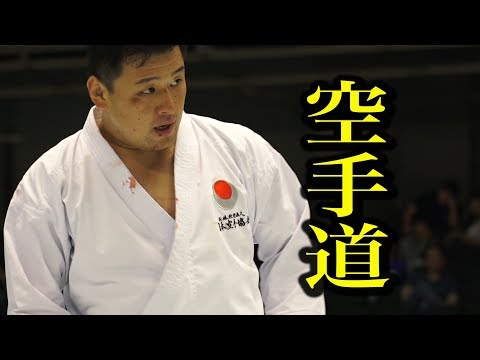
Many of you arrive here seeking to understand what it takes to ascend to such heights, perhaps hoping to translate a sliver of that success into your own training. You're not just looking for techniques; you're searching for the *Budo* itself, the Way of the Warrior. Today, we dissect the career of Keisuke Nemoto of the Japan Karate Association (JKA), particularly his incredible run in the 2018 All Japan Tournament. Prepare yourselves, for this is not just a highlight reel; it's a lesson in commitment, strategy, and the indomitable will that defines a true martial artist.

Deconstructing the Champion: A Sensei's Perspective

Witnessing Keisuke Nemoto's performance, particularly in the quarter-finals, semi-finals, and finals of the 2018 All Japan Tournament, is akin to studying a master painter at work. His movements are not just efficient; they are imbued with intent. Each step, each block, each strike carries the weight of countless hours of repetition, refinement, and understanding. The JKA, a bastion of traditional Karate, emphasizes deep stances, powerful hip rotation, and precise technique. Nemoto embodies these principles, yet elevates them.

His kumite (sparring) is a masterclass in timing and distance management. He doesn't just react; he anticipates. You see him subtly shift his weight, a micro-adjustment that baits his opponent, creating an opening that is then exploited with devastating accuracy. This isn't the frenetic chaos of some modern combat sports; it’s a calculated dance of engagement and disengagement, where every action has a consequence.

"The true warrior is not one who wins every battle, but one who understands the battle and faces it with unwavering resolve." - A principle often echoed in the dojos of Japan.

What often gets overlooked in analyzing champions is their mental fortitude. To win six times requires overcoming not only the physical challenge of each opponent but also the immense pressure of expectation, the fatigue of repeated high-stakes matches, and the mental exhaustion of maintaining peak performance. Nemoto's serene demeanor even in the heat of competition speaks volumes about his inner strength. This is the essence of Mushin (no mind), a state of effortless action born from absolute mastery.

Kumite Strategy: The Art of the Unseen

Let's delve deeper into Nemoto's kumite strategy. In the quarter-finals, you often see a more cautious approach. Fighters test each other, probing for weaknesses. Nemoto, however, displays an immediate assertiveness, establishing his presence and dictating the pace. His offensive techniques, primarily Tsuki (punches) and Geri (kicks), are executed with blinding speed and impeccable form. But it’s his defense that truly sets him apart.

His blocks are not merely passive deflections; they are active parries that often transition seamlessly into counter-attacks. This is a key difference between recreational Karate and the high-level competition seen here. The ability to flow from defense to offense without losing momentum is crucial. It requires an incredible understanding of body mechanics and an acute sense of timing.

Consider his footwork. It’s light, agile, allowing him to cover distance quickly or evade an incoming strike with minimal effort. He utilizes the ring space effectively, often forcing his opponents to the boundaries where their movement is restricted. This strategic use of space, combined with his offensive and defensive prowess, creates a suffocating environment for his opponents. The semi-finals would then reveal how he adapts this strategy against fighters who have likely studied his every move.

The finals, of course, are the ultimate test. Facing the best of the best, Nemoto’s ability to maintain his composure and execute his game plan under such intense scrutiny is what truly defines him as a six-time champion. It's not just about landing the decisive blow; it's about consistently performing at an elite level, match after match.

Kata Perfection: More Than Just Movements

While the footage highlights kumite, it's imperative to remember that a champion like Nemoto’s foundation is built upon the rigorous practice of Kata. Kata are not merely sequences of movements; they are codified combat applications, teaching principles of distance, timing, balance, and power generation. Mastering Kata instills muscle memory, develops Budo spirit, and provides the underlying techniques that are adapted for sparring.

The discipline required to perfect a single Kata, let alone the myriad of techniques that underpin a champion's arsenal, is immense. It demands introspection, patience, and a deep respect for the art's lineage. Nemoto’s ability to translate this Kata-honed precision into the dynamic, unpredictable environment of kumite is what makes his achievements so remarkable. It’s the bridge between static form and fluid combat.

"Karate is a lifetime study. There is no end to learning, no plateau of mastery." - A common sentiment among high-ranking Karateka.

The Cultural Impact of a Six-Time Champion

In Japan, and indeed across the global Karate community, figures like Keisuke Nemoto are more than just athletes; they are cultural icons. They embody the ideals of discipline, perseverance, and respect that are central to Japanese culture and the Budo philosophy. His success inspires countless young practitioners to dedicate themselves to their training, fostering a new generation of martial artists.

The JKA’s continued prominence on the international stage is significantly bolstered by the achievements of its top competitors. Nemoto’s reign is a powerful statement about the effectiveness and enduring relevance of the JKA's approach to Karate. His story serves as a beacon, demonstrating that traditional Karate, when practiced with dedication and intelligence, remains a formidable force. This isn't just about winning tournaments; it's about upholding a legacy and preserving the spirit of Karate for future generations.

Training Regimen: Forging the Champion's Body and Mind

What kind of training regimen would produce a six-time champion? While specific details are proprietary to Nemoto and his coaches, we can infer the essential components. At the elite level of Karate, training is multifaceted:

  • Physical Conditioning: Beyond standard Karate drills, expect intense cardiovascular training for endurance, strength training for power, and plyometrics for explosive movements. Agility drills would be paramount for footwork and evasion.
  • Technical Refinement: Endless hours spent perfecting stances, punches, kicks, and blocks. This involves drilling techniques thousands of times, focusing on precision, power, and speed.
  • Sparring Practice (Kumite): Regular, high-intensity sparring sessions, often with different partners to experience various styles and strategies. This is where theoretical knowledge meets practical application.
  • Kata Practice: Daily practice of Kata, focusing on both the form and the underlying bunkai (application).
  • Mental Training: Visualization techniques, meditation (like Zazen), and strategic analysis to build mental resilience, focus, and the ability to perform under pressure.
  • Recovery: Proper nutrition, rest, and injury prevention/management are critical for sustaining a demanding training schedule over years.

This holistic approach ensures that the physical, technical, and mental aspects are all honed to peak performance. It’s a commitment that extends far beyond the dojo floor. For those looking to enhance their own training, focusing on these pillars is key.

Essential Gear for Your Karate Journey

While Karate is fundamentally about the practitioner's own skill and spirit, the right equipment can significantly enhance training and safety. For serious Karateka aiming for competitive levels or simply seeking the best in their practice, consider the following:

  • High-Quality Karate Gi: A durable, well-fitting Karate Gi is essential. For serious practitioners, a double-weave or heavy-weight gi offers better structure and resilience during sparring. Look for brands known for their quality and durability in competitive Karate.
  • Protective Gear: When engaging in kumite, especially with full contact or under competition rules, protective gear is non-negotiable. This includes mitts, shin guards, and a groin protector. Ensure they meet competition standards if applicable.
  • Training Mats (if training at home): If you’re practicing techniques or drills at home, especially those involving falls or groundwork (though less common in traditional JKA Karate), consider appropriate training mats for safety.
  • Focus Mitts and Punching Pads: Excellent tools for partner training, allowing you to practice power strikes and combinations with a coach or training partner.

Investing in good equipment is not just about comfort; it's about safety and allowing you to focus entirely on your technique and Budo development. Remember to explore specific Karate Merchandise that aligns with your style and needs.

Veredicto del Sensei: A True Budo Legacy

Keisuke Nemoto’s six-time championship at the All Japan Tournament is a monumental achievement that solidifies his place in Karate history. This is not merely about athletic prowess; it is a profound display of the principles of Budo: discipline, respect, perseverance, and the relentless pursuit of perfection. His performances showcase the pinnacle of JKA Karate – a harmonious blend of power, speed, technical precision, and unwavering mental fortitude. He embodies the ideal that true mastery lies not just in winning, but in the journey of self-improvement and the dedication to the Way.

Rating: 5 out of 5 Dan Ranks - A Masterclass in Budo.

Frequently Asked Questions

Q1: How old is Keisuke Nemoto?
A1: While specific birthdates can be private, Keisuke Nemoto has competed at elite levels for many years, indicating he is an experienced adult practitioner. His longevity in competition is a testament to his dedication.

Q2: What specific style of Karate does Keisuke Nemoto practice?
A2: Keisuke Nemoto is a prominent Karateka within the Japan Karate Association (JKA), which is a leading organization for Shotokan Karate, known for its deep stances, powerful techniques, and emphasis on traditional principles.

Q3: Is JKA Karate practical for self-defense?
A3: JKA Karate, with its focus on powerful strikes, blocks, and strategic distancing, provides a strong foundation for self-defense. While competition rules differ from real-world scenarios, the core principles of timing, power generation, and decisive action are highly applicable. Many practitioners adapt their training for SelfDefense applications.

Q4: How can I develop the mental strength shown by Nemoto?
A4: Mental strength is cultivated through consistent practice, facing challenges head-on, and developing a resilient mindset. Techniques like meditation, visualization, and setting achievable goals within your training can significantly improve your Mental Game and Inner Strength.

Q5: Where can I watch Keisuke Nemoto's fights?
A5: You can find resources for watching Keisuke Nemoto's matches, including streaming and downloads with English subtitles, and DVD sales, through links provided by KURO-OBI WORLD INTERNATIONAL SERVICE (e.g., links to Vimeo or specific DVD sales portals).

To Deepen Your Path

The journey of a martial artist is continuous. To further enrich your understanding and practice, explore these related topics on our blog:


If you resonate with the spirit of true martial arts and wish to support our mission of sharing authentic Budo knowledge, consider exploring exclusive NFTs or merchandise that celebrate the dedication and artistry of warriors like Keisuke Nemoto.

Follow us on social networks and do not forget to visit our main page for the most complete and updated martial arts blog on the internet. We also invite you to visit our other blogs.

Reflexión del Sensei: Your Next Step

Nemoto’s six championships are not an endpoint, but a continuous state of being – a testament to the power of unwavering commitment. When you step onto the mat, are you merely going through motions, or are you truly embodying the principles that forge champions? What single, small action can you take *today* that echoes the dedication of a six-time winner? Is it one more repetition, a deeper bow, or a moment of focused breathing before your next drill? The path to mastery is paved with such deliberate steps. Now, go forth and apply this lesson. The dojo awaits.

GEMINI_METADESC: Analyze Keisuke Nemoto's 6-time Karate championship with a Sensei's eye. Discover Kumite strategy, Kata perfection, and the Budo spirit behind his JKA dominance.


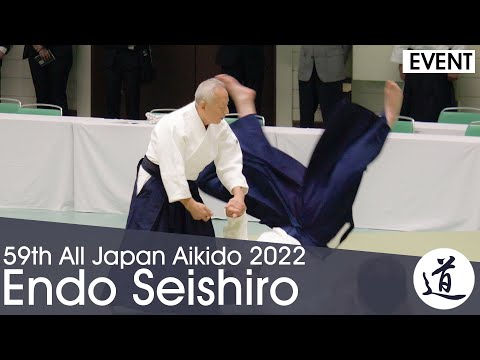
Endo Seishiro Shihan at the 59th All Japan Aikido Demonstration: A Master's Flow in Motion

The Essence of Aikido: Beyond Technique

Welcome, students of the Way. Today, we delve into a realm where motion becomes poetry and technique transforms into philosophy. We dissect the performance of Endo Seishiro Shihan at the 59th All Japan Aikido Demonstration in 2022. For many, Aikido is seen as a defensive art, a series of elegant locks and throws. But to truly grasp its essence, one must look beyond the physical execution and perceive the underlying principles of harmony, control, and the redirection of energy – a concept deeply ingrained in the philosophy of BUDO.

Analyzing Endo Seishiro Shihan's Performance

Endo Seishiro Shihan, an 8th Dan instructor at the venerable Aikikai Hombu Dojo, presents a masterclass in Aikido. His movements at the 59th All Japan Aikido Demonstration are not merely physical acts; they are manifestations of decades of rigorous training, deep understanding, and a profound connection to the art's foundational principles. When observing Shihan Endo, one witnesses a fluidity that belies the inherent power of the techniques. This is not the explosive, often aggressive, nature seen in some MMA or Karate contexts, but rather a controlled redirection, a seamless blending with the opponent's force. This exemplifies a core tenet of Aikido – to harmonize and control, not to overcome through brute strength.

The precision of his stances, the economy of motion, and the intent behind each gesture speak volumes. It's easy to get lost in the spectacle of a demonstration, especially one held at a prestigious venue like the Nippon Budokan. However, a true martial artist looks for the underlying mechanics and philosophy. The 60fps footage allows for an unprecedented clarity, revealing the subtle shifts in weight, the precise angle of entry, and the controlled application of pressure that make Endo Shihan's Aikido so effective and aesthetically profound.

"The Art of Peace is not a religion, nor an ideology. It is the art of the possible, the art of reconciliation, the art of harmonizing the great opposing forces of our inner and outer lives." - Morihei Ueshiba, Founder of Aikido.

This quote by O-Sensei encapsulates the spirit that Endo Seishiro Shihan embodies. His demonstration is a visual testament to this philosophy, showcasing how conflict can be resolved through understanding and control rather than confrontation.

The Spirit of Nippon Budokan

The Nippon Budokan, a sacred ground for Japanese martial arts, adds an aura of gravitas to any event. Hosting the 59th All Japan Aikido Demonstration here signifies the continuity and respect for tradition within BUDO. It's a place where history breathes and where the lineage of masters, from founders to current high-dan practitioners like Endo Seishiro Shihan, is palpable. This venue elevates the demonstration from a mere display of skill to a ceremonial reaffirmation of martial heritage. The energy of such a space demands respect and a profound commitment to the principles being showcased, which Shihan Endo clearly delivers.

Principles in Motion

Let us break down what we observe. The fundamental principle of Aikido is the blending (awase) with the attacker's movement and energy. Shihan Endo demonstrates this masterfully. When an attacker strikes, he doesn't meet force with force. Instead, he seamlessly moves off the line of attack, using the attacker's momentum against them. Techniques like ikkyo (first teaching), shiho nage (four-direction throw), and various wrist manipulations (kote gaeshi, nikyo) are executed with a deceptive simplicity. Deceptive, because the ease of execution in the video masks the immense amount of internal power and precise timing required.

Observe the centering (kokyu) and the extension of Ki. This is not about muscular strength. It's about generating power from the center of gravity and extending it through the body, much like the concept of Ki found in many martial arts, or the concept of "intent" that is crucial in Karate or Judo. Shihan Endo's movements are economical and direct, illustrating that true mastery lies in efficiency, not in extraneous effort. The way he manipulates his opponent's balance is a lesson in leverage and body mechanics that transcends any single fight.

"Aikido is the principle of the strong helping the weak, of one's own technique neutralizing the opponent's spirit." - Morihei Ueshiba

This sentiment is crucial when analyzing demonstrations. While it might appear aggressive to an untrained eye, the goal is always neutralization and harmony. The demonstration is a controlled environment to showcase these principles, distinct from a real-life confrontation which requires a different set of tactical considerations, as one might find in discussions about Combate en la Calle or Self Defense.

Continuity and Evolution in Aikido

The 59th All Japan Aikido Demonstration highlights how Aikido, while rooted in tradition, continues to evolve. The presence of high-dan instructors like Endo Seishiro Shihan, alongside practitioners of various ranks, showcases the unbroken lineage and the ongoing transmission of knowledge. It's a vibrant ecosystem where the foundational teachings of Morihei Ueshiba are preserved and propagated. This demonstration serves as a vital link in the chain, connecting past masters to future generations of Aikido practitioners.

The very fact that this event is recorded and shared, as evidenced by the YouTube link and the detailed credits provided, speaks to the modern approach to disseminating martial arts knowledge. This allows practitioners worldwide, regardless of their location or Dojo affiliation, to learn from such esteemed masters. It’s a far cry from the secretive traditions of old, embodying a more open philosophy of shared learning, a principle we champion on this blog dedicated to BUDO and Martial Arts.

Veredicto del Sensei: Does This Demonstration Resonate?

Cinturón Negro en Claridad y Armonía. The 59th All Japan Aikido Demonstration featuring Endo Seishiro Shihan is a profound exhibition of the art of Aikido. It transcends mere physical display to offer a glimpse into the philosophical underpinnings of harmonious movement and energy control. While not a direct comparison to the combative nature of MMA or the striking power of Karate, the demonstration serves its purpose admirably: to showcase the principles and refined techniques of Aikido at the highest level. For practitioners of Aikido, it's an invaluable resource. For others, it's an education in a different philosophy of combat and self-mastery.

Resources for Deeper Study

To truly appreciate and integrate the principles demonstrated, proper training and resources are essential. While observing is valuable, direct instruction is paramount.

  • Kimono de Aikido: A well-fitting and durable Aikido gi is crucial for training. Look for reinforced seams and a comfortable fabric that allows for unrestricted movement.
  • Libros sobre Filosofía Marcial: Explore texts on BUDO philosophy and the teachings of Morihei Ueshiba to deepen your understanding of the principles behind the movements.
  • Clases Directas: The most effective way to learn is under the guidance of a qualified instructor. Seek out a reputable Aikido dojo in your area.
  • Equipo de Entrenamiento Básico: While Aikido is often hands-on, basic conditioning equipment like jump ropes for cardiovascular fitness or resistance bands for strength training can be beneficial.

Continuity and Evolution in Aikido

The 59th All Japan Aikido Demonstration highlights how Aikido, while rooted in tradition, continues to evolve. The presence of high-dan instructors like Endo Seishiro Shihan, alongside practitioners of various ranks, showcases the unbroken lineage and the ongoing transmission of knowledge. It's a vibrant ecosystem where the foundational teachings of Morihei Ueshiba are preserved and propagated. This demonstration serves as a vital link in the chain, connecting past masters to future generations of Aikido practitioners.

The very fact that this event is recorded and shared, as evidenced by the YouTube link and the detailed credits provided, speaks to the modern approach to disseminating martial arts knowledge. This allows practitioners worldwide, regardless of their location or Dojo affiliation, to learn from such esteemed masters. It’s a far cry from the secretive traditions of old, embodying a more open philosophy of shared learning, a principle we champion on this blog dedicated to BUDO and Martial Arts.

Training Focus: Achieving Harmony in Motion

While this demonstration is a high-level display, beginners can cultivate foundational Aikido principles through focused practice:

  1. Centering (Hara): Practice deep abdominal breathing. Sit or stand tall, focus your attention on your lower abdomen, and breathe slowly and deeply, exhaling completely. This builds your internal foundation.
  2. Movement (Tai Sabaki): Practice moving your body in circular patterns, staying low and balanced. Imagine an attacker's force and practice stepping offline, allowing the imaginary force to pass harmlessly. Think of the footwork in Judo or Karate – balance is key in all combat sports.
  3. Connection: If training with a partner, focus on maintaining a light yet connected grip. Practice feeling their weight shift and intention, and respond by blending, not resisting. This is the essence of awase.
  4. Relaxation: Cultivate the ability to remain relaxed under pressure. Tension hinders flow and power. Practice releasing unnecessary muscular tension throughout your body.

Remember, the goal in Aikido is not to exert force, but to harmonize with it. This requires patience and persistent training, a journey shared by all practitioners of BUDO.

Frequently Asked Questions

What is the significance of Endo Seishiro Shihan's rank?

Endo Seishiro Shihan holds the 8th Dan, a very high rank in Aikido, signifying mastery and extensive experience. It places him among the senior instructors of the art.

Is Aikido effective for self-defense?

Aikido principles of blending and redirecting energy can be highly effective for self-defense, particularly against larger or stronger attackers. However, its application in real-world scenarios often requires adaptation and dedicated training beyond standard demonstrations, which focus on principles rather than combat tactics.

What is the Nippon Budokan?

The Nippon Budokan is a renowned indoor arena in Tokyo, Japan, primarily used for martial arts events and concerts. It is considered a prestigious venue for demonstrations of traditional Japanese martial arts.

How does Aikido differ from other martial arts like Karate or Judo?

While Karate focuses on striking and Judo on throws and grappling, Aikido emphasizes joint locks, pins, and throws achieved by blending with an opponent's motion and redirecting their energy. The philosophical goal of Aikido is often to neutralize conflict without causing undue harm.

What does "Shihan" mean in Aikido?

"Shihan" is an honorific title used for senior instructors in Japanese martial arts, indicating a high level of mastery, teaching experience, and typically a senior rank.

Reflection of the Sensei: Your Next Step

We have observed the elegant flow, the controlled power, and the deep philosophical underpinnings demonstrated by Endo Seishiro Shihan. This is not merely about executing techniques; it is about embodying a way of life – one of harmony, respect, and continuous self-improvement. The path of BUDO is a lifelong journey, and each demonstration, each training session, is a step further along that path.

Now, I pose this to you: Can you see the stillness within the movement? Can you perceive the redirection of force as a metaphor for navigating life's challenges? Do you recognize that true strength lies not in opposition, but in understanding and adaptation? Consider these questions as you move through your day. Do not just watch the techniques; seek the underlying principles. That is the true lesson.

For Deeper Understanding

  • Aikido: The Philosophy and Practice
  • BUDO: More Than Just Combat
  • The Importance of Ki in Martial Arts
``` GEMINI_METADESC: Explore the mastery of Endo Seishiro Shihan at the 59th All Japan Aikido Demonstration. Analyze the principles, philosophy, and artistry of Aikido in this in-depth Sensei review.

Mikio Yahara: The Unyielding Spirit of Shotokan Karate and the Rediscovery of Budo

The Uncompromising Fighter

Welcome, students of the martial path. Today, we delve into the life and legacy of a man whose name resonates with the very essence of dynamic Shotokan Karate: Mikio Yahara. Born in 1947, Yahara Sensei is not merely a practitioner; he is a force of nature within the dojo and a living testament to the power of unwavering spirit. Masatoshi Nakayama, a titan of Karate himself, recognized this when he declared Yahara "the best fighter of his generation." This is not hyperbole; it is a pronouncement earned through sweat, discipline, and an unshakeable commitment to the principles of martial combat.

But what truly sets Yahara Sensei apart, and what we will explore today, is his profound dedication to reintroducing Karate to its ancient Budo roots. In an era where Karate often drifts towards sport or mere physical exercise, Yahara Sensei stands as a beacon, reminding us of the deeper, combative, and spiritual dimensions of our art. Prepare yourselves for a lesson not just in Karate, but in the enduring philosophy of the warrior.

Forged in the Crucible of the JKA

Mikio Yahara emerged from the prestigious Japan Karate Association (JKA) dojo, an institution synonymous with the standardization and global dissemination of Shotokan Karate. This was no easy environment. The JKA of Yahara's formative years was a breeding ground for exceptional talent, a place where only the strongest, most dedicated, and most skilled could thrive. To be recognized within this elite group, let alone singled out for praise, speaks volumes about Yahara's innate abilities and relentless work ethic.

His achievements within the JKA are legendary. Winning the JKA Grand Championship is not a minor feat; it signifies conquering the highest echelon of competitive Karate. This victory was more than just a trophy; it was a declaration of dominance, a validation of his physical prowess and tactical acumen. He proved himself on the most demanding stage, a feat that solidified his reputation as a formidable competitor.

"The JKA was a proving ground. Every session, every kumite, was a test. Yahara didn't just pass these tests; he redefined them."

His early success wasn't accidental. It was the direct result of countless hours spent honing his techniques, perfecting his timing, and cultivating an indomitable spirit. The intensity of training within the JKA under masters like Nakayama instilled a level of discipline and combat readiness that few could match.

A Style Born of Necessity

What made Mikio Yahara a fan favorite and a feared opponent was his truly unique fighting style. It wasn't simply about executing perfect techniques; it was about a raw, energetic, and often unpredictable approach to kumite. This dynamism wasn't just for show; it was a product of his deep understanding of combat and his commitment to effectiveness.

In the world of martial arts, especially in competition, styles often evolve. Some become more reliant on speed, others on power, and some on strategic point-scoring. Yahara Sensei, however, embodied a style that was both explosive and deeply rooted. He attacked with a ferocity that belied his technical precision, making him a captivating figure to watch. His movements were not just movements; they were manifestations of focused intent, designed to overwhelm and disable an opponent.

This fighting style, described as "energetic" and "dynamic," is a hallmark of true martial artists who understand that combat is not static. It requires adaptability, a willingness to press the advantage, and the courage to face adversity head-on. His approach was a stark contrast to more conservative styles, making him a standout performer and an inspiration to many who sought a more aggressive, yet still principled, way to fight.

The impact of such a style on the perception of Shotokan Karate cannot be overstated. It demonstrated that the art, while possessing a rich tradition, could also be expressed through powerful, modern combat applications. This versatility is key to the longevity of any martial art, and Yahara Sensei was a living embodiment of this principle.

The Path Back to Budo

While his prowess in competition is undeniable, it is Yahara Sensei's later focus on the philosophical underpinnings of Karate that has cemented his status as a modern master. He is a fervent advocate for reintroducing Karate to its original Budo roots. This is a critical distinction and one that resonates deeply with those who believe Karate is more than just a sport.

Budo, the "way of warfare" or "martial way," encompasses not just technical proficiency but also the spiritual, ethical, and mental cultivation of the practitioner. It emphasizes discipline, respect, self-control, and the development of character. In its purest form, Budo is a lifelong path of self-improvement, where combat is a means to an end—the perfection of self—rather than the ultimate goal.

"Karate, in its original Budo context, was not merely about striking. It was about understanding the totality of conflict, both external and internal."

Yahara Sensei's commitment to this philosophy is not just theoretical; it's a guiding principle in his teachings and his personal practice. He believes that by returning to these core principles, Karate can regain its profound depth and continue to be a transformative force in practitioners' lives. This perspective challenges many modern interpretations of Karate, which may focus heavily on sport Karate or self-defense without fully embracing the holistic development inherent in traditional Budo.

His exploration of Budo Karate has made him a pivotal figure today, guiding Karateka toward a more complete understanding of their art. This is crucial in a world that often separates physical training from mental and spiritual growth. Yahara Sensei bridges this gap, reminding us that the strongest fighter is not just the one with the most powerful technique, but the one with the most disciplined and enlightened mind.

The journey back to Budo is a call to arms for martial artists worldwide. It is an invitation to look beyond the immediate rewards of competition or self-defense and to embrace the lifelong pursuit of wisdom and character development that martial arts, at their best, offer.

Enduring Influence and the Future of Karate

Mikio Yahara's influence extends far beyond his competitive achievements. His dedication to the Budo aspect of Karate ensures that his teachings will continue to shape the art for generations to come. He represents a vital bridge between the historical roots of Karate and its future potential.

As Karate continues to evolve, with its inclusion in the Olympic Games and its diverse manifestations across the globe, voices like Yahara Sensei's are essential. They serve as a reminder of the art's origins and its potential for profound personal development. His legacy is not just in the techniques he performed, but in the philosophical direction he champions for Karate.

The question for practitioners today is: How do we integrate the dynamism and competitive spirit, for which Yahara Sensei is renowned, with the depth and wisdom of Budo? It is a challenge that requires careful consideration, dedication, and a willingness to look beyond superficial achievements. The path forward for Karate, as championed by masters like Yahara, involves a holistic approach that nourishes both the body and the spirit.

Sensei's Verdict: A Champion's Legacy

Mikio Yahara is more than just a decorated Karateka; he is a living embodiment of the martial spirit. His career exemplifies the peak of Shotokan competition, earning him accolades and the respect of his peers. Yet, it is his unwavering commitment to the deeper principles of Budo that truly elevates his status. He reminds us that true mastery lies not only in victory but in the continuous pursuit of self-perfection and the preservation of an art's soul.

Rating: 10th Dan in Legacy & Philosophy

Essential Training Gear for Karateka

To emulate the dedication of masters like Mikio Yahara, having the right equipment is fundamental. Quality training gear not only enhances performance but also ensures safety and respect for the dojo.

  • High-Quality Karate Gi: Look for a double-weave or heavyweight gi for durability during intense kumite and kata. Brands offering a good balance of tradition and modern fit are ideal.
  • Protective Gear: For sparring (kumite), ensure you have proper sparring gear including mitts, foot protectors, and a chest protector. Safety is paramount.
  • Training Mats (if applicable): For home practice or specific dojo drills, consider mats that offer good cushioning and grip.
  • Bokken or Bo Staff (for related disciplines): While not always central to Shotokan, if exploring weapons-based Budo, a wooden sword (bokken) or staff (bo) is essential.
  • Books on Budo and Karate History: Supplement your physical training with knowledge. Understanding the philosophy and history deepens your practice.

Investing in quality Karate merchandise is an investment in your own development.

Frequently Asked Questions

Who is Mikio Yahara?
Mikio Yahara is a highly respected 10th Dan Shotokan Karate practitioner, renowned for his dynamic fighting style and his advocacy for returning Karate to its Budo roots.
What is Budo Karate?
Budo Karate emphasizes the martial way, focusing not only on combat techniques but also on the spiritual, ethical, and mental development of the practitioner, akin to traditional samurai disciplines.
What was Yahara's significance in the JKA?
Yahara was considered "the best fighter of his generation" by Masatoshi Nakayama and won the prestigious JKA Grand Championship, showcasing exceptional skill and competitive spirit.
Why is his focus on Budo important today?
In a landscape where Karate can sometimes lean heavily towards sport or self-defense without deeper philosophical engagement, Yahara Sensei's emphasis on Budo reminds practitioners of the art's holistic potential for character development and spiritual growth.

To Dive Deeper Into Your Journey

The path of the martial artist is one of continuous learning. To further enrich your understanding and practice, explore these related topics:

Reflexión del Sensei: Tu Próximo Paso

Yahara Sensei's life is a testament to the idea that true martial arts mastery is a blend of fierce combat effectiveness and profound philosophical depth. He urges us to look beyond the immediate victory and seek the enduring lessons of the path. Now, I ask you:

Can the fierce warrior and the contemplative sage truly coexist within a single martial artist? And if so, how does one cultivate both without sacrificing the essence of the other?

Share your thoughts, your doubts, and your insights. Let us engage in a discussion that honors the spirit of Budo and the legacy of masters like Mikio Yahara.

``` GEMINI_METADESC: Explore the dynamic fighting style and profound Budo philosophy of 10th Dan Shotokan Karate master Mikio Yahara, hailed as the best fighter of his generation.

The "Unsu" Kata: A Storm of Technique at Kagami Biraki 2022 – A Sensei's Critical Analysis

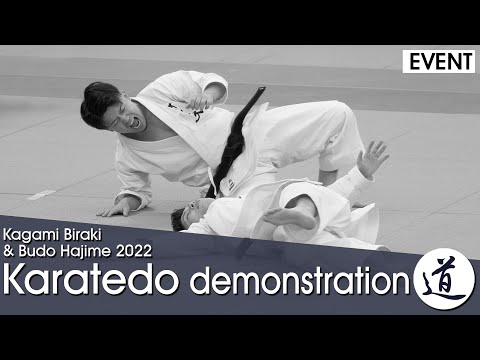
In the hallowed halls of martial tradition, certain events stand as beacons, illuminating the path of Budo for practitioners worldwide. The Kagami Biraki, a ceremony steeped in history and meaning, culminating in the Budo Hajime, or "first practice of the year," is precisely such an occasion. In 2022, the Nippon Budokan played host to this revered event, and amidst the solemnity and tradition, a breathtaking demonstration of Karate-Do unfolded – the *Unsu* Kata, performed by Kikuchi Ryonosuke, Okamoto Ken, and Kitazawa Ishin, all 3rd Dan practitioners. But does this visual spectacle translate into a true masterclass of martial principle, or is it merely a dance of advanced movements? As your Sensei, I am here to dissect this performance, not just to admire it, but to understand the depth of its Budo spirit.
## Unveiling the "Unsu": More Than Just Pushing Clouds The *Unsu* Kata, a cornerstone of Shotokan-Ryu Karate-Do, is often described through poetic imagery, such as "pushing aside clouds." This evocative language hints at the fluidity and dynamic nature of the techniques within. The initial block, a powerful union of the fists along the edge of the hand, is designed to deflect an incoming assault with an almost effortless grace. Yet, this apparent simplicity belies the storm of action that follows. The *Unsu* is a relentless exchange of offense and defense, where techniques evolve like the tempestuous gathering of storm clouds. The practitioners demonstrated a level of technical mastery that is, frankly, astounding. The free adaptation and novel creation of techniques – a dynamic *Mawashi-Geri* (roundhouse kick) to unbalance an opponent, a rotational follow-up after a *Mikatsuki-Geri* (crescent kick), and the piercing precision of an *Ippon-Nukite* (one-finger strike) and *Keitou-Uke* (cock's comb block) – showcase an understanding of combat application far beyond mere rote memorization. The use of feints, the explosive application of speed and strength, all contribute to the kata's reputation as a complex, challenging, and utterly captivating performance. The aerial maneuvers and intricate footwork inherent in *Unsu* demand not only physical prowess but also a deep well of mental fortitude. ### The Kagami Biraki: A Mirror to Budo's Soul To truly appreciate the significance of this demonstration, one must understand the context of the Kagami Biraki. Translating to "opening the mirror," this traditional ceremony, with roots tracing back to the Shogunate era, is intrinsically linked to the practice of Budo. It symbolizes renewal and clarity, a fresh start for the year ahead. Held at the beginning of January at the iconic Nippon Budokan, it’s a multi-faceted event: * **The Kagami Biraki Ceremony**: Often includes a historical reconstruction, complete with armored samurai, to honor the past. * **Budo Demonstrations**: Showcasing the excellence of the nine "official Budo" recognized in Japan. This is where the *Unsu* performance found its stage. * **Budo Hajime**: The "first practice of the year," where all present practitioners engage in training, reinforcing the spirit of collective growth and shared commitment. * **The Oshiruko Kai**: A traditional gathering for a sweet azuki bean soup with mochi. Symbolically, it represents the sharing of prosperity and unity, though unfortunately, this part was canceled in 2022 due to pandemic safety measures. This rich tapestry of tradition elevates the *Unsu* demonstration from a mere athletic display to a profound expression of martial heritage.

The "Unsu" Kata: A Deeper Dive into its Technical Virtuosity

While the performance was undoubtedly impressive, a true martial artist always probes deeper. The *Unsu* Kata is renowned for its complexity and the advanced nature of its applications. Let's break down some key elements that a practitioner of *Karatedo* would observe and analyze: * **Transition and Flow**: The seamless transition between blocking, striking, and evasive movements is crucial. In the *Unsu*, the shift from a defensive posture to an offensive onslaught must be fluid, reflecting the unpredictability of combat. The "pushing aside clouds" analogy is apt here; the movement should be deliberate yet appear natural, masking the underlying power. * **Kicking Techniques**: The inclusion of *Mawashi-Geri* and *Mikatsuki-Geri* is significant. These are not simple kicks; they are tools for disruption and control. The rotational kick following the *Mikatsuki-Geri* demonstrates an understanding of leverage and momentum, allowing a practitioner to pivot and exploit an opponent's imbalance. * **Hand Techniques**: The *Ippon-Nukite* and *Keitou-Uke* are precision instruments. The *Ippon-Nukite* targets vital areas with focused intent, while the *Keitou-Uke* is a sophisticated block that can transition into a strike or a control technique. The mastery of these requires exceptional control and awareness of an opponent's structure. * **Complexity and Aerials**: The jumps and acrobatic elements in *Unsu* are not for show. They serve tactical purposes – gaining distance, evading attacks, or setting up subsequent techniques. However, such techniques demand a high level of conditioning and coordination, making *Unsu* a kata that separates the novice from the seasoned practitioner.

The Martial Philosophy Behind the Movement

Beyond the physical execution, the *Unsu* Kata embodies several core principles of *Karatedo* and Budo: * **Sen no Sen (Preemptive Initiative)**: While the *Unsu* contains elements of defense, its aggressive follow-through suggests a mastery of *Sen no Sen*, anticipating an opponent's move and striking first. * **Mushin (No Mind)**: The ability to execute complex sequences without conscious thought, reacting instinctively, is paramount. The fluidity displayed by the practitioners suggests a high degree of *Mushin*. * **Zanshin (Lingering Spirit)**: After the final technique, the practitioner must maintain a state of awareness. This is the essence of *Zanshin*, ensuring readiness for any further threat.
"The ultimate aim of Karate is not winning or losing, but the perfection of the character of its adherents." - Gichin Funakoshi
This quote from the father of modern Karate is a vital reminder. While the *Unsu* demonstration was a display of technical brilliance, its true value lies in the discipline, focus, and character development it represents for the performers and observers alike.

Veredicto del Sensei: ¿Merece la pena?

The demonstration of the *Unsu* Kata at Kagami Biraki 2022, as presented by Kikuchi Ryonosuke, Okamoto Ken, and Kitazawa Ishin, is a **Cinturón Negro en Ejecución Técnica y Tradición**. The practitioners exhibited exceptional skill, precision, and a clear understanding of the *Unsu*'s complex sequences. Their ability to weave advanced techniques, feints, and dynamic movements into a cohesive and powerful performance is commendable. The context of the Kagami Biraki and Budo Hajime adds a layer of cultural and spiritual significance that enhances the viewing experience. However, it's crucial to remember that a kata demonstration, while impressive, is a stylized representation. Its effectiveness in a real combat scenario is a perpetual debate within the martial arts community. This performance showcased the *art* of Karate-Do at its finest, a testament to years of dedicated *entrenamiento*.
"Karate is a work of love. It is a physical and spiritual discipline that demands the utmost of its practitioners. It is a lifelong pursuit of self-improvement." - Unknown Master

Equipo Esencial para tu Entrenamiento

To truly embody the principles seen in the *Unsu* Kata, consistent and dedicated *entrenamiento* is paramount. While the kata itself is performed with bare hands and feet, the journey to mastery often involves specific gear that supports progression.
  • Kimono de Karate de Alta Calidad: For superior freedom of movement and durability during rigorous training sessions. Look for a double-weave fabric for advanced practitioners of Shotokan.
  • Guantes de Entrenamiento (Opcional): For certain conditioning drills or sparring sessions to protect hands.
  • Protector Bucal: Essential for any sparring or contact drills to ensure safety.
  • Zori o Sandalias de Entrenamiento: For transitioning between indoor and outdoor training spaces, and for specific drills where footwear is required.
  • Esterilla de Entrenamiento (Tatami o similar): Crucial for safely executing dynamic movements and falls, especially for advanced katas like Unsu.
Investing in quality gear is a subtle but important step in showing respect for your chosen art and supporting your own commitment to progress. For those serious about their Karate journey, exploring **artes marciales merchandise** can also provide inspiration and necessary training aids.

Guía de Entrenamiento: Practicando Principios del "Unsu"

While mastering the entire *Unsu* Kata requires expert instruction, you can begin to internalize its principles through focused drills. Here’s a simplified approach to practicing elements reminiscent of the kata's spirit:
  1. Bloqueo Dinámico y Transición: Practice a strong, sharp outward block (like *Gedan Barai* or *Uchi Uke*). Immediately after the block, transition into a sharp hand strike (e.g., *Gyaku Tsuki* or *Shuto Tsuki*). Focus on maintaining your balance and transferring hip power into the strike. Repeat this sequence rapidly, simulating the defensive-offensive flow.
  2. Acondicionamiento de Piernas con Patadas Rotacionales: Practice *Mikatsuki-Geri* slowly, focusing on hip rotation and control. Once comfortable, add a simple follow-up kick, like a controlled *Mae Geri* (front kick), simulating the chain of techniques.
  3. Salto y Aterrizaje Seguro: Practice small, controlled jumps, focusing on landing softly and maintaining your posture. This builds the foundational strength and coordination for the more complex aerial techniques.
  4. Postura y Conciencia Corporal: Spend time in stable Karate stances (e.g., *Zenkutsu Dachi*, *Kiba Dachi*). Practice shifting weight smoothly and maintaining a low center of gravity. This grounds the dynamic movements and prepares you for powerful applications.
Remember, consistency is key. Even short, focused sessions can yield significant improvements.

Para Profundizar en tu Camino

The spirit of Budo is a vast ocean, and Karate-Do is but one of its many magnificent currents. To truly understand the depth of martial philosophy and practice, I encourage you to explore related disciplines and concepts:

Preguntas Frecuentes

¿Qué significa "Unsu" en Karate?

"Unsu" (雲手) translates from Japanese as "Cloud Hands." This name reflects the kata's fluid, evasive movements that are likened to pushing clouds aside.

¿Por qué es importante el Kagami Biraki en las artes marciales?

Kagami Biraki is a New Year's ceremony symbolizing renewal and a fresh start. It's deeply connected to Budo, marking the first training session of the year and reinforcing the martial community's commitment and traditions.

¿Es el "Unsu" Kata adecuado para principiantes?

No, the "Unsu" Kata is considered an advanced kata due to its complexity, dynamic techniques, and aerial movements. It requires a strong foundation in Karate basics and significant training experience.

¿Cuál es la diferencia entre una demostración de kata y un combate real?

A kata demonstration is a refined, stylized performance of pre-arranged techniques designed to cultivate skill, form, and spirit. A real combat scenario is dynamic, unpredictable, and driven by survival instincts. While kata principles can be applied, their execution and purpose differ significantly.

¿Qué Budo se practican en el Kagami Biraki?

The Kagami Biraki typically features demonstrations from the nine "official Budo" recognized in Japan, which include various forms of Karate, Judo, Aikido, Kendo, Kyudo, Sumo, Shorinji Kempo, Naginatajutsu, and Jujutsu.

Reflexión del Sensei: Tu Próximo Paso

Is the pursuit of perfect form in kata an end in itself, or merely a stepping stone to true combat effectiveness? Reflect on where the "art" of Karate ends and the "warrior" begins in your own practice. GEMINI_METADESC: Sensei analyzes the Unsu Kata demonstration from Kagami Biraki 2022. Explore its technicality, Budo philosophy, and the importance of tradition.

The Unseen Blade: How Tokugawa Ieyasu Forged the Shogunate and the Soul of Budo

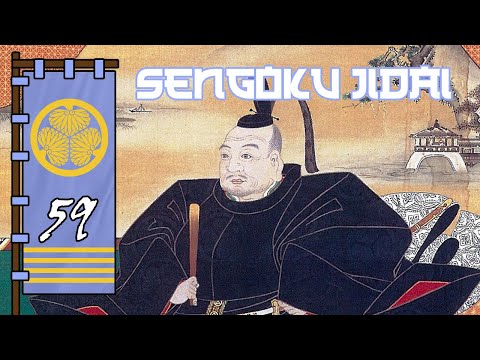
The Sengoku Jidai. A period etched in blood and iron, where ambition clashed like swords and only the most cunning survived. We speak of a time that birthed legends, a crucible that forged the very essence of what it means to be a warrior in Japan. But even in this era of perpetual conflict, where every warlord sought dominion, one figure rose above the chaos, not just as a conqueror, but as a architect of an enduring legacy. Tokugawa Ieyasu. You might know the name, the man who finally unified Japan. But do you truly understand the profound martial and philosophical shift that his ascension to Shogun represented? This wasn't merely a change in political power; it was the birth of an era that would shape the soul of Budo for centuries.

The Crucible of War: Forging the Warrior-King

By 1603, the winds of change had swept across the land, and Tokugawa Ieyasu, a man forged in the fires of countless battles, had finally cemented his grip on the nation. His victory at Sekigahara in 1600 was not just a military triumph; it was the resounding declaration that the age of constant warfare was drawing to a close. But Ieyasu was more than just a battlefield general. He was a strategist, a pragmatist, and a deep student of human nature. He understood that true power wasn't just won by the sword, but by the establishment of order, by the careful weaving of tradition and innovation.

His naming as the new Shogun, the military ruler of all Japan, was not an end, but a beginning. It was the culmination of a lifetime dedicated to the martial arts, to the understanding of strategy, and to the unwavering pursuit of a singular vision: a stable, prosperous Japan under his rule. This was the ultimate prize, the ultimate demonstration of Bushido – the Way of the Warrior – not just in its combative aspects, but in its governance, its discipline, and its enduring principles.

"Victory attained by violence is a victory of ephemeral success." - Often attributed to Tokugawa Ieyasu, reflecting a pragmatic understanding of lasting peace.

The significance of this moment cannot be overstated. It marked the end of the chaotic Sengoku Jidai (Warring States period) and the dawn of the Edo period. A period that, while often characterized by peace, was undergirded by the very martial prowess that Ieyasu embodied. The philosophies and practices honed on the battlefield were now to be the bedrock of a new era, influencing everything from the samurai's code of honor to the very structure of martial training.

The Unseen Foundations: Philosophy Beyond the Battlefield

While the history books often focus on the political machinations and military campaigns, the true strength of the Tokugawa Shogunate lay in its philosophical underpinnings, deeply rooted in the martial traditions. Ieyasu didn't just defeat his enemies; he absorbed their lessons. He understood that a lasting legacy required more than just brute force. It required the cultivation of virtues like discipline, loyalty, perseverance, and self-mastery – the very cornerstones of Budo.

Consider the principles of Zen Buddhism, which profoundly influenced the samurai class. The pursuit of Mushin (no mind), the state of effortless action and intuition, was not just a meditative practice; it was a tactical advantage. In the heat of battle, the ability to react without conscious thought, to be one with the movement, was the difference between life and death. Ieyasu, through his patronage and understanding, ensured that these philosophical elements were not sidelined but were integrated into the very fabric of his regime.

This period saw a refinement of existing martial arts and the development of new ones, all under the umbrella of the Tokugawa peace. While large-scale warfare diminished, the emphasis shifted towards perfection of technique, mental fortitude, and the ethical application of martial skills. This is the true birth of many codified styles we recognize today, laying the groundwork for schools that would focus on the spiritual and ethical development of their practitioners, not just their combat effectiveness.

For those of you training today, understanding this historical context is crucial. The kata you practice, the stances you hold, the principles of respect you learn in the dojo – they are not mere relics of a bygone era. They are echoes of a time when survival depended on the razor's edge, and when the warrior's spirit was as vital as their sword arm. This is the essence of #BUDO and #MartialArtsJourney.

The Legacy in Motion: From Edo to Modern Dojos

The peace established by Tokugawa Ieyasu was not a stagnant one. It was a peace that allowed for the flourishing of arts and culture, including the martial arts. The samurai, no longer solely defined by their battlefield prowess, began to turn inwards, focusing on the refinement of their skills and the philosophical aspects of their way of life. This era saw the formalization of many classical #Jujutsu, #Kenjutsu, and other combat disciplines.

The ideals of loyalty, honor, and self-discipline, embodied by Ieyasu himself, became the guiding principles of #Bushido. These principles transcended the samurai class, influencing the broader societal structure and becoming aspirational virtues for all of Japan. This cultural permeation is what makes the history of the Tokugawa Shogunate so vital to understanding the enduring appeal of Japanese martial arts worldwide.

Think about the rigorous training regimens of #Kyokushin Karate or the intricate footwork of #Judo throws. These disciplines, while evolved, carry the indelible imprint of the era Ieyasu ushered in. The emphasis on discipline, perseverance, and the pursuit of perfection in every technique is a direct lineage from those who sought to build a stable society on the foundation of martial excellence.

Even today, when we watch modern combat sports like #MMA or #Kickboxing, we see echoes of this ancient warrior spirit. The dedication of athletes like Jon Jones or the strategic brilliance seen in fights like MorenovsFigueiredo, while vastly different in context, still resonate with the core principles of discipline and mastery that Ieyasu helped to codify.

Equipo Esencial para tu Entrenamiento

Para honrar la tradición y mejorar tu práctica marcial, es fundamental contar con el equipo adecuado. Ya sea que estés aprendiendo los fundamentos del #Karate o perfeccionando técnicas de #Grappling, la calidad de tu equipamiento puede marcar una gran diferencia. Aquí te presento algunos elementos clave:

  • Kimono de alta calidad: Busca un gi (judogi, karategi, etc.) de doble tejido o un tejido resistente que soporte el rigor de tus entrenamientos. Para #Judo, un judogi robusto es indispensable.
  • Guantes de sparring: Si tu práctica incluye contacto, unos buenos guantes (como los de 16oz para sparring general) son cruciales para tu seguridad y la de tu compañero.
  • Protecciones: Rodilleras, coderas y protectores bucales pueden ser necesarios dependiendo del estilo y la intensidad del entrenamiento.
  • Esterillas de entrenamiento (Tatami): Para estilos que implican caídas y agarres, como el #BJJ o el Aikido, unas esterillas adecuadas son esenciales para prevenir lesiones.
  • Armas de entrenamiento (Bokken, Bo, etc.): Para disciplinas como el Kendo o ciertas escuelas de Karate, las armas de madera seguras y bien mantenidas son parte integral del aprendizaje.

Invertir en #MartialArtsMerchandise de calidad no es un lujo, es una necesidad para progresar de forma segura y efectiva.

Veredicto del Sensei: ¿Merece la pena estudiar la historia de la Shogunate?

Absolutamente. Este período no es solo una lección de historia política o militar; es una inmersión profunda en la forja del espíritu marcial japonés. Comprendiendo la visión de Ieyasu y la era que inauguró, podemos apreciar de dónde provienen muchos de los principios que rigen las artes marciales hoy en día. Es un recordatorio de que la verdadera maestría marcial trasciende la mera técnica física y abraza la disciplina mental, la fortaleza espiritual y la sabiduría del liderazgo.

Calificación del Sensei: Cinturón Negro en Legado e Influencia Marcial

Guía de Entrenamiento: Cultivando la Paciencia del Guerrero

La consolidación del poder por parte de Tokugawa Ieyasu no fue un acto de un día, sino el resultado de años de estrategia, paciencia y perseverancia. Aplicar esta virtud en tu entrenamiento marcial es fundamental:

  1. Establece objetivos a largo plazo: No te enfoques solo en la próxima graduación, piensa en tu desarrollo como artista marcial en los próximos años.
  2. Practica con consistencia: Asiste a tus clases regularmente, incluso cuando no tengas ganas. La disciplina es la madre de la maestría.
  3. Repite los fundamentos: No subestimes el poder de perfeccionar las técnicas básicas. La simplicidad bien ejecutada es devastadora.
  4. Aprende de tus fracasos: Cada error, cada derrota, es una oportunidad de aprendizaje. Analiza qué salió mal y cómo puedes mejorar.
  5. Sé paciente con tu progreso: El desarrollo marcial es un maratón, no un sprint. Celebra tus pequeñas victorias y no te desanimes por los desafíos.

Esta mentalidad, cultivada en el dojo, te servirá mucho más allá del entrenamiento físico, influyendo en tu #SelfImprovement y #SuperaciónPersonal.

Preguntas Frecuentes

¿Quién fue Tokugawa Ieyasu?

Tokugawa Ieyasu (1543-1616) fue el fundador y primer Shogun del Shogunato Tokugawa de Japón. Estableció un gobierno militar que gobernó Japón durante más de 250 años, marcando el inicio del período Edo.

¿Qué fue el período Sengoku Jidai?

El Sengoku Jidai, o período de los Estados en Guerra, fue una época de intensa guerra civil y lucha por el poder en Japón, que duró desde mediados del siglo XV hasta principios del siglo XVII. Tokugawa Ieyasu puso fin a este período.

¿Cómo influyó el Budo en el gobierno del Shogunato Tokugawa?

El Budo, el "Camino del Guerrero", con sus énfasis en la disciplina, la ética, el autocontrol y la lealtad, no solo moldeó a los samuráis sino que también sirvió como base filosófica y de orden para el gobierno del Shogunato, promoviendo la estabilidad y la jerarquía.

¿Por qué es importante estudiar la historia de las artes marciales?

Estudiar la historia de las artes marciales nos permite comprender sus orígenes, la evolución de sus técnicas y filosofías, y el contexto cultural y social en el que surgieron. Esto enriquece nuestra práctica actual y nos da una apreciación más profunda del legado que portamos.

¿Qué es el Bushido?

Bushido, que significa "El Camino del Guerrero", es el código ético y moral que regía a los samuráis japoneses. Incluye virtudes como la lealtad, el honor, la rectitud, la valentía, la benevolencia, el respeto y la autodisciplina.

Para Profundizar en tu Camino

Reflexión del Sensei: Tu Próximo Paso

Ieyasu no solo conquistó, sino que construyó. Su legado no se basa únicamente en las batallas ganadas, sino en la estructura duradera que creó. Reflexiona sobre tu propio camino marcial: ¿Estás construyendo ladrillo a ladrillo, con disciplina y visión a largo plazo, o solo te enfocas en la "victoria" inmediata sin pensar en la estructura que dejas atrás? ¿Cuál es el legado que forjarás en tu propio dojo, en tu propia vida?

``` GEMINI_METADESC: Explore how Tokugawa Ieyasu's founding of the Shogunate unified Japan and cemented the philosophical and spiritual foundations of Budo, influencing martial arts to this day.